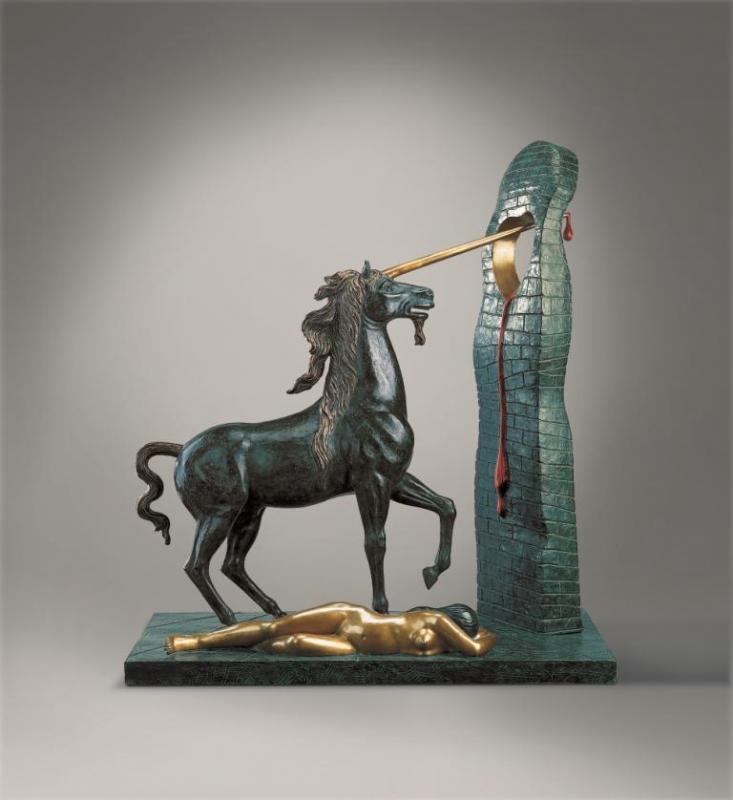
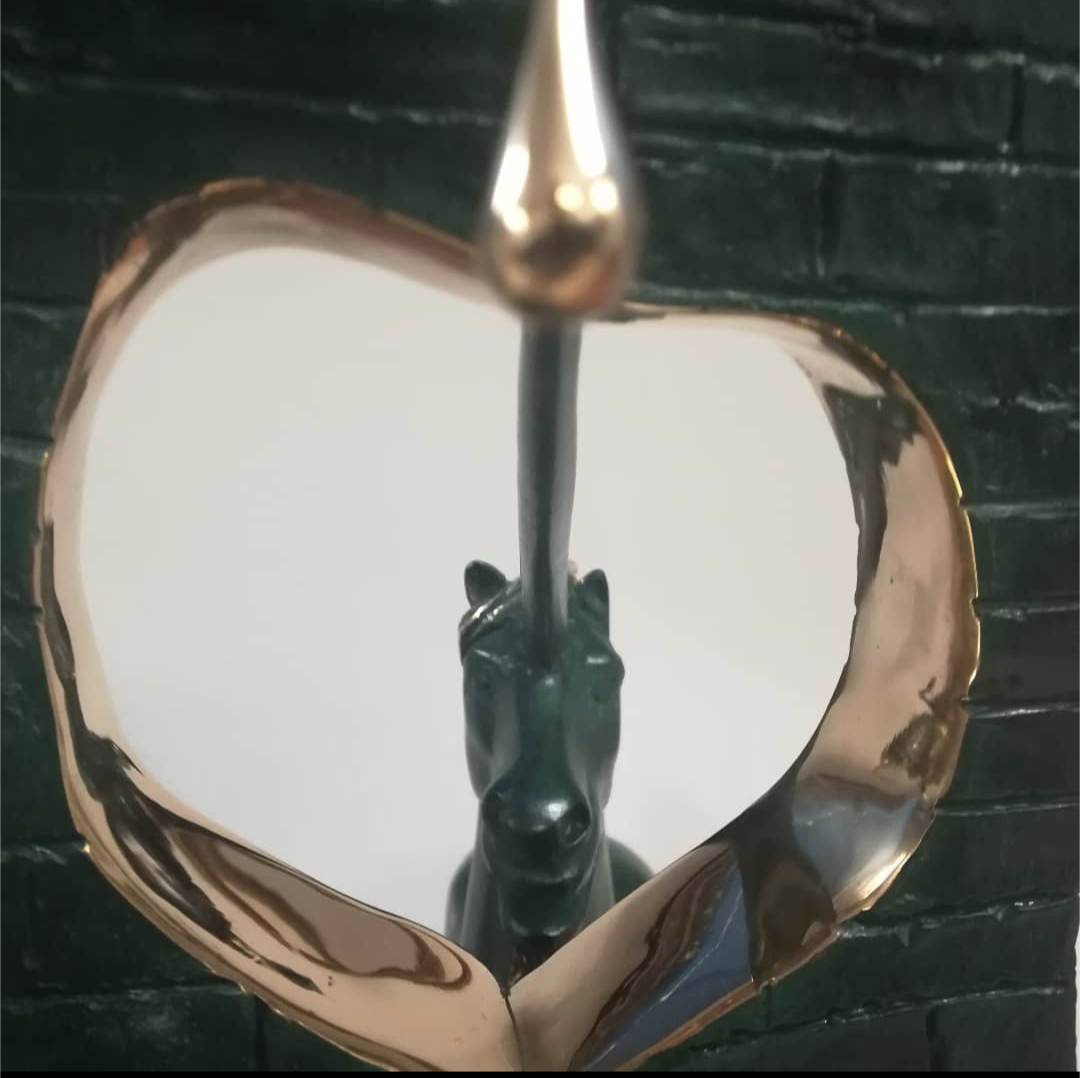
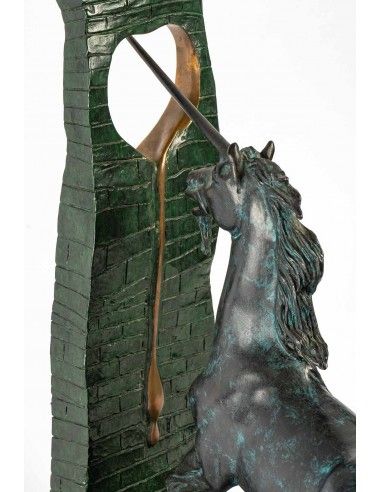
Salvador Dali (Spanish, 1904-1989) Unicorn (Multiple-scale, edition of 350, plus 35EA- first conceived 1977, first cast 1984- HGT: 53cm)
PRICE: on request
In this sculpture Dalí eulogizes his relationship with his beloved wife Gala, the heart-shaped opening in the wall representing their love. In his autobiography, Dalí illustrates Gala riding a Unicorn, Gala, mounted on the Unicorn of my Fate, suggesting that the image of the Unicorn and eternal love for Gala were, for Dalí, sources of inspiration. The Unicorn is a mythical creature prominent in legends as a symbol of purity, it was also adopted as the sign or ideal representation of the “perfect” knight. The horn of the Unicorn was believed capable of neutralizing any poison. The Unicorn’s horn pierces the wall through a heart-shaped opening, from which blood drops. Universally celebrated as a benevolent creature that appeared in many diverse cultural traditions, the Unicorn is admired as beautiful, mysterious, difficult to tame. The distinguishing factor is the single horn; it is of significant interest and is a recurring image in Dalí’s art. Dalí was intrigued by the rhinoceros’s horn fascinated by its perfect spiral logarithmic forms, as well as seashells shaped like horns. Dalí’s Unicorn becomes a compositional synthesis full of multiple messages; the symbolism of the wall, the bleeding heart, Dalí’s love for Gala, and the woman in the foreground who adds to the feminine and sensual aspect of the sculpture.