Pablo Picasso (Spanish, 1881–1973)
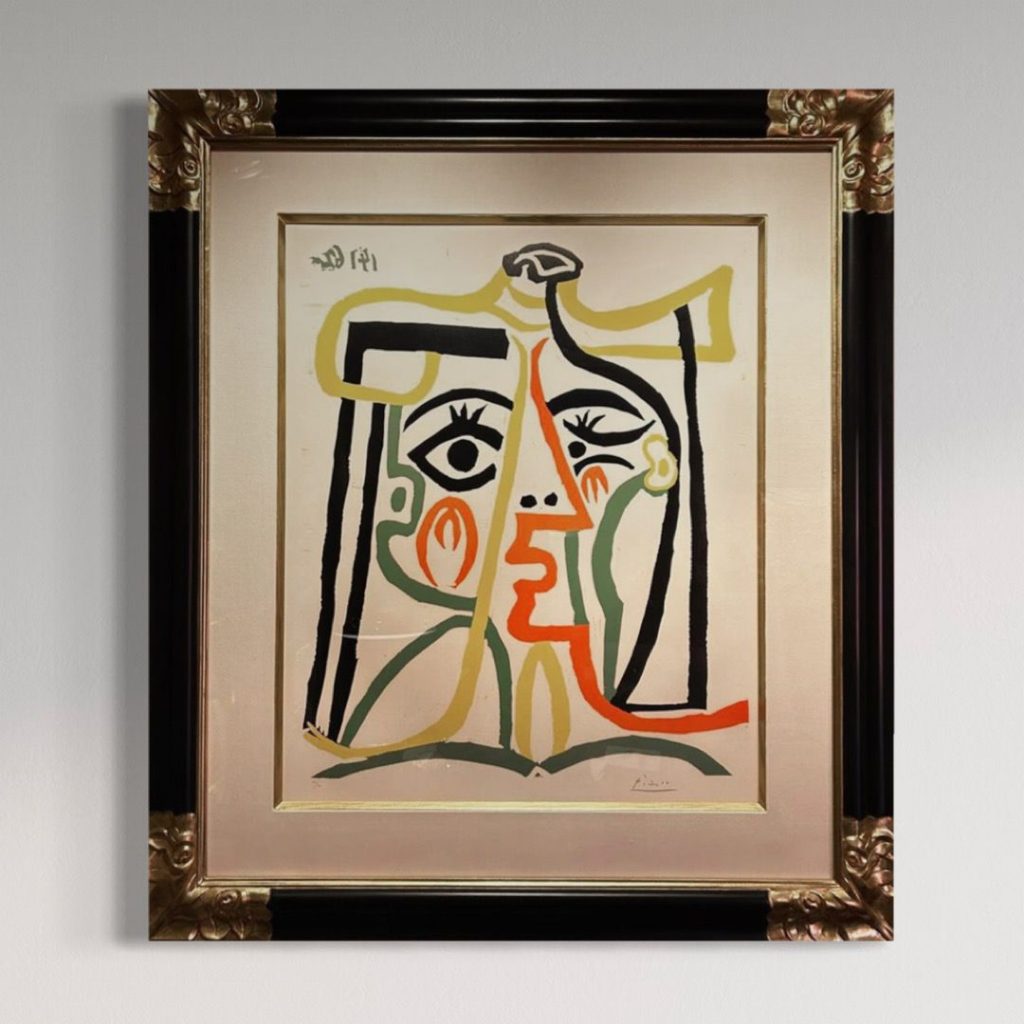
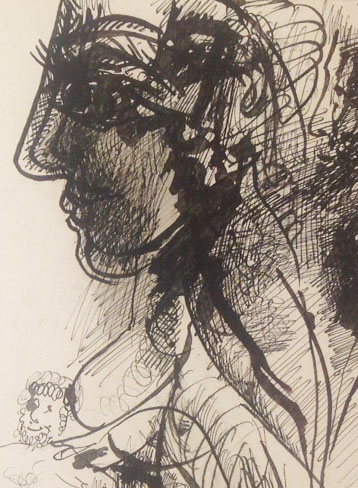
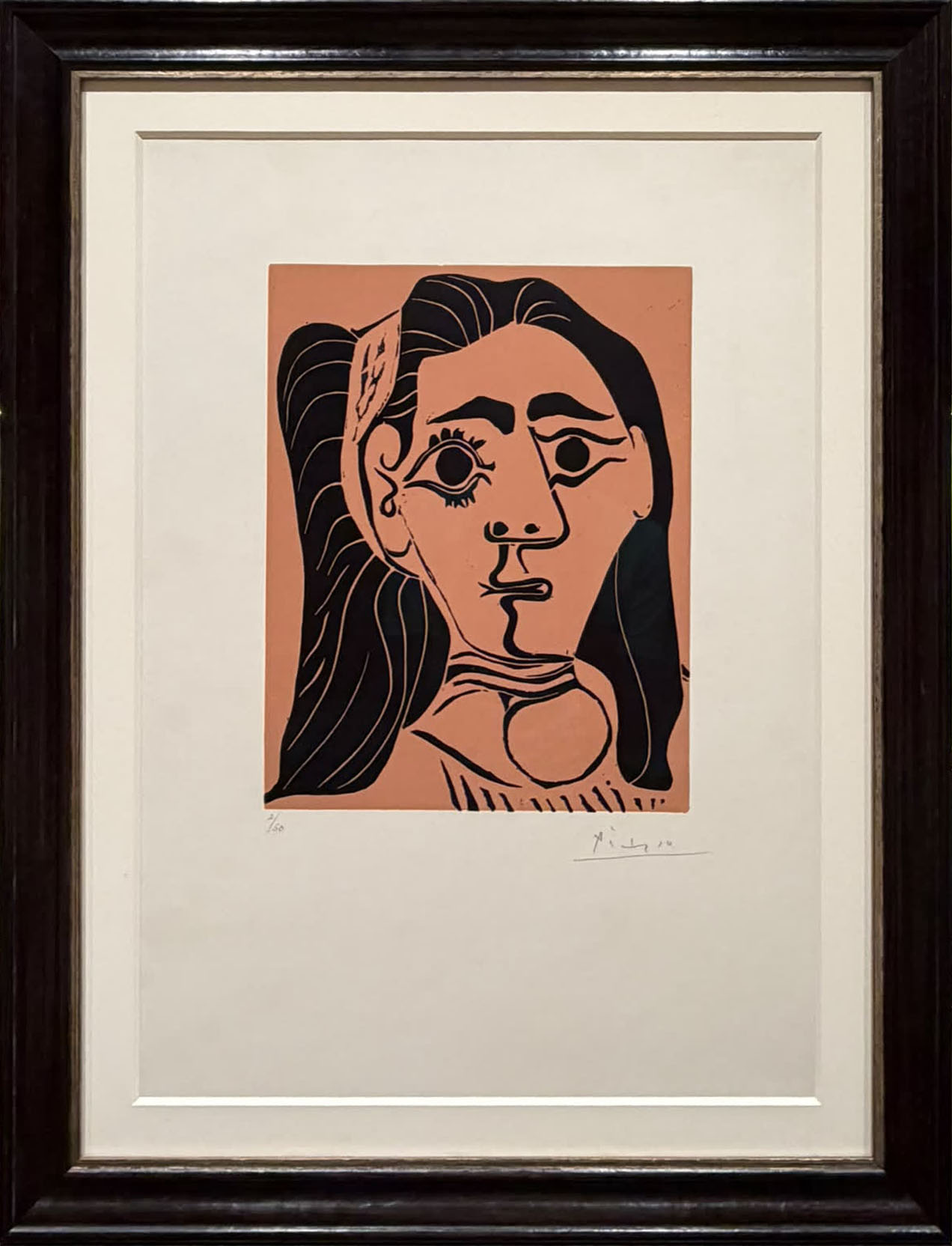
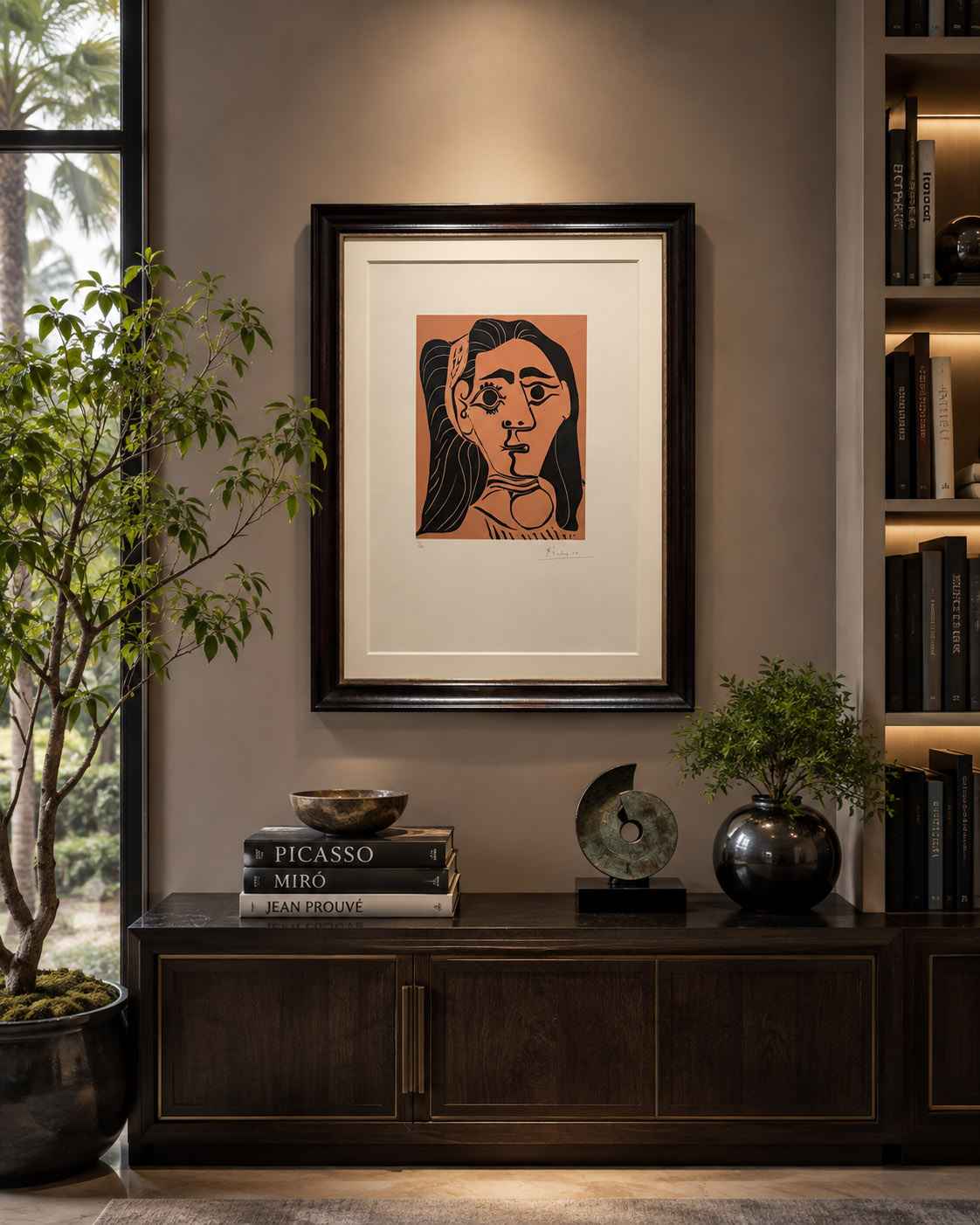
Jacqueline au Bandeau III (Femme aux cheveux flous), 1962
Linocut in beige and black on Arches wove paper
Image: 13 11/16 × 10 9/16 in. (34.8 × 26.8 cm)
Sheet: 24 5/8 × 17 3/8 in. (62.5 × 44.1 cm)
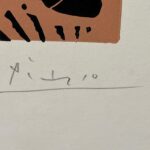
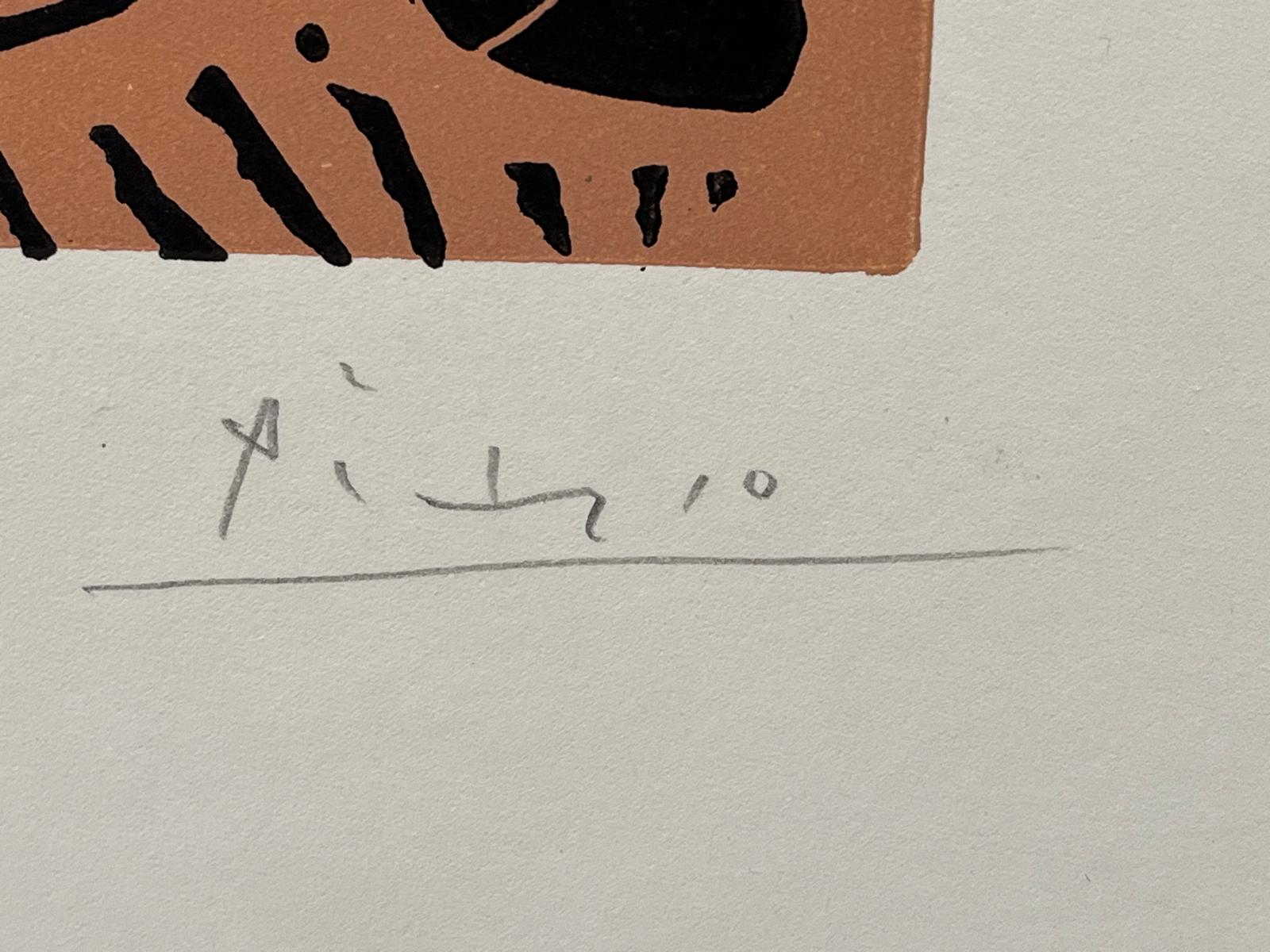
Signed by Pablo Picasso in pencil
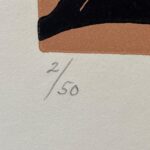
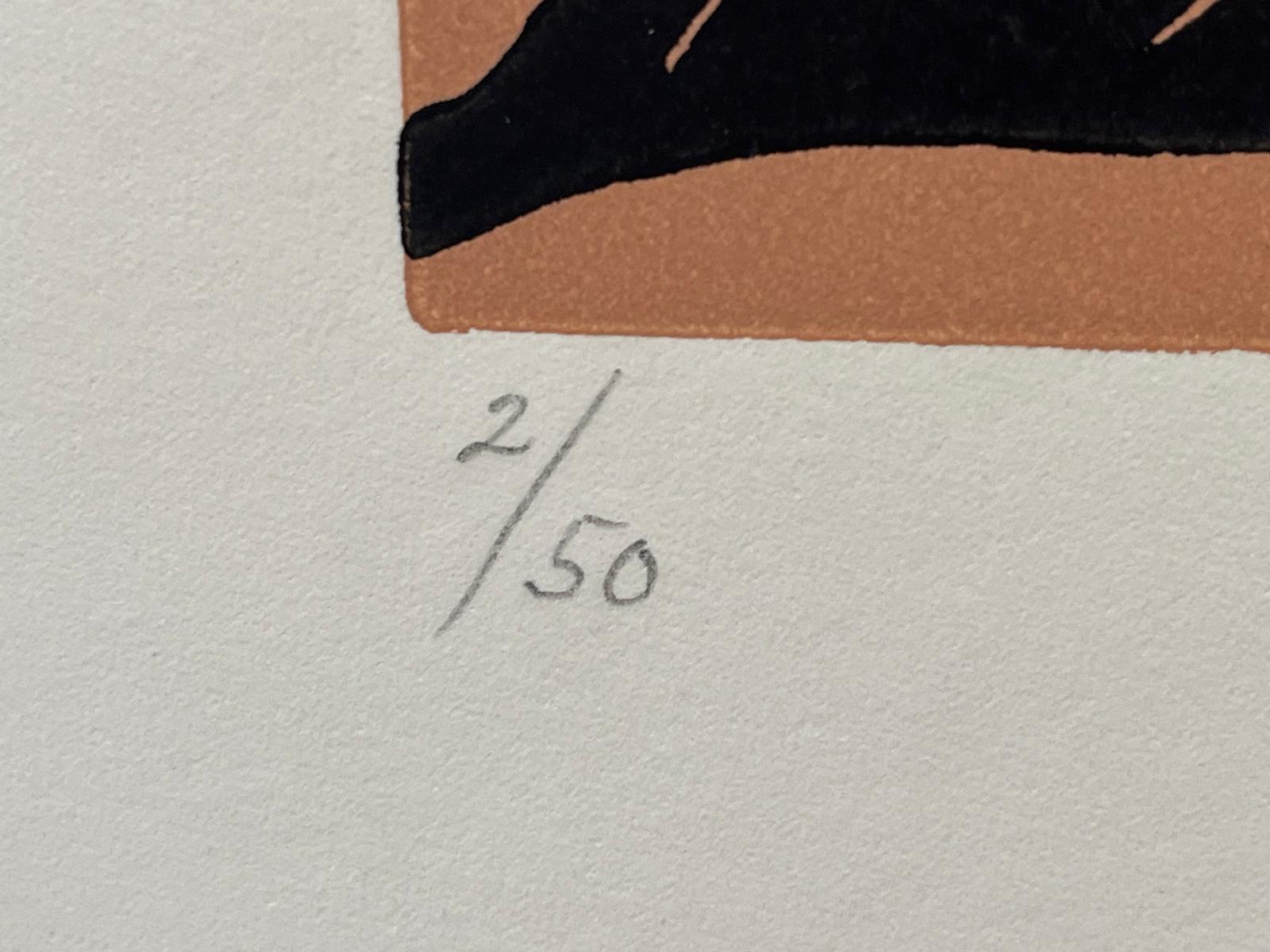
Numbered 2/50
From the edition of 50
Published by Galerie Louise Leiris, Paris
Publisher’s stamp verso
Catalogue Raisonné: Bloch 1079; Baer 1297; Picasso Project L.117
Price: SOLD
About the Work
Few subjects are as intimately associated with the final decades of Pablo Picasso’s life and work as Jacqueline Roque.
Picasso met Jacqueline in Vallauris in the early 1950s, and she would become his wife, constant companion and, ultimately, one of the most extensively portrayed women in his entire oeuvre. By the time Picasso created Jacqueline au Bandeau III in 1962, the two had married and Jacqueline’s distinctive features—the dark, almond-shaped eyes, strong profile and mass of dark hair—had become an extraordinary source of artistic invention.
Here, Picasso transforms her face into something at once remarkably simple and immediately recognizable.
Using only beige and black, he reduces Jacqueline’s features to sweeping curves, bold areas of color and a handful of extraordinarily economical lines. One eye stares directly outward while the other is almost absorbed into the surrounding black forms. Her hair, headband and facial contours merge and separate across the composition, creating a portrait that seems simultaneously ancient and strikingly modern.
It is quintessential Picasso: a remarkably complex personality communicated with astonishingly few means.
Picasso and the Linocut
Picasso’s experiments with linocut rank among the great technical achievements of his later printmaking.
Working in Vallauris in the 1950s and early 1960s, Picasso became fascinated by a medium traditionally associated with relatively straightforward graphic reproduction. He pushed it considerably further, developing increasingly sophisticated methods that allowed him to create complex images through successive stages of cutting and printing.
The immediacy of the technique suited him perfectly.
Rather than attempting photographic likeness, Picasso could carve, simplify and reconstruct a face until only its most essential characteristics remained. Jacqueline proved an ideal subject for these experiments, and the portraits Picasso created of her during this period are among the most distinctive images of his late graphic oeuvre.
Jacqueline au Bandeau III comes directly from this remarkable period of experimentation.
The Present Impression
This example is especially appealing as number 2 from the edition of only 50 impressions.
It is signed by Picasso in pencil and printed on Arches wove paper, with the Galerie Louise Leiris, Paris, publisher’s stamp on the verso.
The unusually low 2/50 numbering adds another attractive characteristic to an already scarce edition. More importantly, the impression retains the wonderful graphic tension of the composition: the warm beige ground provides a dramatic counterpoint to Picasso’s dense blacks and sweeping linear passages.
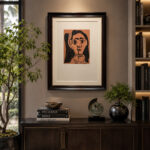
At approximately 24 5/8 × 17 3/8 inches (62.5 × 44.1 cm) overall, the sheet has considerably more presence in person than the intimate dimensions of the central image might suggest. The generous margins give the composition room to breathe and make it particularly elegant when properly framed.
More than sixty years after its creation, Jacqueline au Bandeau III remains a wonderfully distilled expression of three things central to Picasso’s late career: his fascination with Jacqueline, his extraordinary command of printmaking, and his lifelong ability to reinvent the human face.