
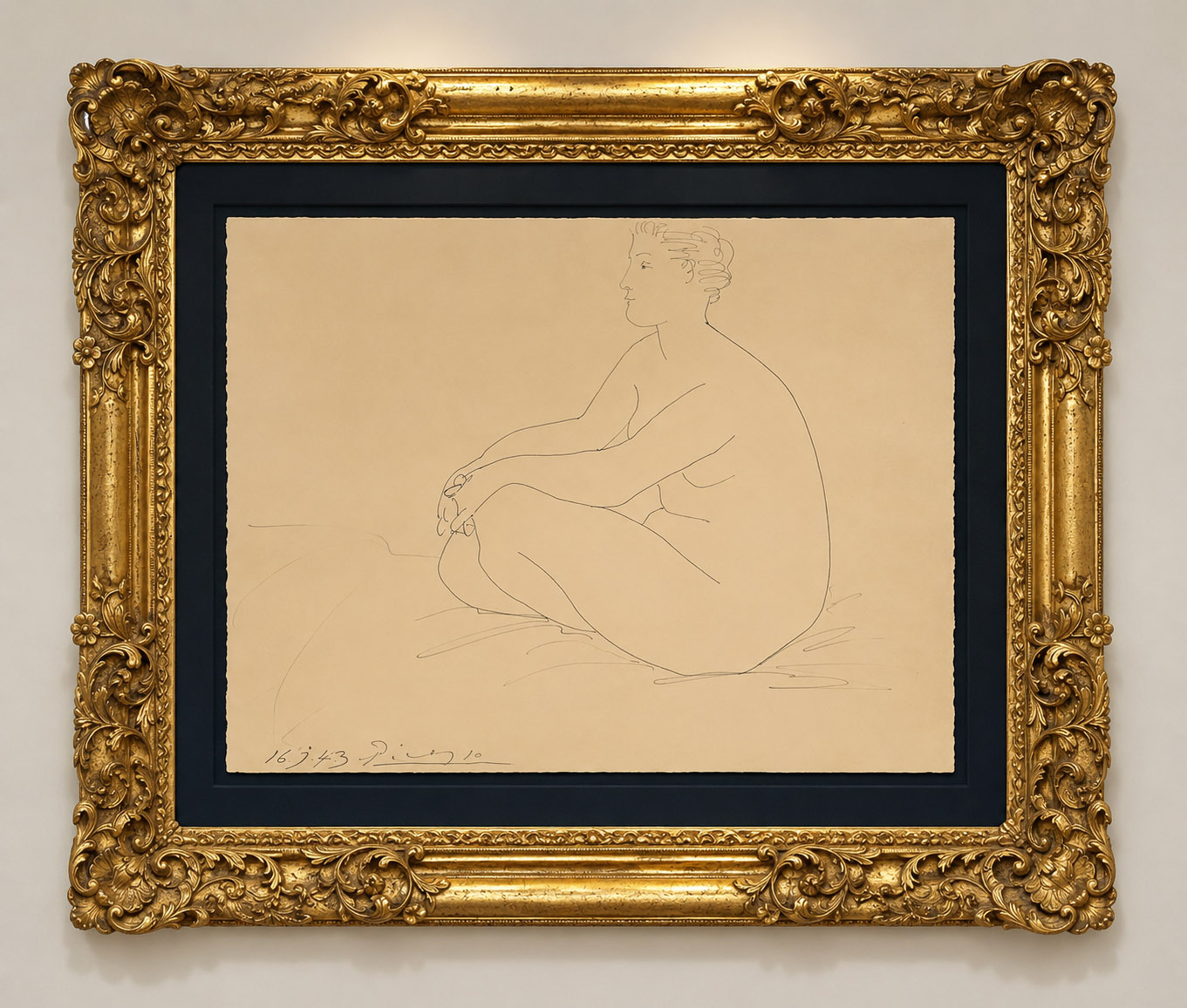
Pablo Picasso (Spanish, 1881–1973)
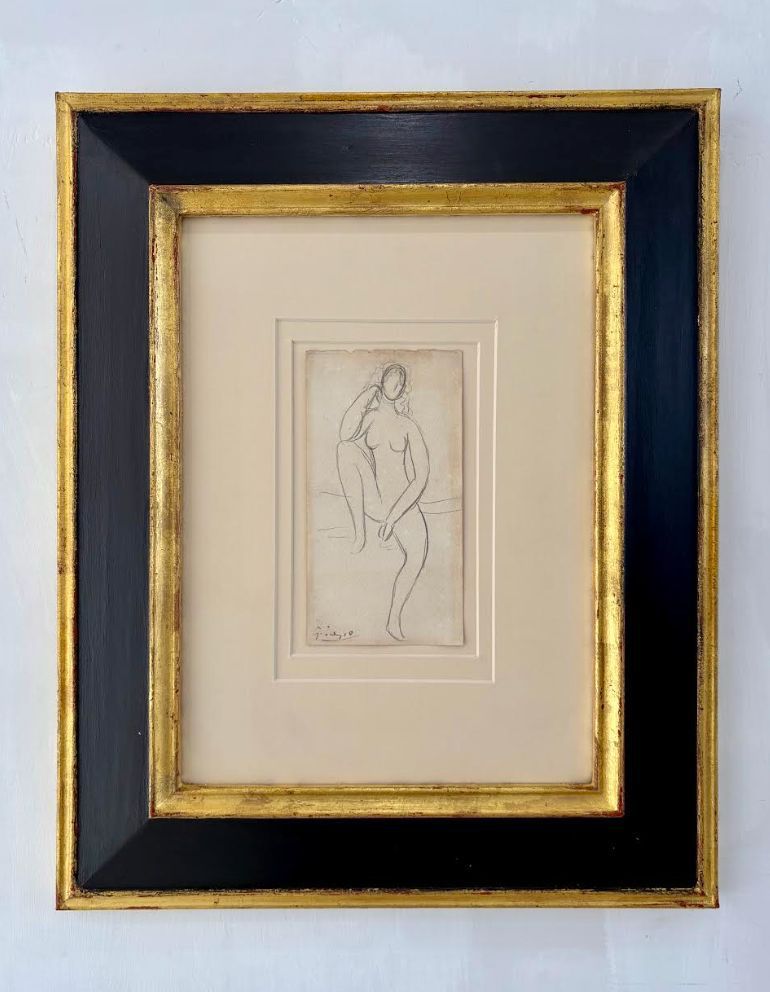
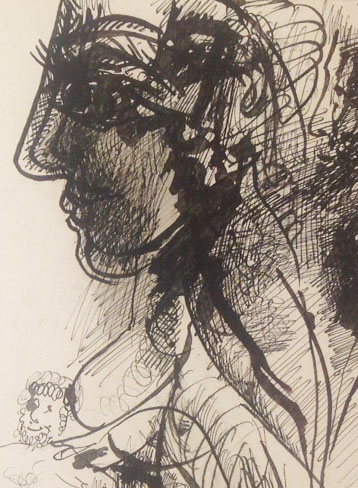
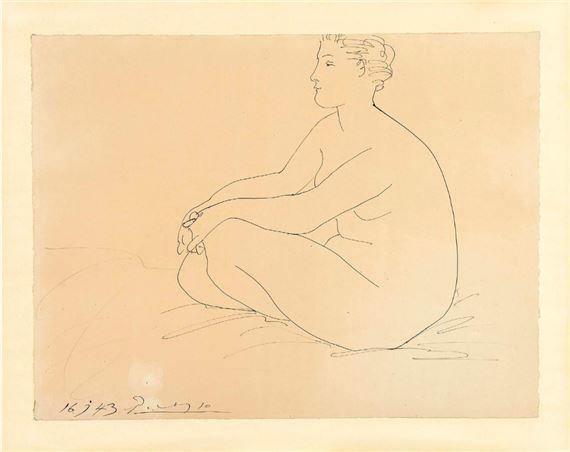
Femme nue assise (Seated Nude), 1943
Drawing on paper
55.5 × 66 cm (21⅞ × 26 in.)
Signed and dated “16 j 43 Picasso”, lower left
Executed 16 June 1943
Accompanied by photographic certification from Claude Ruiz Picasso
Provenance: Imaginart Gallery, Barcelona; Private Collection, Spain
Price: on request
Location: Spain
Executed in Paris in June 1943, Femme nue assise is a striking example of Pablo Picasso’s extraordinary command of line. Created during one of the most consequential periods of the artist’s life, while Picasso remained in German-occupied Paris, the drawing reduces the seated female figure to an exceptionally economical series of fluid contours.
The apparent simplicity is deceptive. With remarkably little intervention, Picasso establishes the sitter’s profile, posture, weight and volume, allowing the uninterrupted expanses of paper to become an integral part of the composition. The rounded forms of the body contrast elegantly with the more tightly articulated profile and hair, giving the figure a quiet monumentality despite the spareness of the medium.
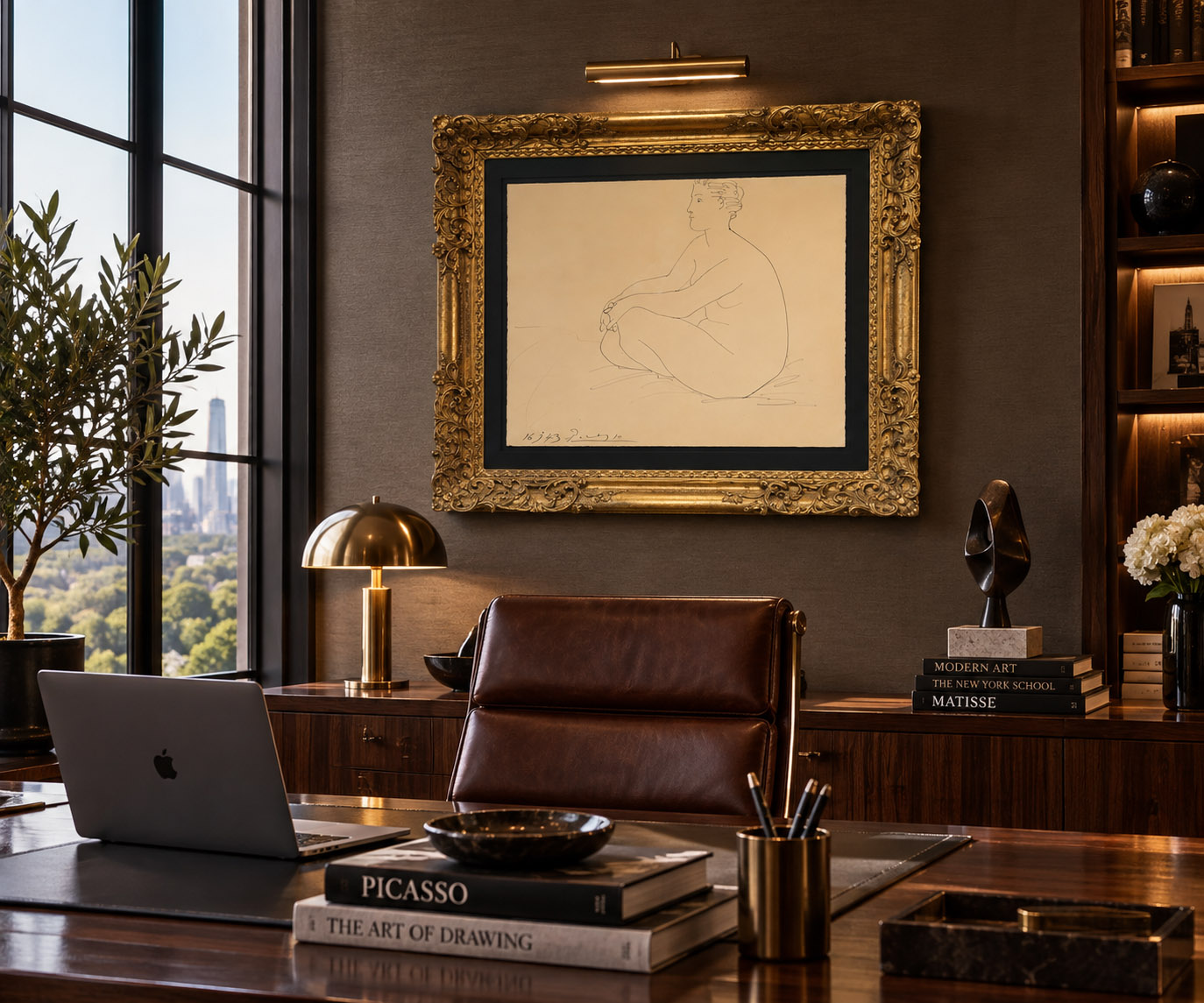
At 55.5 × 66 cm, the drawing is substantial in scale and has considerably more wall presence than many works on paper. The unusually prominent signature and precise date, 16 June 1943, are incorporated along the lower edge of the sheet and form part of the visual composition.
The year 1943 represents an important moment in Picasso’s wartime period. He had remained in Paris throughout the Occupation, continuing to draw, paint and sculpt despite the restrictions imposed upon him. The female figure remained central to his work, and the extraordinary assurance visible here—the ability to describe anatomy, gesture and personality through the minimum of means—is characteristic of Picasso at the height of his powers as a draftsman.