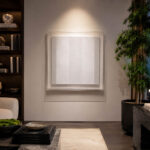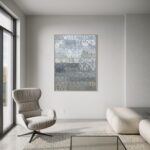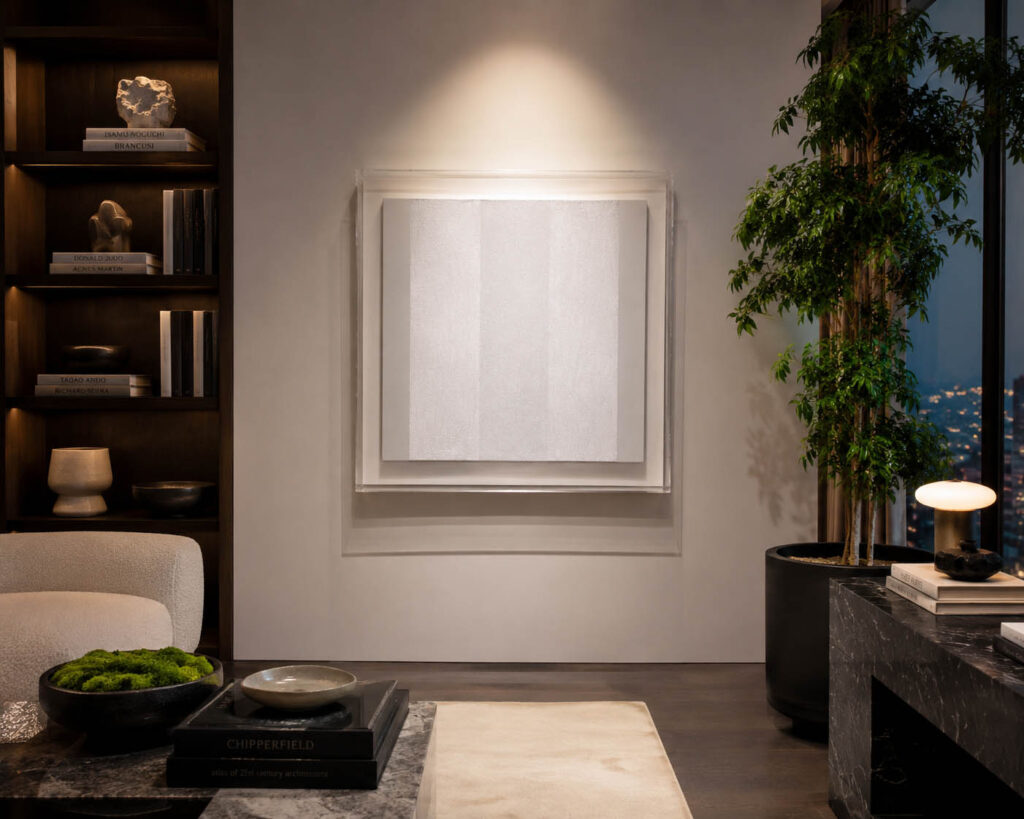
At first glance, Mary Corse’s paintings appear deceptively simple. White on white. Quiet, restrained, almost ethereal. But spend a few moments in front of one, and something extraordinary happens: the painting begins to change.
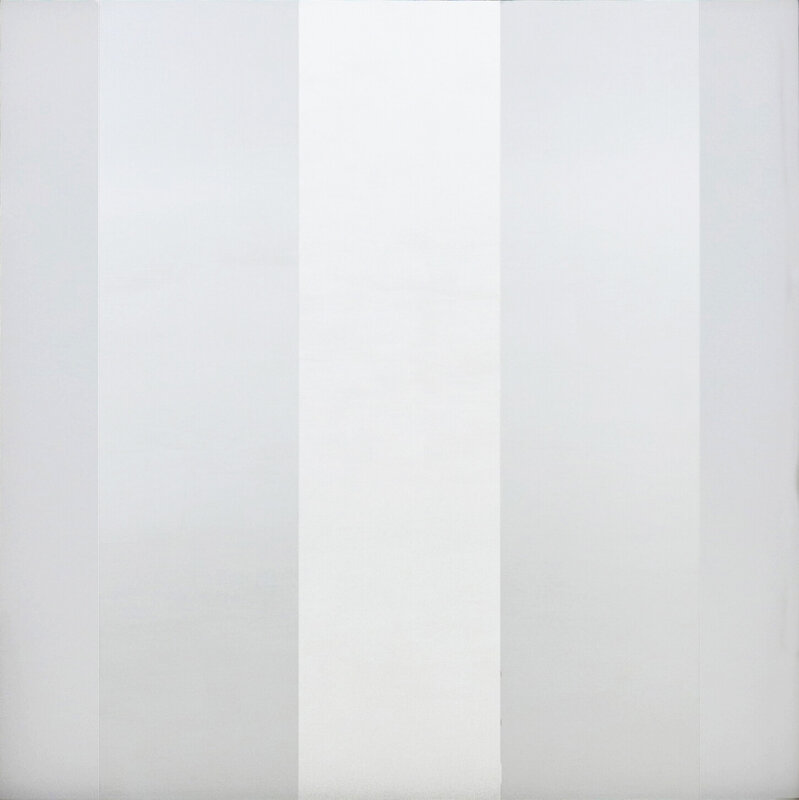
As you move, the surface shifts between brilliant white, silvery gray, and subtle pearlescent tones. Light appears to emerge from within the canvas itself. What initially seems like a minimalist composition becomes an immersive experience in perception.
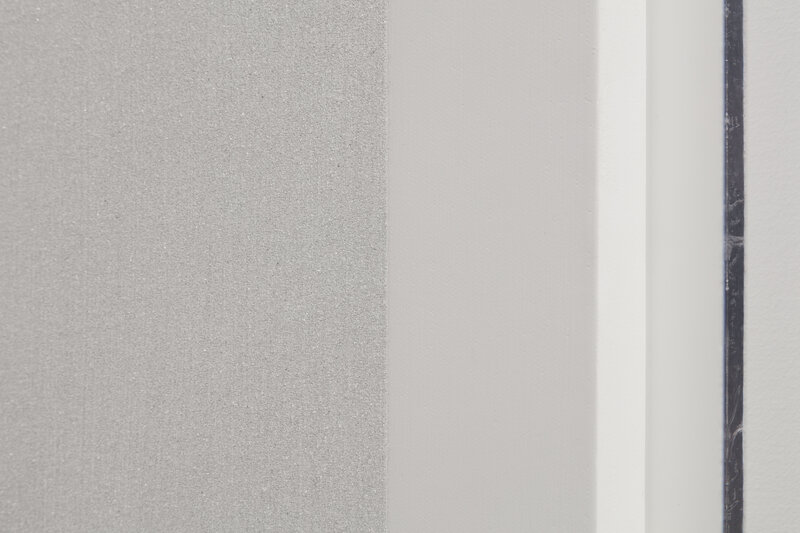
This remarkable Untitled painting from 2000 belongs to Corse’s celebrated White Light series, the body of work that has defined her artistic legacy and established her as one of the most innovative figures associated with California’s Light and Space movement.
The Artist Who Made Light Her Medium
Born in Berkeley, California, in 1945, Mary Corse emerged during the 1960s alongside artists such as James Turrell, Robert Irwin, and Larry Bell, whose experiments with light and perception transformed contemporary art.

While many of her contemporaries moved toward sculpture and installation, Corse remained devoted to painting. Her ambition was deceptively radical: rather than simply depicting light, she wanted to make light an active ingredient in the artwork itself.
Her breakthrough came in 1968, when she began incorporating tiny glass microspheres into acrylic paint. These reflective particles, similar to those used in highway markings, interact with ambient illumination and the viewer’s position, producing extraordinary optical effects.
The result is a painting that never looks quite the same twice.
Corse’s work bridges the intellectual rigor of Minimalism with the experiential qualities of Light and Space. Like Agnes Martin or Robert Ryman, she finds enormous expressive potential in apparently limited visual means. Yet her paintings introduce another dimension: the viewer’s movement becomes essential to the experience.
A Signature Work from the White Light Series
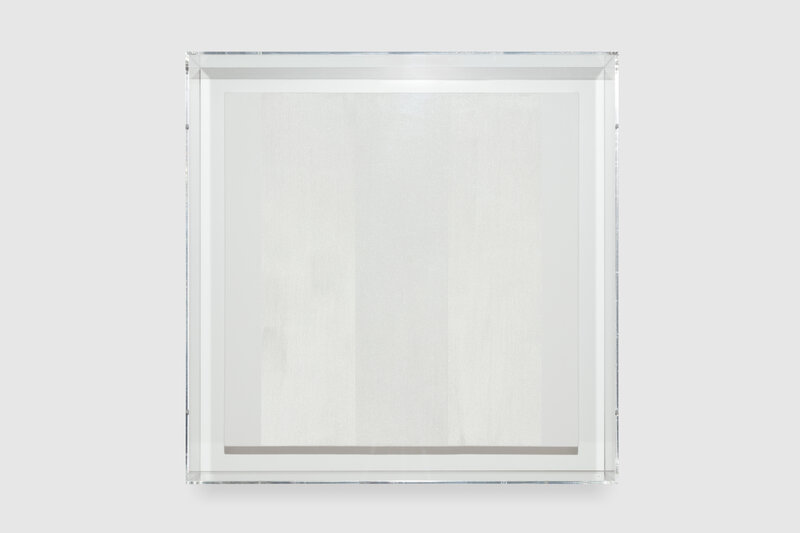
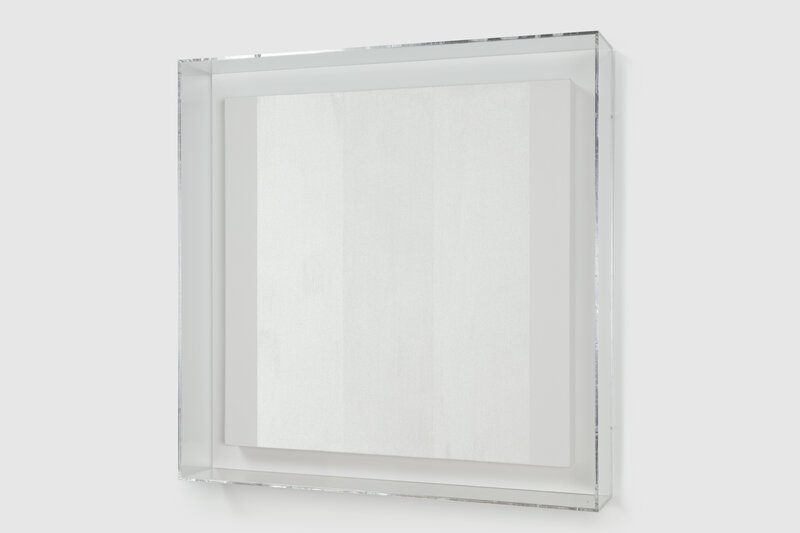
Executed in 2000, this intimate 24-inch-square painting is an excellent representation of the visual language for which Corse is best known.
Its restrained composition allows the extraordinary properties of its surface to take center stage. The embedded glass microspheres respond to changing light, creating a dynamic interplay between material, environment, and perception.
Unlike conventional paintings, which generally maintain a consistent appearance regardless of where the viewer stands, Corse’s White Light works reveal themselves gradually. Their beauty is not simply in what the artist places on the canvas, but in what happens between the painting and the person experiencing it.
This example is presented in a substantial, transparent acrylic frame, lending the work an elegant architectural presence while preserving its minimalist character.
Mary Corse (American, b. 1945)
Title: Untitled (White Light Series)
Year: 2000
Medium: Glass microspheres in acrylic on canvas
Dimensions: 61 × 61 × 5.1 cm (24 × 24 × 2 in.)
Framed dimensions: 72.4 × 72.4 × 14 cm (28½ × 28½ × 5½ in.)
Signature: Hand-signed verso
Provenance: Emily Friedman Fine Art, Los Angeles; Private Collection, Germany
Condition: Excellent, according to prior gallery documentation
An Important Voice in Contemporary Art
Corse’s contributions to postwar abstraction have received significant institutional recognition, including her landmark 2018 survey, Mary Corse: A Survey in Light, organized by the Whitney Museum of American Art and subsequently presented at the Los Angeles County Museum of Art.
Her paintings occupy a distinctive position in contemporary art history, combining the formal discipline of Minimalism with an almost magical sensitivity to light.
For collectors drawn to the work of Agnes Martin, Robert Ryman, Donald Judd, or James Turrell, Corse represents a fascinating intersection of these artistic philosophies.
Her White Light paintings, in particular, embody the discovery that made her career so influential: a painting need not merely reflect the world around it. It can actively respond to it.
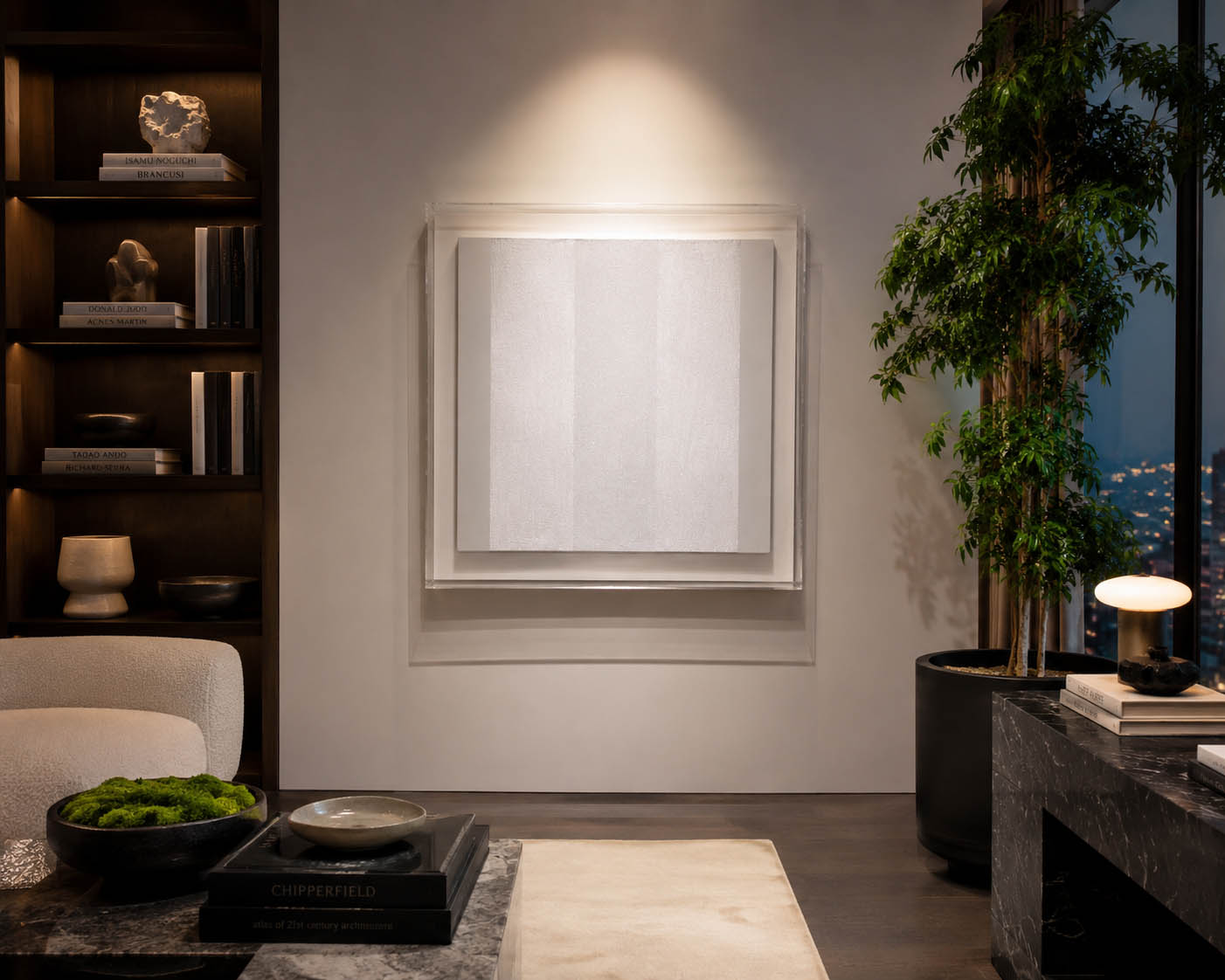
This exceptional example is available for private acquisition through Robin Rile Fine Art.
Please DM us for pricing, additional photographs, documentation, and acquisition details.