Jean-Michel Basquiat’s market is often discussed through the lens of eight-figure paintings and museum-level drawings. Less frequently examined—but increasingly important to collectors—is the role of estate-authorized prints in shaping access, scholarship, and long-term market participation.
Over the past decade, Basquiat’s posthumous print editions have established a clear, disciplined track record, particularly when the imagery is anchored in his strongest early-1980s vocabulary. Three bodies of work illustrate this especially well: Leeches, the Figures portfolio, and Odours of Punt.
Leeches
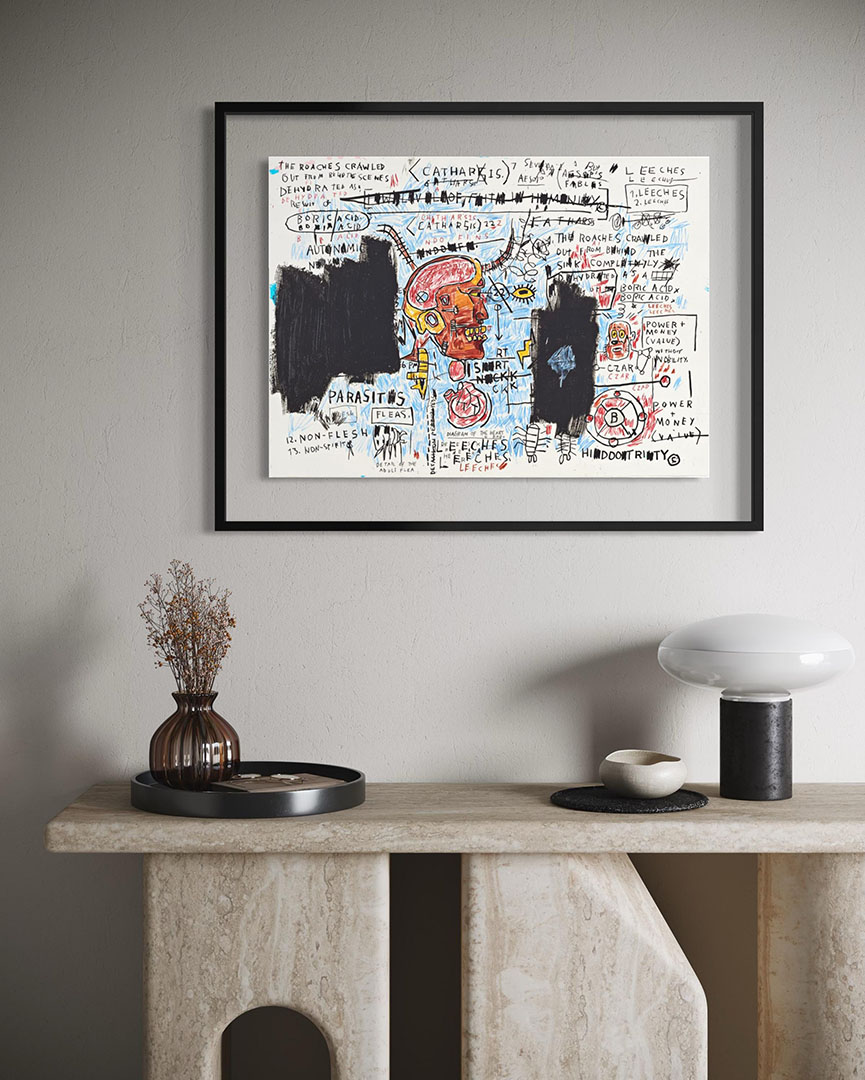
Originally conceived in 1982–83, Leeches draws directly from what many scholars and collectors consider Basquiat’s most critical period. The image is dense, confrontational, and unmistakably Basquiat: skull imagery, parasitic forms, fragmented text, and references to power and extraction.
As a posthumous screenprint, Leeches does not attempt to replace an original drawing or painting. Instead, it functions as something else entirely: a faithful transmission of a canonical image into a format that remains attainable while retaining intellectual and visual weight.
From a market perspective, Leeches has consistently attracted buyers who understand the hierarchy within Basquiat’s oeuvre. Collectors respond to the fact that the image feels inseparable from his early painted language—something not always true of later or more decorative editions. Over the last ten years, works like Leeches have demonstrated steady liquidity, particularly in private transactions, with values closely tied to condition, documentation, and edition size rather than speculation.
The Figures Portfolio
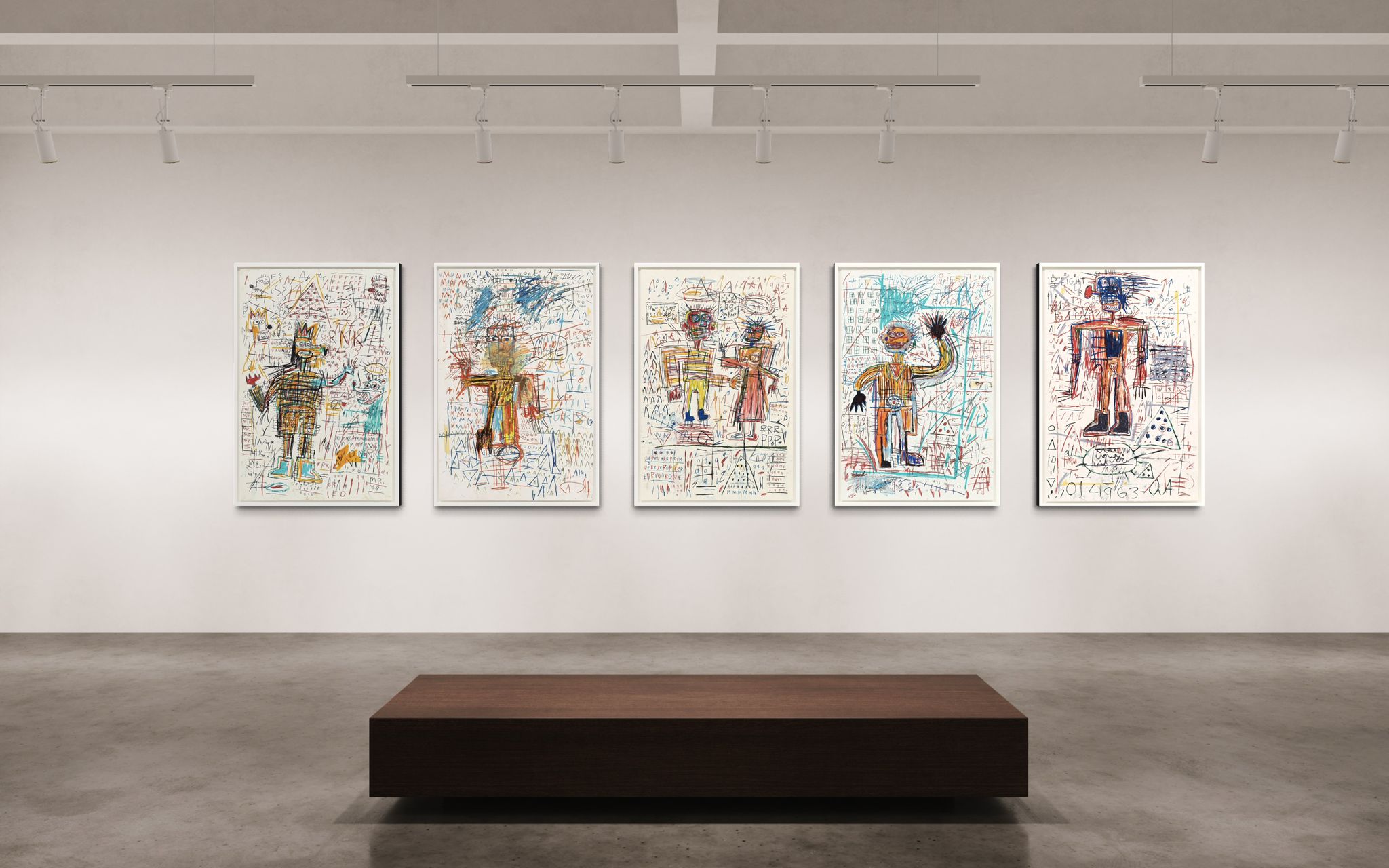
The Figures portfolio represents a different, but equally important, aspect of Basquiat’s visual language. Where Leeches feels aggressive and confrontational, Figures is more schematic—human forms reduced to signs, gestures, and symbolic shorthand.
These works reflect Basquiat’s sustained interest in anatomy, identity, and archetype. The figures are not portraits in the traditional sense; they are vessels—markers of presence, vulnerability, and history. For collectors, this portfolio often reads as closer to drawing than print, conceptually speaking.
In the market, the Figures prints have tended to appeal to connoisseur collectors rather than entry-level buyers. Their performance over the past decade has been quieter than headline-grabbing, but notably consistent. When examples appear with strong condition and estate documentation, they tend to find homes without dramatic discounting—an indicator of a healthy, informed buyer base rather than speculative churn.
Odours of Punt
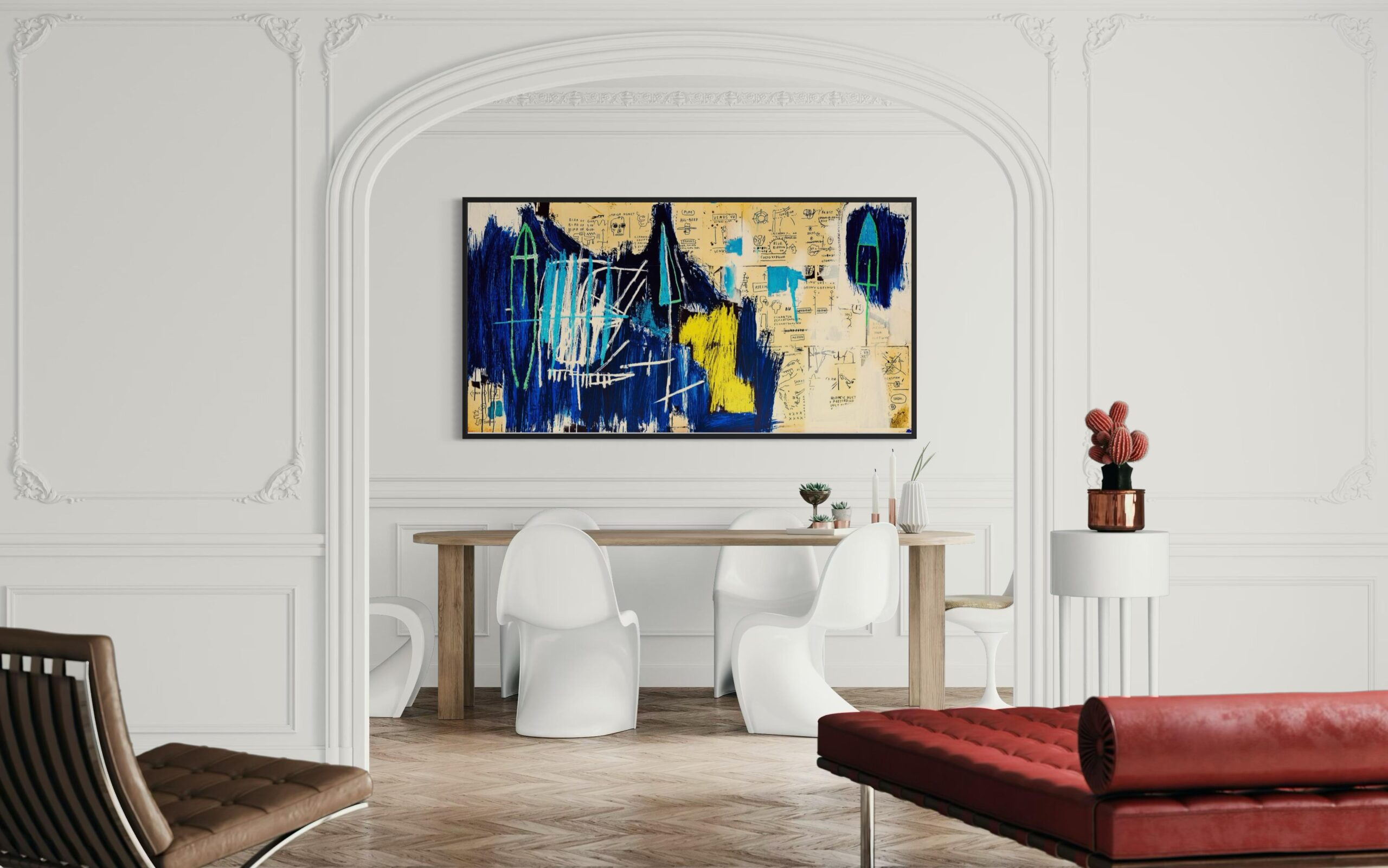
Odours of Punt occupies a third category altogether: scale. Derived from Basquiat’s 1983 imagery and published as a monumental posthumous screenprint, the work is unapologetically large and immersive. It pulls viewers into Basquiat’s layered universe of text, symbols, alchemical references, and painterly gesture.
This is not a subtle work—and it isn’t meant to be. Odours of Punt speaks to Basquiat’s ambition during the early 1980s, when his canvases expanded in both size and conceptual reach. As a print, it offers something relatively rare in the market: a museum-scale Basquiat experience that still fits within the print category.
Over the last ten years, large-format estate prints like Odours of Punt have benefited from a shift in collector behavior. As wall space and visual impact matter more—particularly in contemporary architecture—scale has become a value driver. When paired with disciplined editions and strong estate oversight, these works have shown durable pricing and solid demand, especially among collectors who already own smaller Basquiat works and want a more commanding presence.
The Estate Print Track Record (Last 10 Years)
Broadly speaking, Basquiat estate prints have followed a measured upward trajectory over the past decade. This has not been a speculative spike, but rather a reflection of several reinforcing factors:
- -Increased scholarship and institutional validation of Basquiat’s work
- -Tight control and documentation by the estate
- -A growing global collector base priced out of original works
- -Clear differentiation between stronger and weaker imagery
Importantly, the market has become more selective. Not all Basquiat prints perform equally. Images tied directly to the early 1980s—particularly those with complex iconography and historical resonance—have outperformed more decorative or peripheral works.
For collectors, this selectivity is a positive sign. It suggests a maturing market that rewards quality, image strength, and context, rather than indiscriminate buying.
Final Thoughts
Leeches, the Figures portfolio, and Odours of Punt each represent a different entry point into Basquiat’s world—content, structure, and scale. Together, they demonstrate why estate-authorized prints have become an essential part of the Basquiat ecosystem rather than a footnote.
They are not substitutes for paintings or drawings. They are, instead, anchors—works that allow collectors to engage deeply with Basquiat’s language, history, and enduring relevance, while participating in a market that has shown resilience, discipline, and long-term conviction.
For purchase information and pricing, please contact info@robinrile.com.