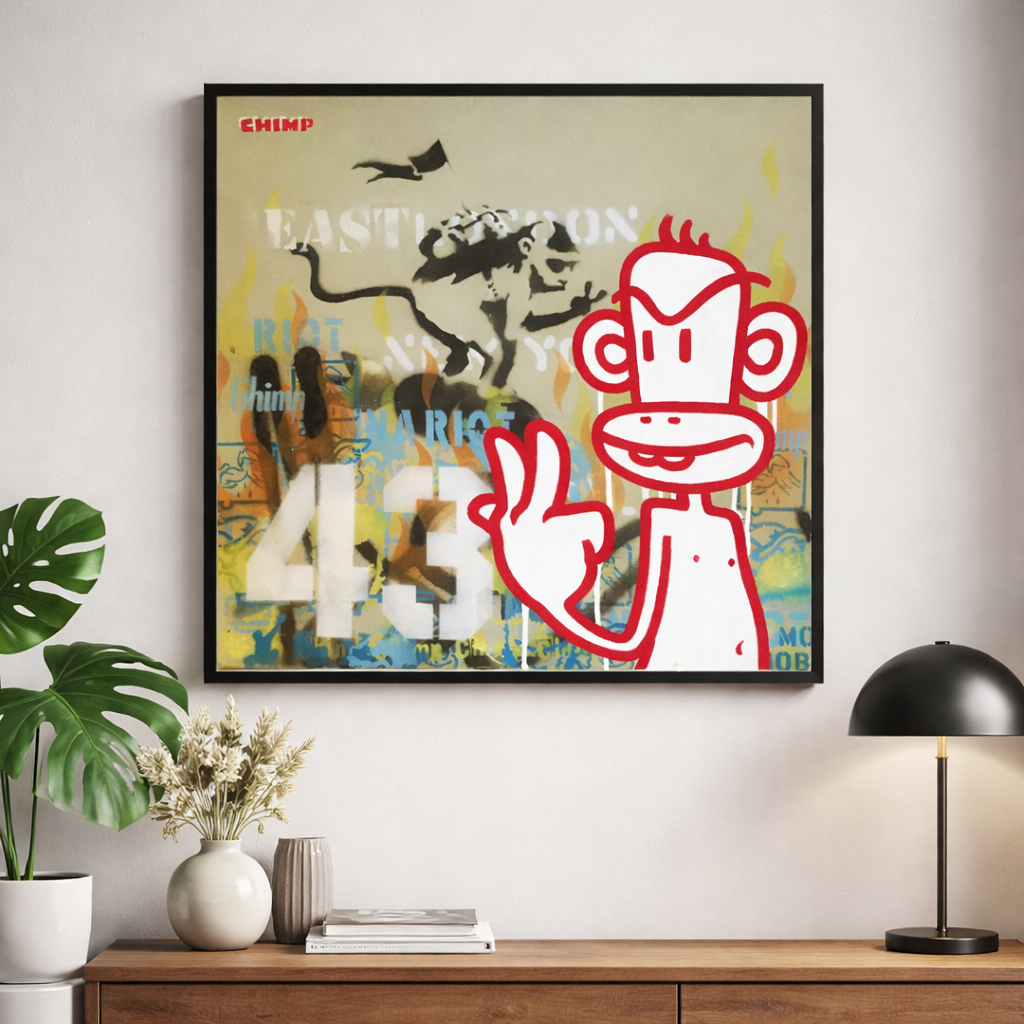
Every so often, something lands in front of me that refuses to sit comfortably inside the market’s neat categories.
It isn’t fake.
It isn’t pristine.
It simply doesn’t behave.
This one began in 2000 at the Rivington Street pop-ups in East London — exhibitions in the loosest sense of the word. Unmarked doors. Word-of-mouth invites. Art priced “pay what you reckon.” Banksy was part of that raw ecosystem, working on walls, experimenting on canvas, and building the visual language that would later travel the world.
Before certificates.
Before condition reports.
Before climate-controlled storage.
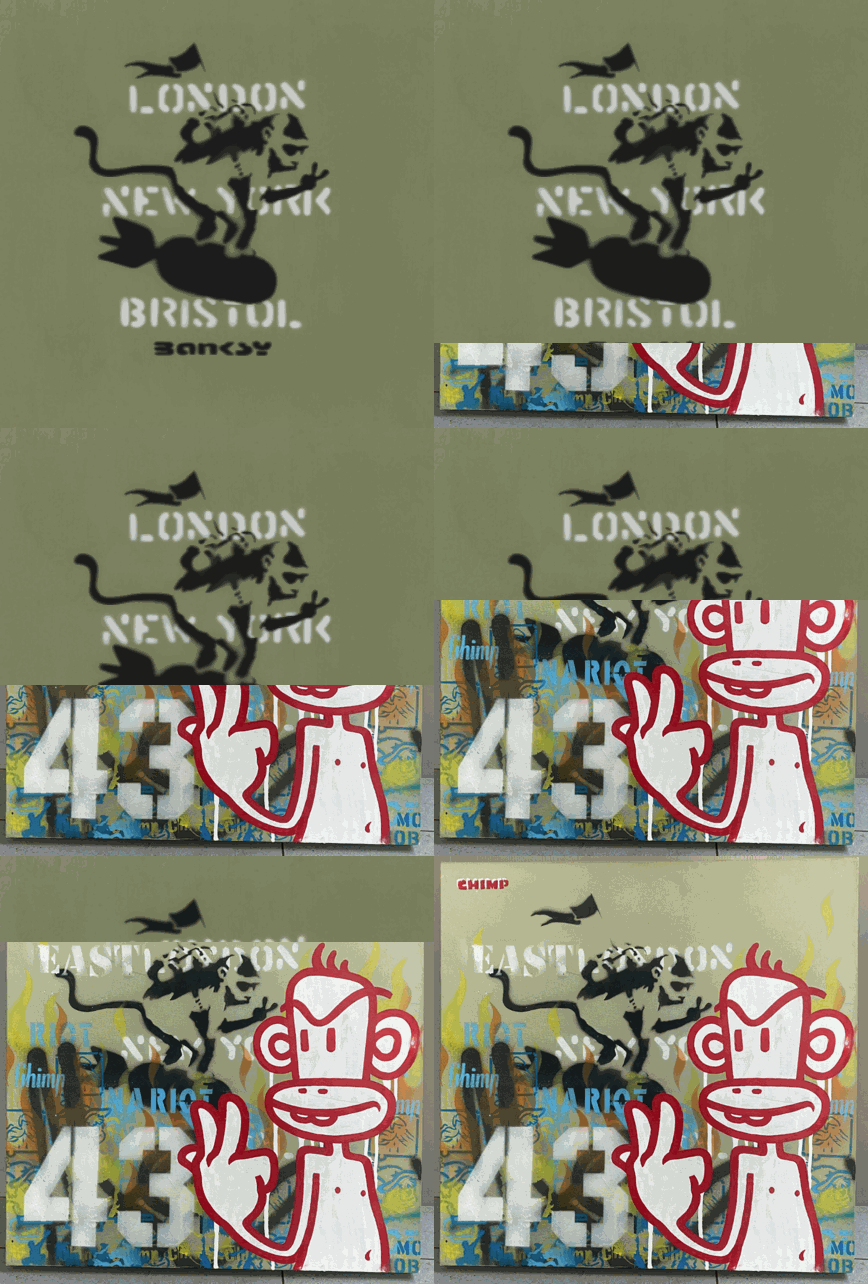
This canvas carried his now-familiar monkey — mid-defiance, riding the bomb — a sharp emblem of that post-Y2K moment. Then, very much in keeping with the culture of the time, it was handed to another artist from the same scene with a simple instruction:
Be inspired.
And he was.
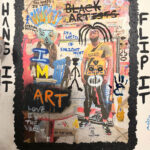
Dave “The Chimp” painted over it, not as vandalism, not as collaboration, but as dialogue. In early street culture, painting over someone else’s work wasn’t erasure. It was rivalry. Acknowledgment. A continuation of the conversation. The wall was never sacred.
It was alive.
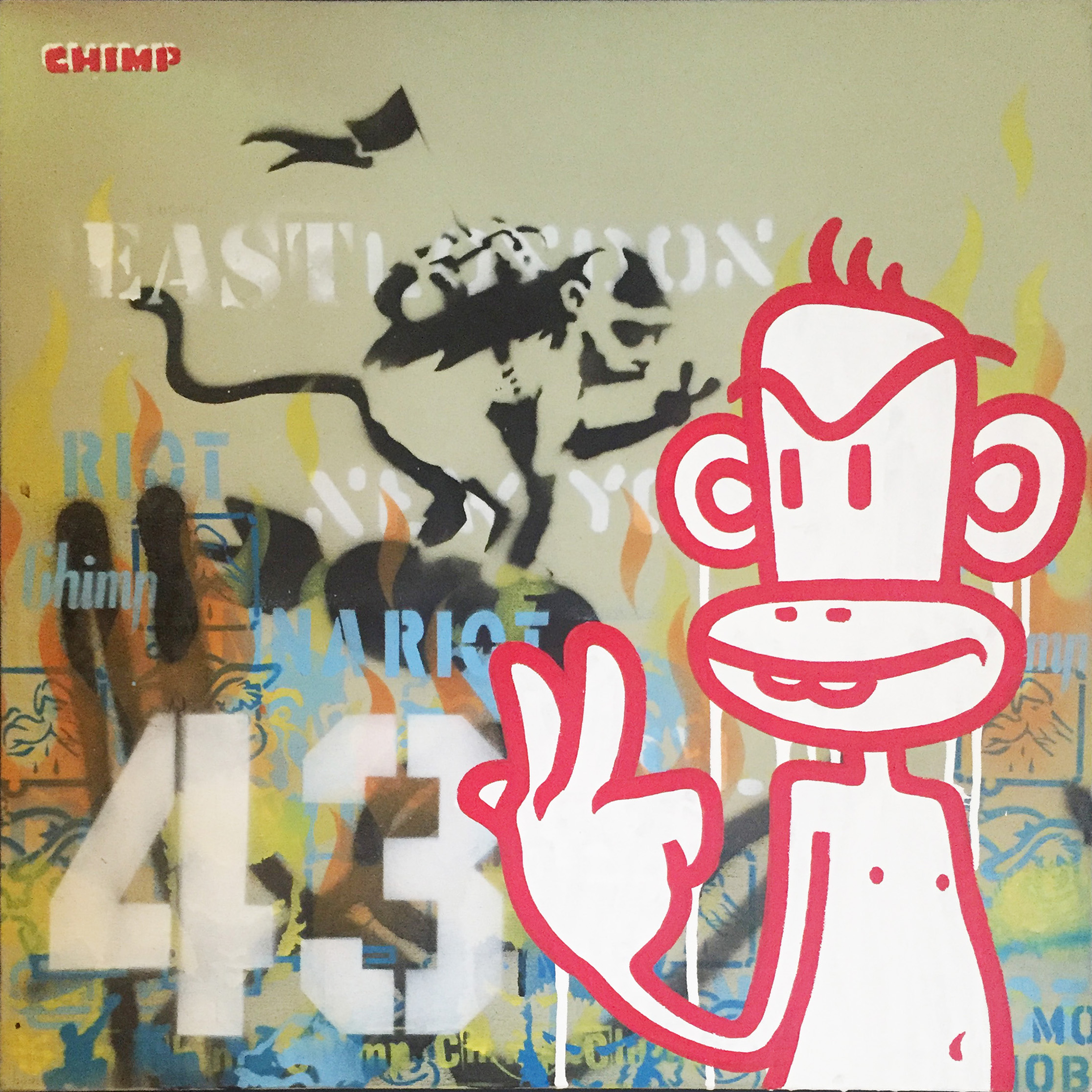
Twenty-five years later, we’ve institutionalized rebellion into assets. The movement that once rejected gatekeepers now depends on them. And here sits this canvas — materially altered, uncategorizable — carrying two moments at once: an artist on the cusp of global recognition, and a peer still operating under punk-era rules where interruption was simply part of the language.
What survives isn’t a damaged relic.
It’s a physical trace of a time before street art became careful.
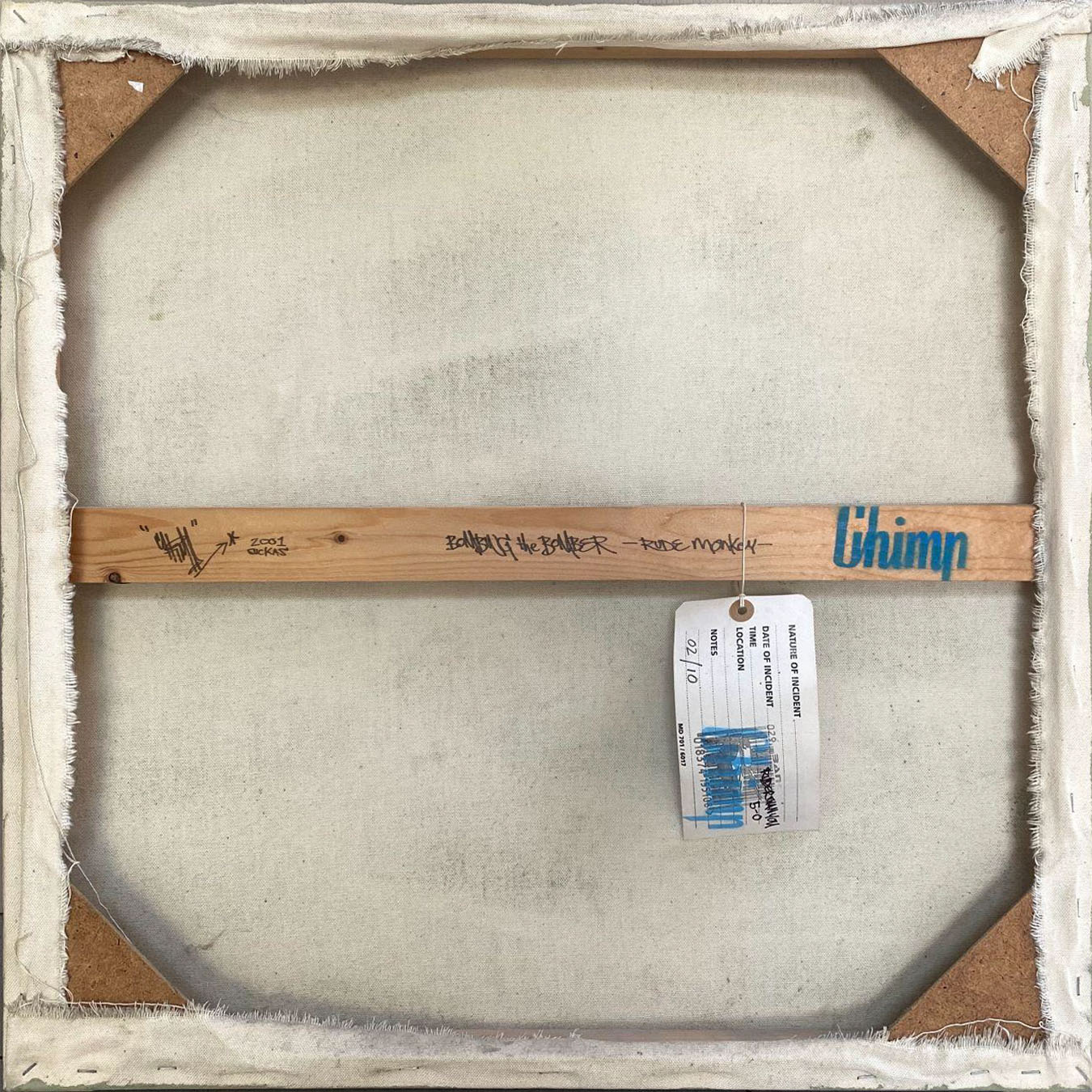
Perhaps the most important artifacts from that era aren’t the pristine ones, but the ones that still carry the friction that made the movement matter.
The street didn’t ask permission.
It answered.
~Reed V. Horth, for RRFA