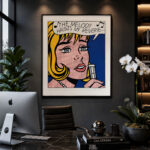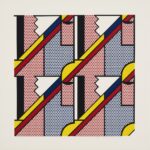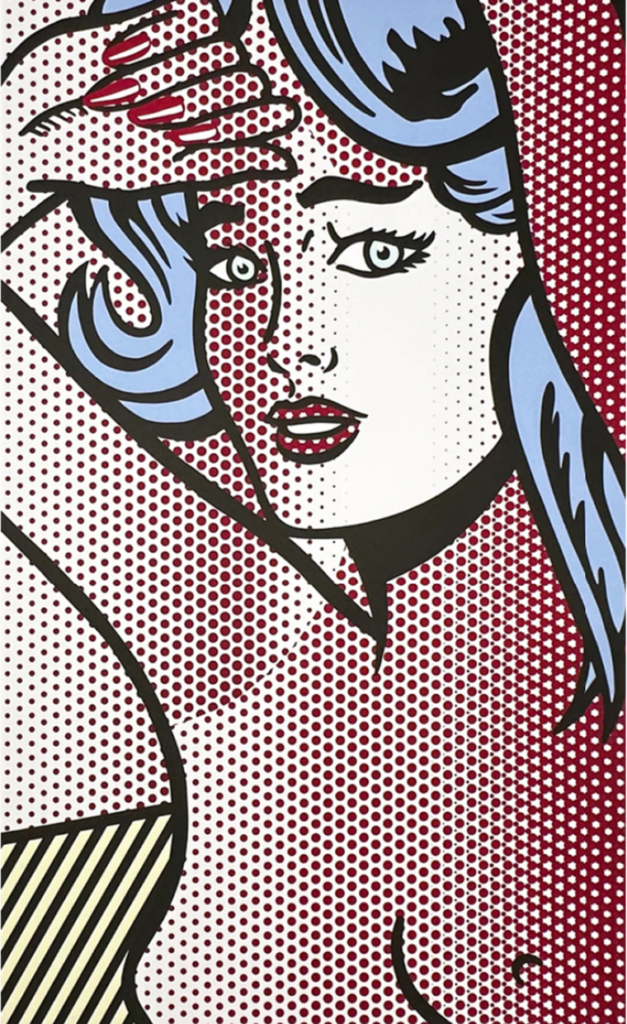
Roy Lichtenstein built his reputation during the 1960s by transforming the visual language of comic books into fine art. Bold black contours, Ben-Day dots, and flattened perspectives became synonymous with the Pop Art movement, challenging traditional distinctions between “high” and “low” culture.
By the early 1990s, however, Lichtenstein had evolved far beyond appropriation. His landmark Nudes series of 1994 represents the culmination of more than three decades of artistic refinement—a body of work in which comic imagery, Cubism, Surrealism, and modern abstraction converge into some of the most sophisticated prints of his career.
Rather than simply depicting the female figure, the Nudes investigate perception itself: how images are constructed, remembered, fragmented, and ultimately understood.
Printed by Tyler Graphics using extraordinarily complex relief-printing techniques on Rives BFK paper, the series stands among the finest printmaking achievements of Lichtenstein’s career.
Although each work stands independently, together they form an extraordinary meditation on the history of the nude in Western art, filtered through Lichtenstein’s unmistakable Pop vocabulary.
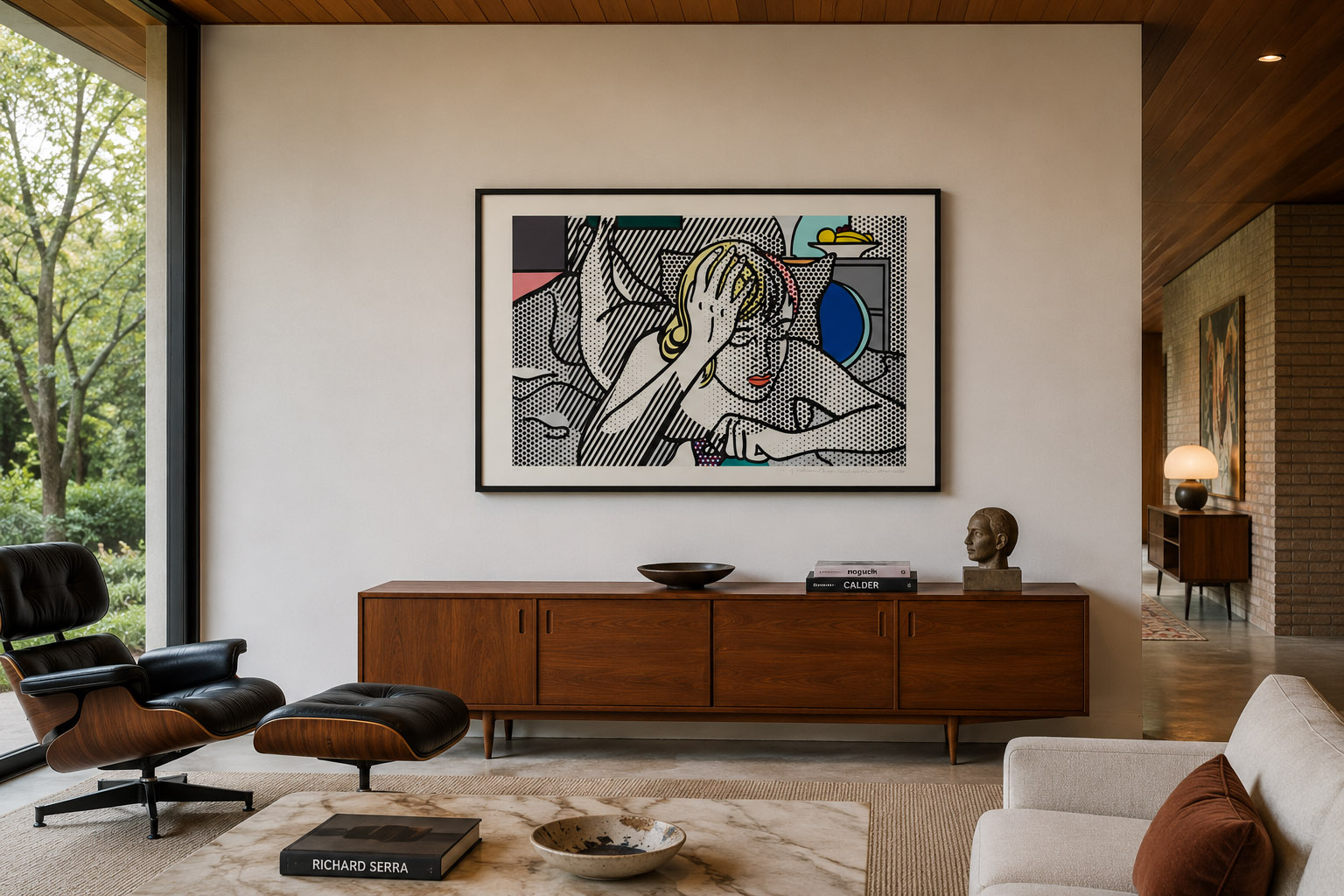
Thinking Nude (Corlett 289): Reflection and Introspection
Perhaps the most contemplative image of the series, Thinking Nude presents a solitary figure seemingly lost in thought. Lichtenstein strips the traditional reclining nude of sentimentality and instead constructs a highly ordered arrangement of line, color, and pattern.
The figure becomes both subject and symbol—a modern reinterpretation of centuries of artistic tradition that invites viewers to consider not simply what they see, but how they see it.
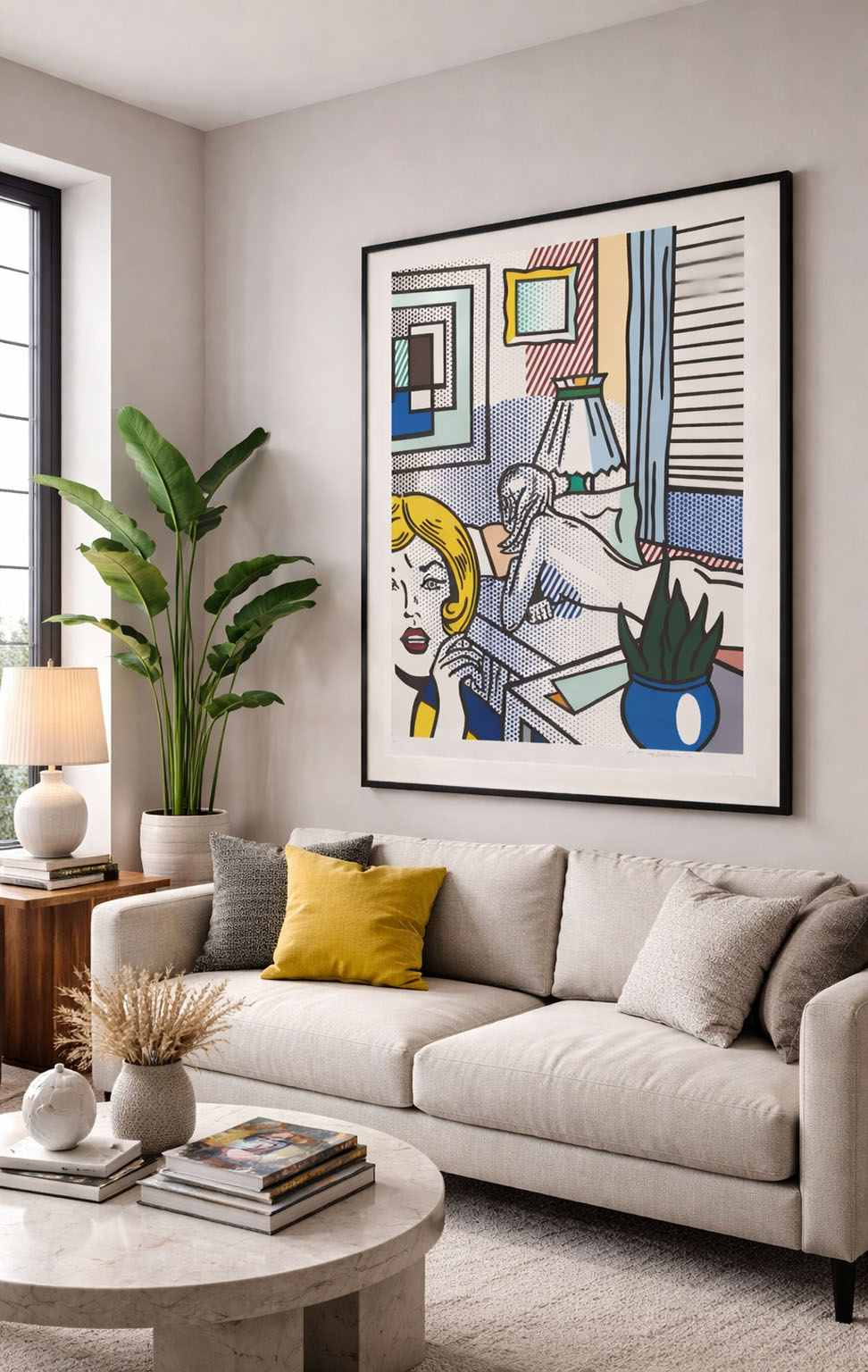
Roommates (Corlett 287): Fragmented Space, Layered Narrative
Roommates is among the most ambitious compositions in the series. At nearly five feet tall, its scale alone sets it apart from most of Lichtenstein’s printed output.
The composition unfolds across multiple visual planes:
- A reclining nude rendered in Lichtenstein’s signature Ben-Day dots
- A cropped comic-style female face
- Windows, frames, and geometric forms
- Multiple overlapping perspectives
Rather than presenting a unified interior, Lichtenstein compresses space into an elegant collage of viewpoints, creating a work that rewards repeated viewing.
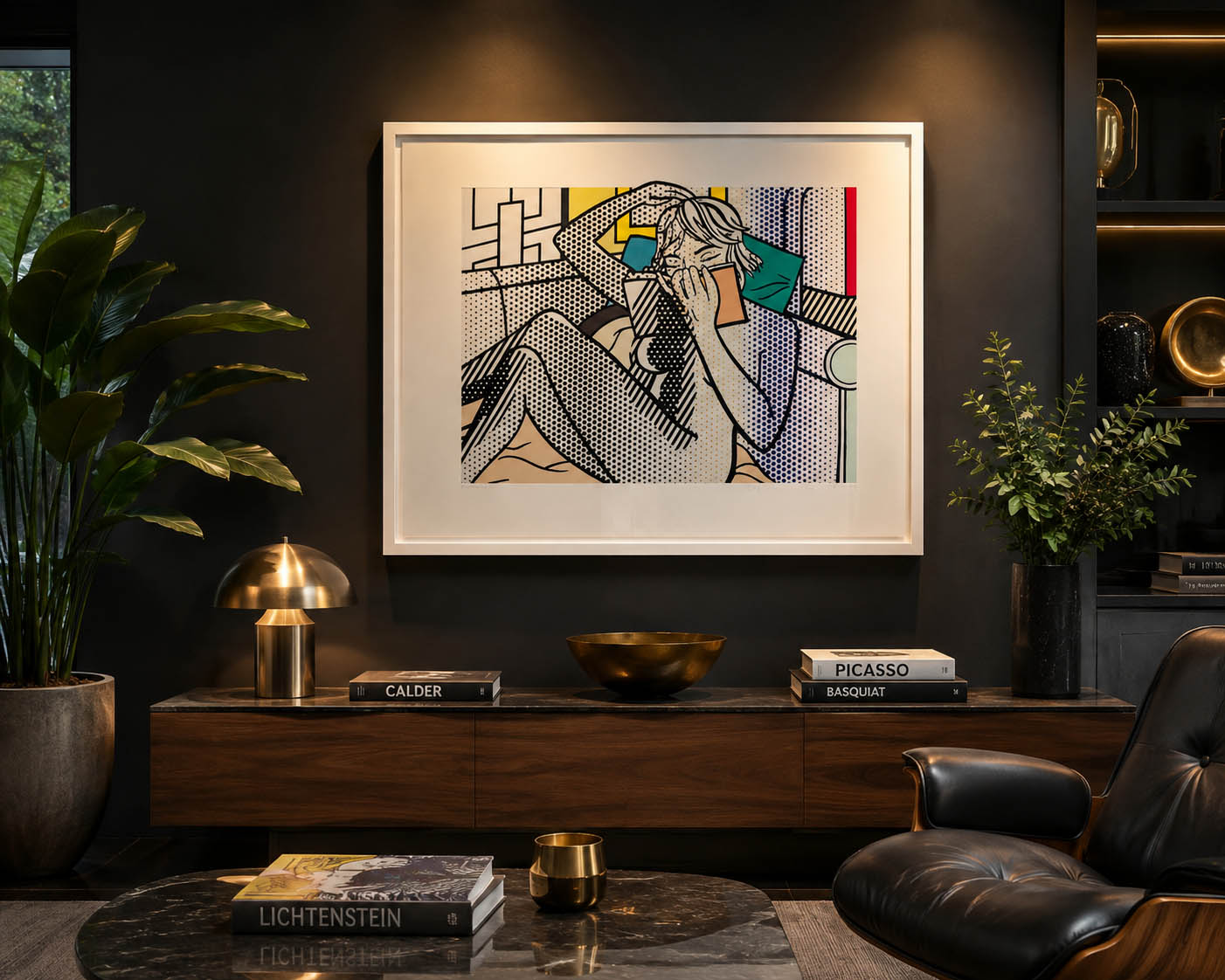
Nude Reading (Corlett 288): Quiet Modernism
Nude Reading introduces a rare sense of stillness within the series. The figure appears absorbed in her book, creating an intimate moment that contrasts with the visual energy surrounding her.
Here, Lichtenstein demonstrates remarkable restraint, balancing decorative pattern, architectural structure, and graphic abstraction into a composition that recalls both Matisse’s interiors and Picasso’s late figurative works while remaining unmistakably his own.
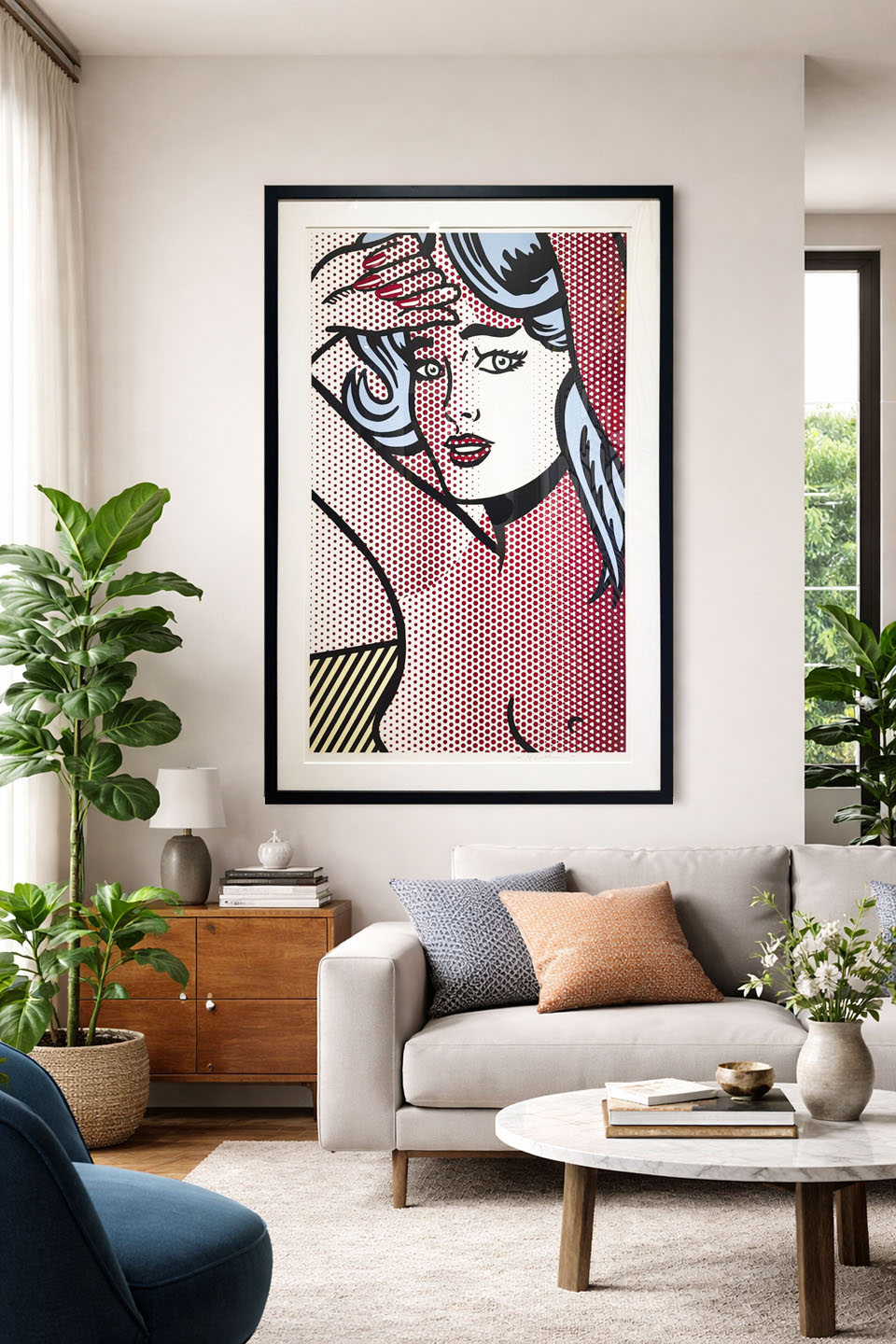
Nude with Blue Hair (Corlett 286): The Icon
Arguably the signature image of the entire series, Nude with Blue Hair distills the female figure to its essential visual elements.
The electric blue hair immediately commands attention, becoming both compositional anchor and psychological focal point. Rather than portraying an individual, Lichtenstein creates an icon—an image simultaneously emotional and detached.
Its remarkable balance of simplicity, color, and graphic precision has made it one of the most sought-after prints in the artist’s graphic oeuvre and a cornerstone for many important Pop Art collections.
SOLD
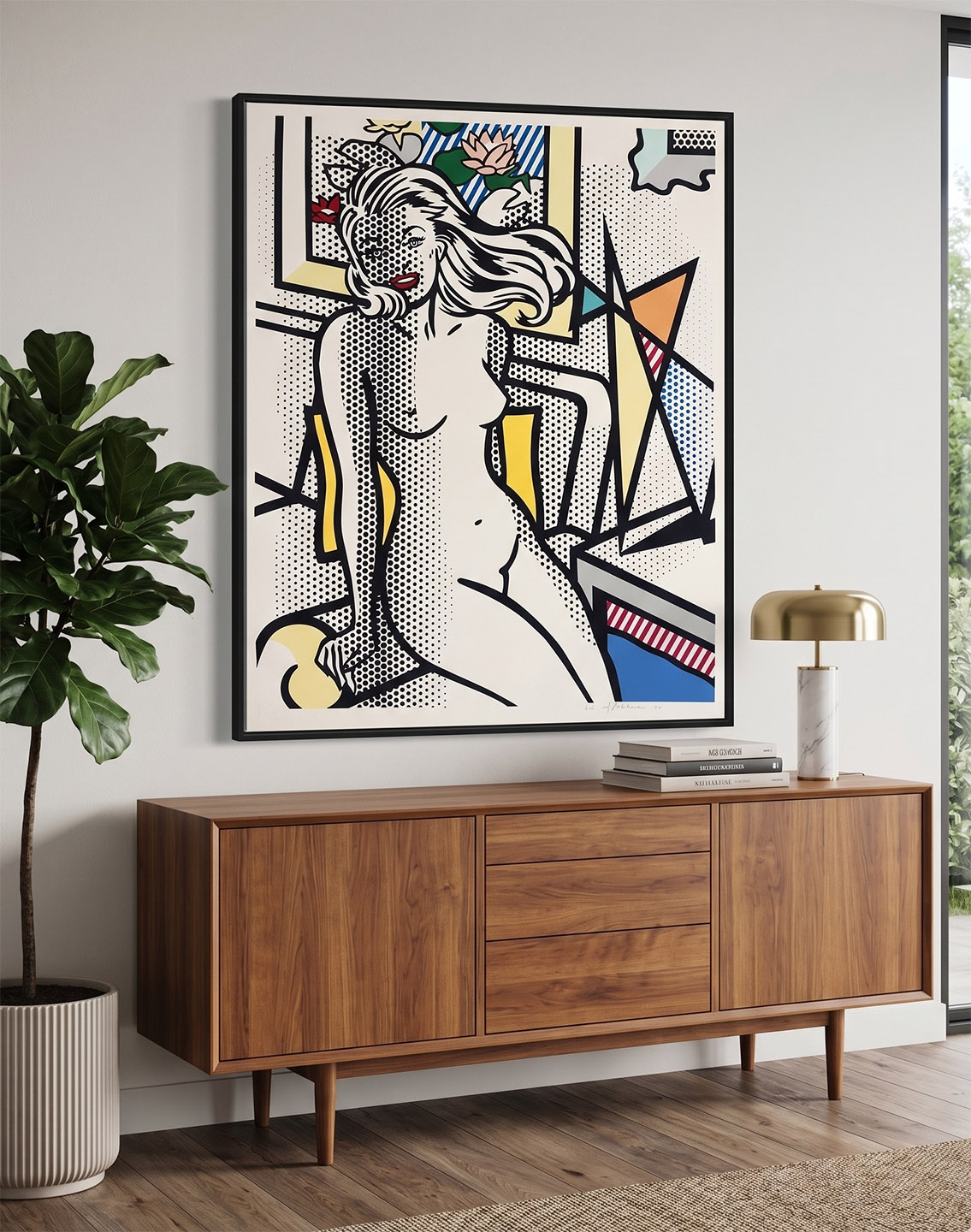
Nude with Yellow Pillow (Corlett 283): Balance and Harmony
Nude with Yellow Pillow demonstrates Lichtenstein’s extraordinary command of composition. The vivid yellow pillow anchors the image while providing a striking counterpoint to the cool blue hair and rhythmic fields of Ben-Day dots.
The work seamlessly combines references to the reclining nudes of art history with the visual immediacy of contemporary graphic design. The result is a composition that feels simultaneously timeless and unmistakably modern.
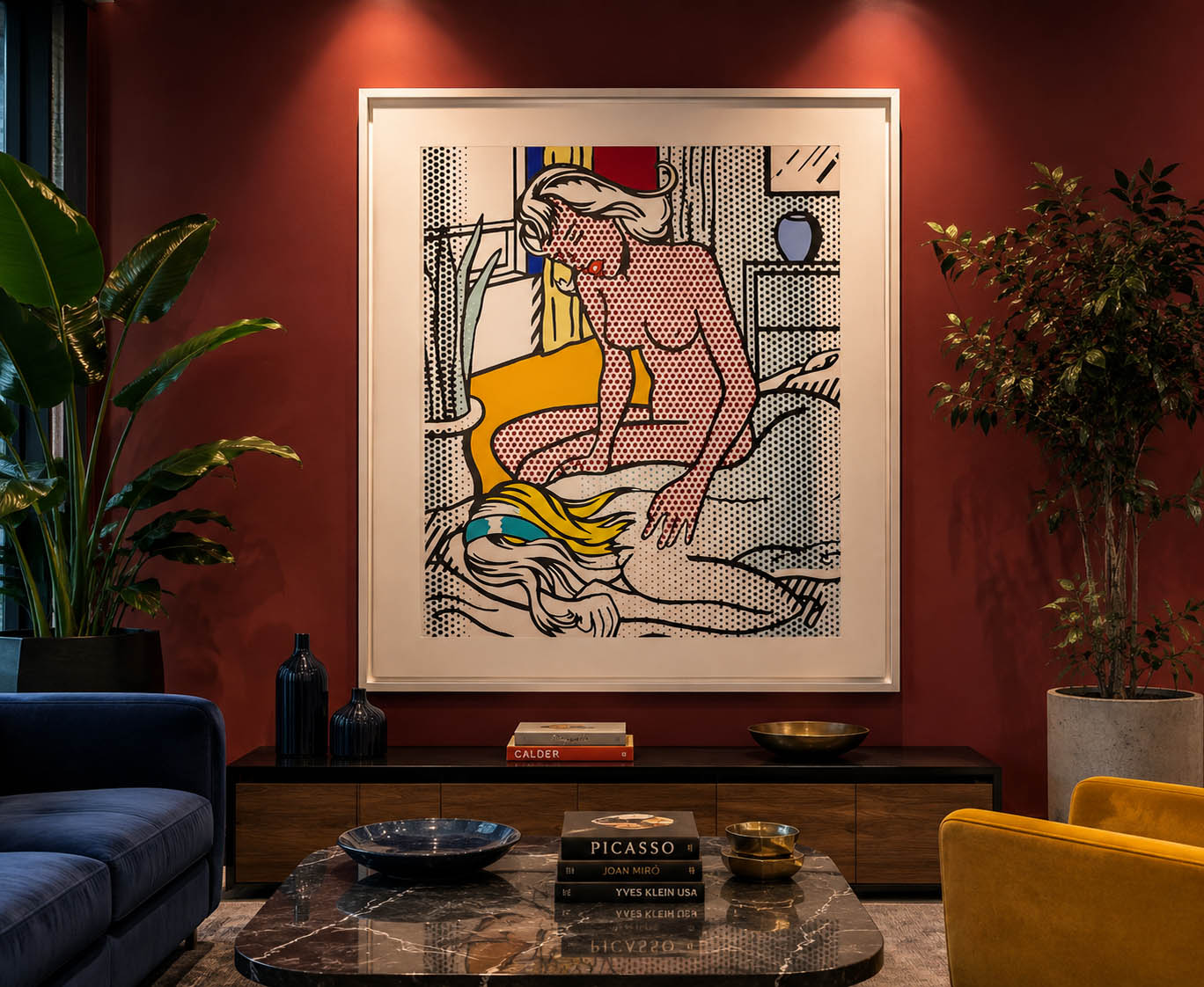
Two Nudes (Corlett 284): Dialogue and Design
Unlike the solitary figures elsewhere in the series, Two Nudes introduces a relationship between its subjects.
Lichtenstein creates visual rhythm through repetition, contrasting poses, and carefully orchestrated color relationships. Rather than functioning as portraiture, the figures become compositional elements that interact across the picture plane.
The work reflects the artist’s lifelong fascination with serial imagery and demonstrates how even slight variations in line, color, and form can dramatically alter visual meaning.
PRICE: on request
Why the Nudes Series Matters
The Nudes series represents the culmination of Roy Lichtenstein’s graphic career.
By 1994, he had moved beyond the comic-strip appropriations that first defined Pop Art, synthesizing decades of experimentation into works of remarkable confidence and sophistication. These prints combine technical mastery, monumental scale, and conceptual depth unlike any other edition in his catalogue raisonné.
Produced in relatively small editions by Tyler Graphics, they remain among the most desirable contemporary prints available to collectors today.
Their rarity, museum-quality production, and importance within Lichtenstein’s late career have made the series a cornerstone of major private and institutional collections worldwide.
Collecting Roy Lichtenstein’s Nudes
Today, examples from the Nudes series seldom appear on the market, and complete, well-preserved impressions have become increasingly difficult to source.
Whether considering the iconic Nude with Blue Hair, the architectural complexity of Roommates, the refined elegance of Nude with Yellow Pillow, the contemplative Thinking Nude, the quiet intimacy of Nude Reading, or the dynamic composition of Two Nudes, collectors are acquiring far more than exceptional prints.
They are acquiring one of the defining achievements of late twentieth-century printmaking—a series that encapsulates Roy Lichtenstein’s lifelong exploration of image, perception, and the enduring power of visual culture.
For pricing and availability, please contact reed@robinrile.com