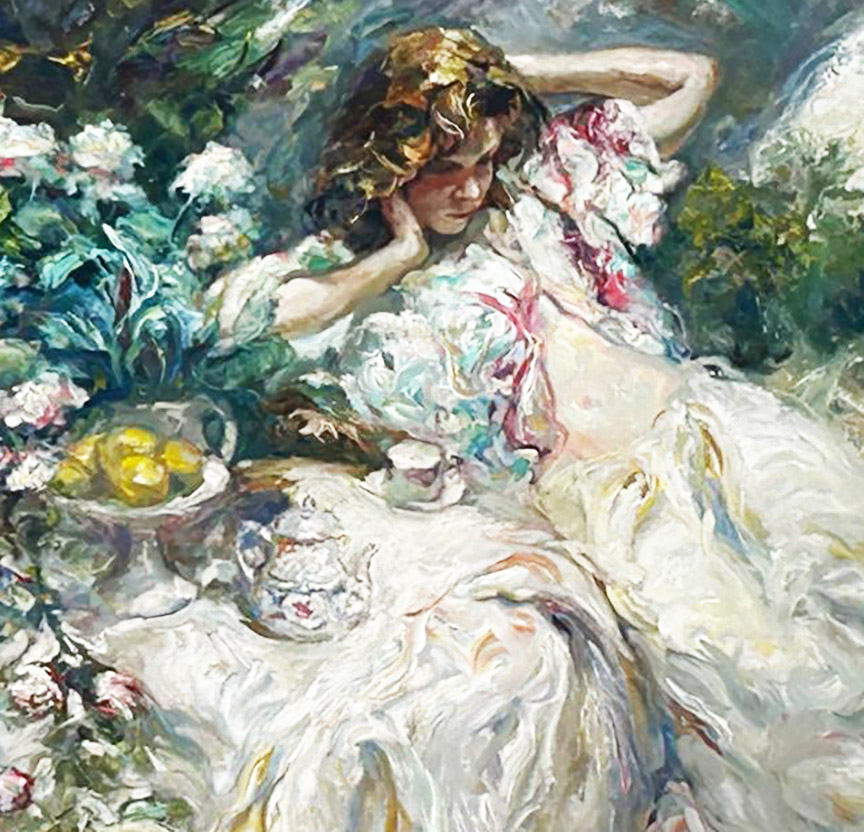
There are certain paintings that don’t announce themselves loudly. They don’t compete for attention so much as they wait quietly, patiently, until the viewer is ready to meet them where they are.
This pair of oils by José Royo, painted in 2011, belongs to that category.
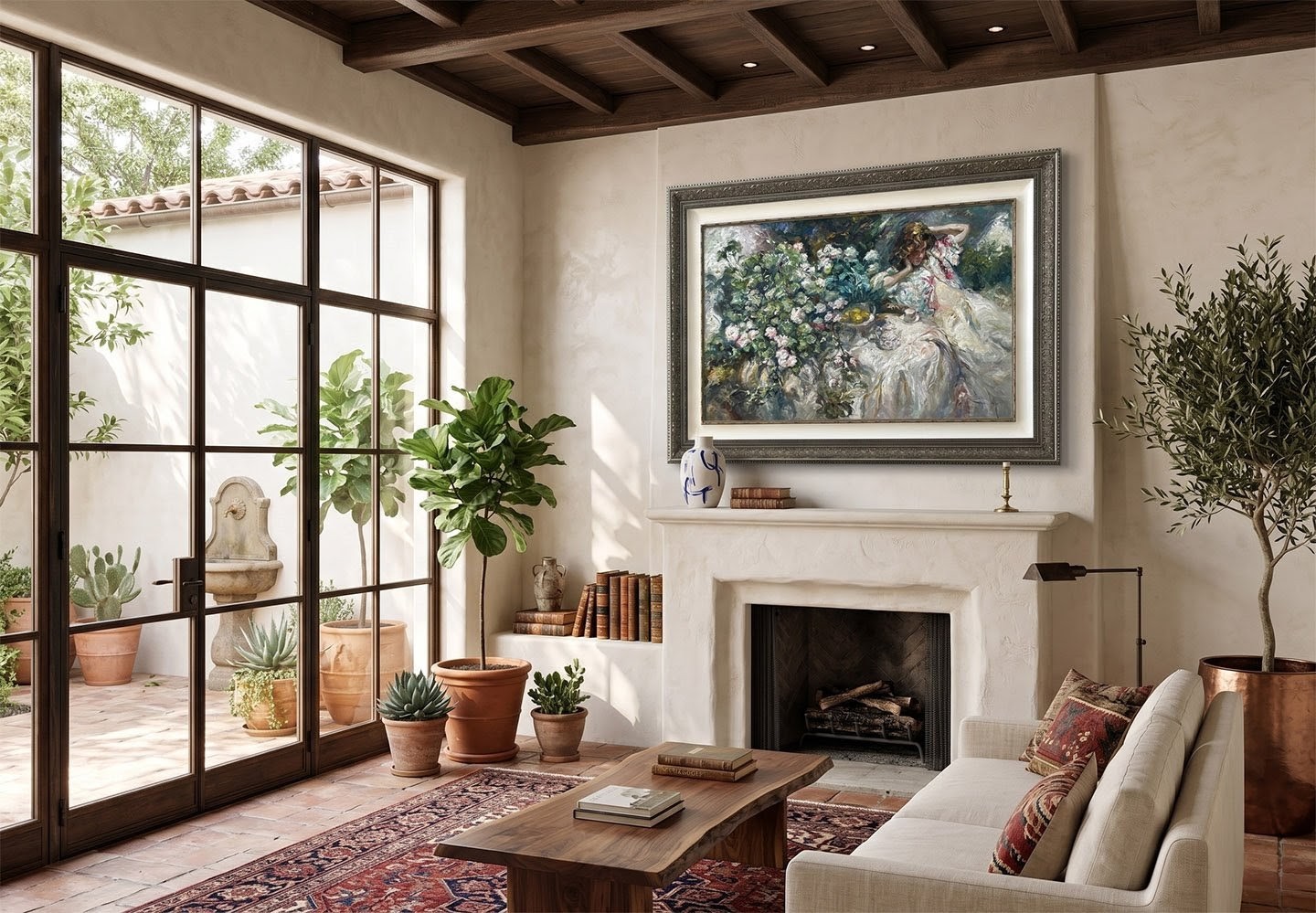
At first glance, they are unmistakably beautiful. Figures softened by light. Florals that seem to breathe rather than decorate. A palette that leans into warmth, comfort, and familiarity. But what lingers, what stays with you long after you’ve stepped away, is something quieter, more internal. A sense of stillness. A pause.
And perhaps that is where these works resonate most deeply with those whose lives are anything but still.
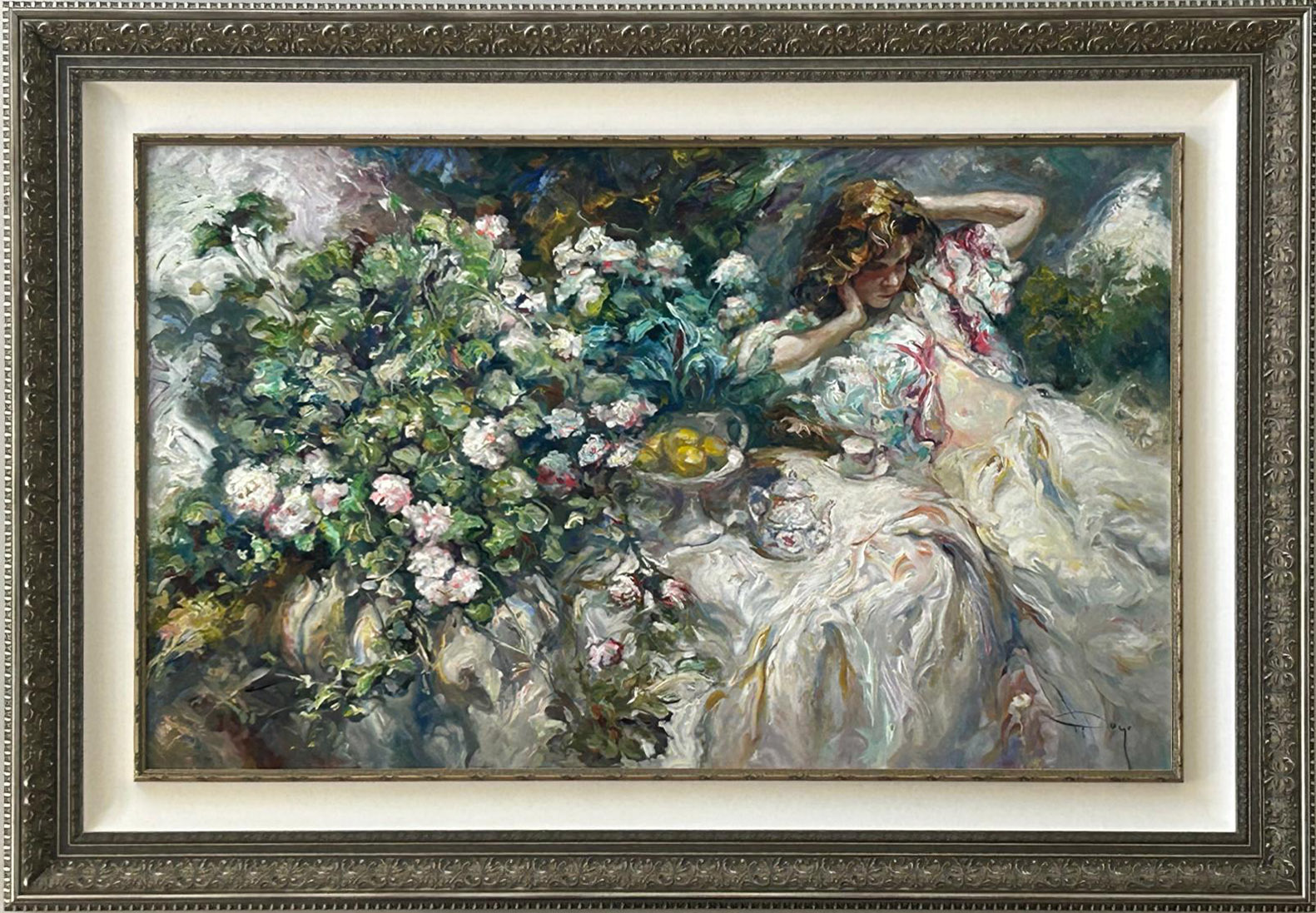
Desayuno en Blancas, opens outward. The horizontal expanse allows the figure to recline into space, surrounded by light and softness. It feels like morning—not in a literal sense, but in the emotional one. A beginning. A moment before the day asks anything of you.
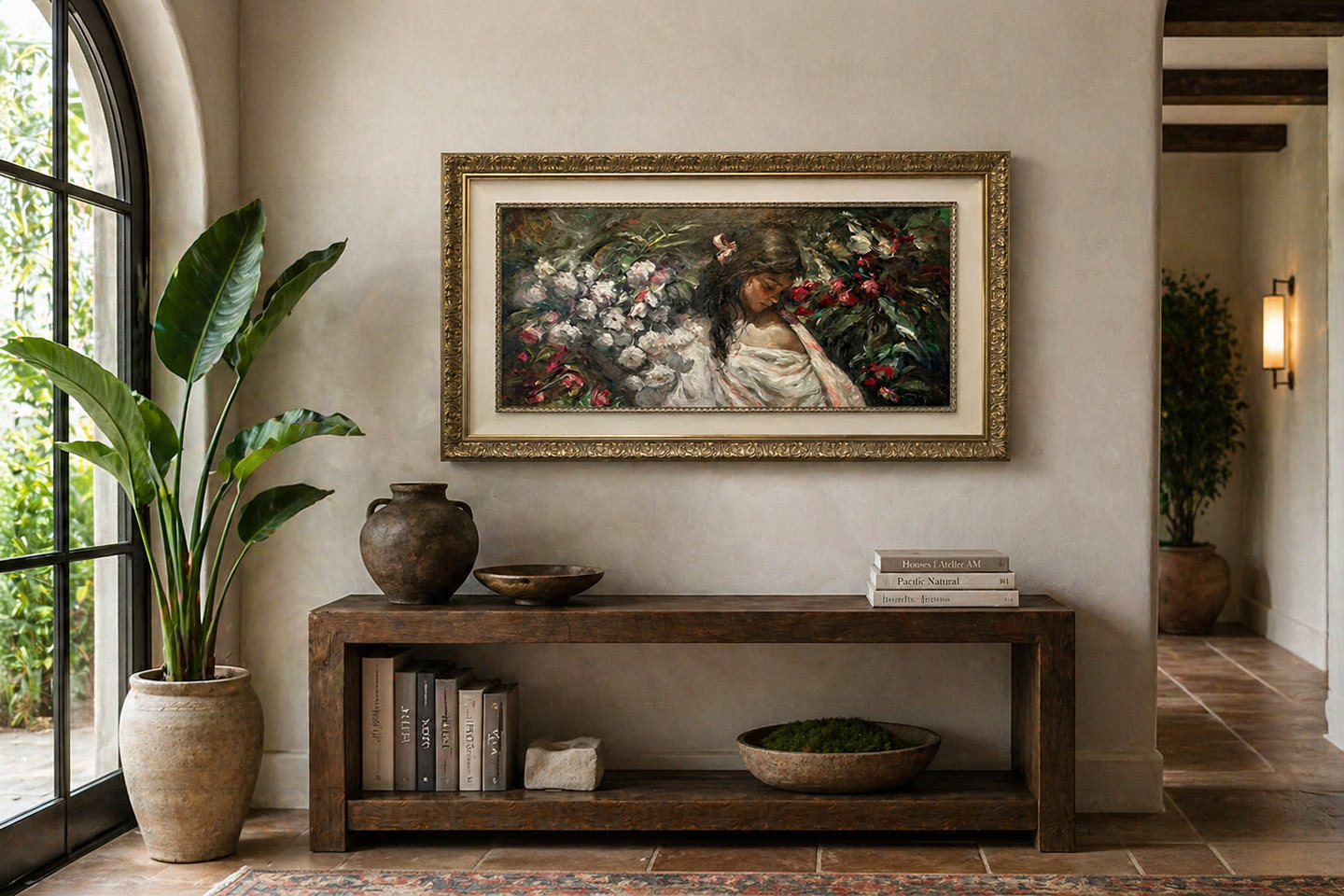
In Entre Flores, by contrast, draws the eye inward. The figure is partially obscured, held, almost protected, by a cascade of blossoms. There is no demand being made of the viewer. No tension to resolve. Just a gentle invitation to slow down. To observe. To breathe.
Together, the two works form a quiet dialogue: inward and outward, shelter and release, introspection and ease.
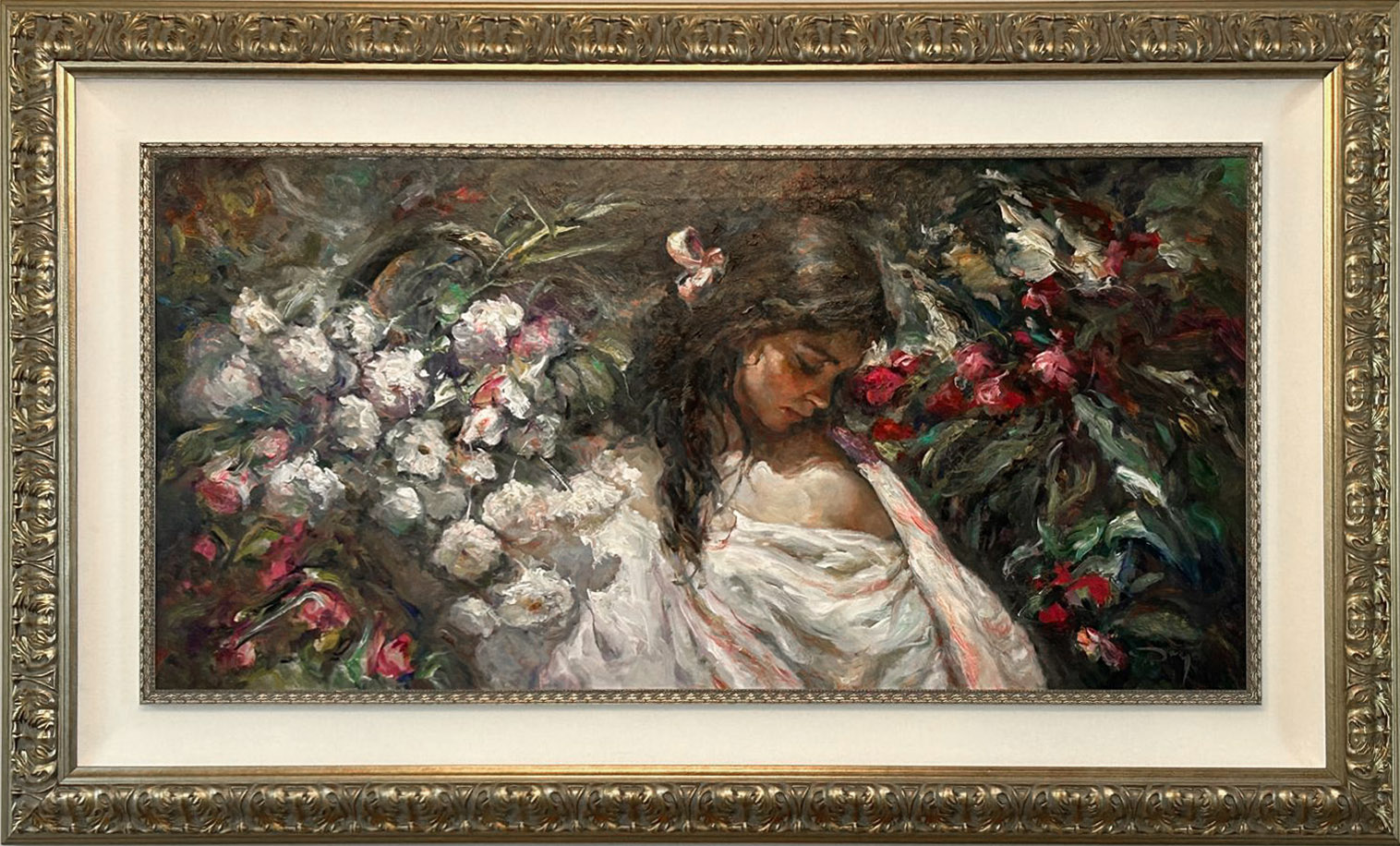
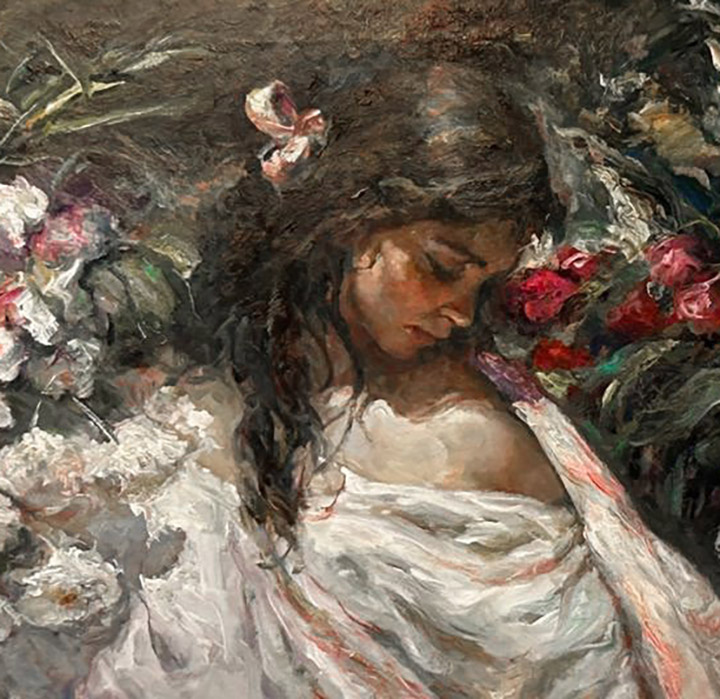
Royo’s brushwork plays an important role here. It is confident but never rigid. Forms dissolve at the edges, colors bleed into one another, and the boundaries between figure and environment soften. There is a looseness that feels intentional—an acceptance that not everything needs to be sharply defined to be fully understood.
That idea, in itself, carries weight.
In a world where precision is often required, where clarity can be the difference between outcomes, there is something quietly powerful about a space that allows for ambiguity. For softness. For the in-between.
These paintings do not demand interpretation. They offer something rarer: permission.
Permission to pause.
Permission to feel without analysis.
Permission to exist, briefly, outside of obligation.
It’s no coincidence that collectors who live highly structured, high-stakes lives often gravitate toward works like these. Not because they lack beauty, far from it, but because their beauty is not exhausting. It restores rather than stimulates.
Placed within a home, these paintings don’t just occupy wall space. They change the rhythm of a room. They create a moment, sometimes the only one in a day, where the pace slows just enough to notice it.
And in that sense, their value extends well beyond the canvas.
They become, quietly and consistently, a form of balance.