Roy Lichtenstein (American, 1923–1997)
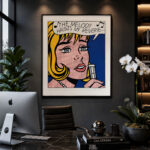
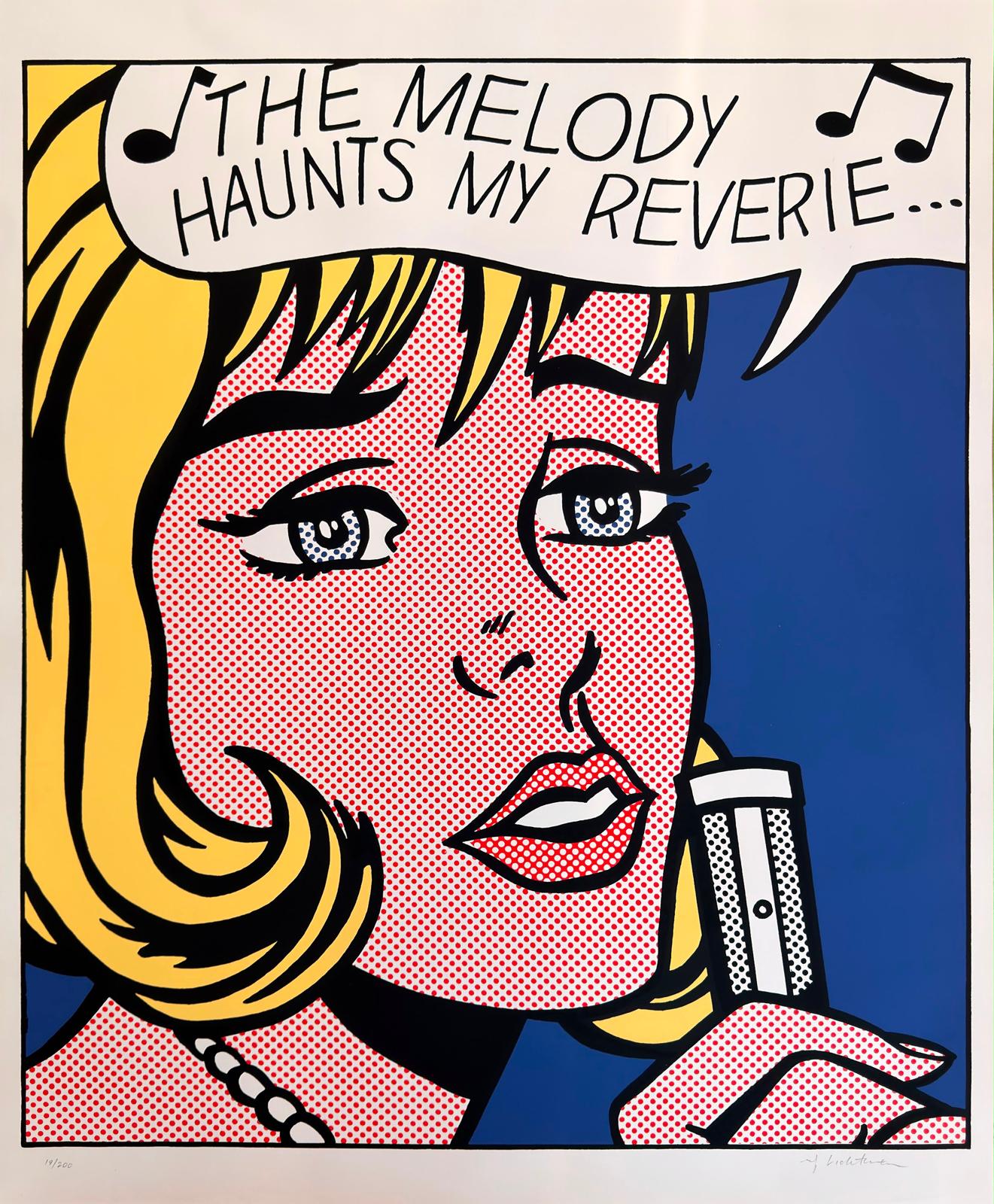
Reverie (The Melody Haunts My Reverie), 1965
Color screenprint on smooth white wove paper
Sheet: 30 1/8 × 24 in. (76.5 × 60.9 cm)
Image: 27 1/16 × 22 15/16 in. (68.7 × 58.3 cm)
Signed in pencil lower right
Numbered edition of 200 lower left
From the portfolio 11 Pop Artists, Volume II
Published by Original Editions, New York
Printed by Knickerbocker Machine & Foundry, Inc., New York
Catalogue Raisonné: Corlett 38; RLCR 1132; Bianchini 10
Provenance: Private Collection, Europe
Price: on request
About the Work
Few images capture the visual language of Roy Lichtenstein—or the emergence of American Pop Art—as immediately as Reverie.
Created in 1965, at the height of Lichtenstein’s revolutionary engagement with comic-book imagery, Reverie brings together virtually every element for which the artist became celebrated: brilliant primary color, mechanical Ben-Day dots, heavy black contours, a glamorous blonde heroine, heightened emotion, and a fragment of text removed from its original narrative and transformed into something wonderfully enigmatic.
Above the woman’s wistful expression float the words:
“THE MELODY HAUNTS MY REVERIE…”
The phrase derives from Hoagy Carmichael and Mitchell Parish’s celebrated American standard Stardust. Removed from the song and placed within Lichtenstein’s comic-book universe, the lyric becomes simultaneously romantic, nostalgic and strangely cinematic. We know almost nothing about the woman or what—or whom—she is remembering. Lichtenstein gives us only a single suspended moment and allows us to construct the story ourselves.
This tension between mass-produced imagery and genuine human emotion lies at the heart of Lichtenstein’s greatest work.
The artist had begun appropriating and radically transforming imagery from romance and war comics only a few years earlier. By 1965, this vocabulary had become unmistakably his own. Lichtenstein enlarged the visual devices of inexpensive commercial printing—particularly the Ben-Day dot—until the mechanics of reproduction themselves became part of the subject.
In Reverie, the result is especially powerful. The heroine’s face is built from hundreds of regimented red dots, yet her sideways glance and parted lips suggest something intensely personal. Lichtenstein turns the supposedly disposable language of popular culture into an image about memory, longing and desire.
An Important Early Pop Print
Reverie was created for the landmark 11 Pop Artists, Volume II portfolio, published by Original Editions in New York in 1965.
The project brought together leading figures of the emerging Pop movement and included three now-celebrated contributions by Lichtenstein: Reverie, Sweet Dreams, Baby! and Moonscape.
These works belong to an especially important moment in the artist’s career. Lichtenstein had held his first solo exhibition with Leo Castelli only a few years earlier, and by the middle of the decade his distinctive comic-inspired paintings had helped fundamentally alter the course of postwar American art.
Unlike later interpretations of his imagery, Reverie therefore comes directly from the period in which Lichtenstein was inventing the visual language for which he would become internationally recognized.
Examples of Reverie are represented in important institutional collections, underscoring the image’s significance within both Lichtenstein’s graphic oeuvre and the broader history of Pop Art.
The Present Impression
This example is from the edition of 200, signed by Roy Lichtenstein in pencil.
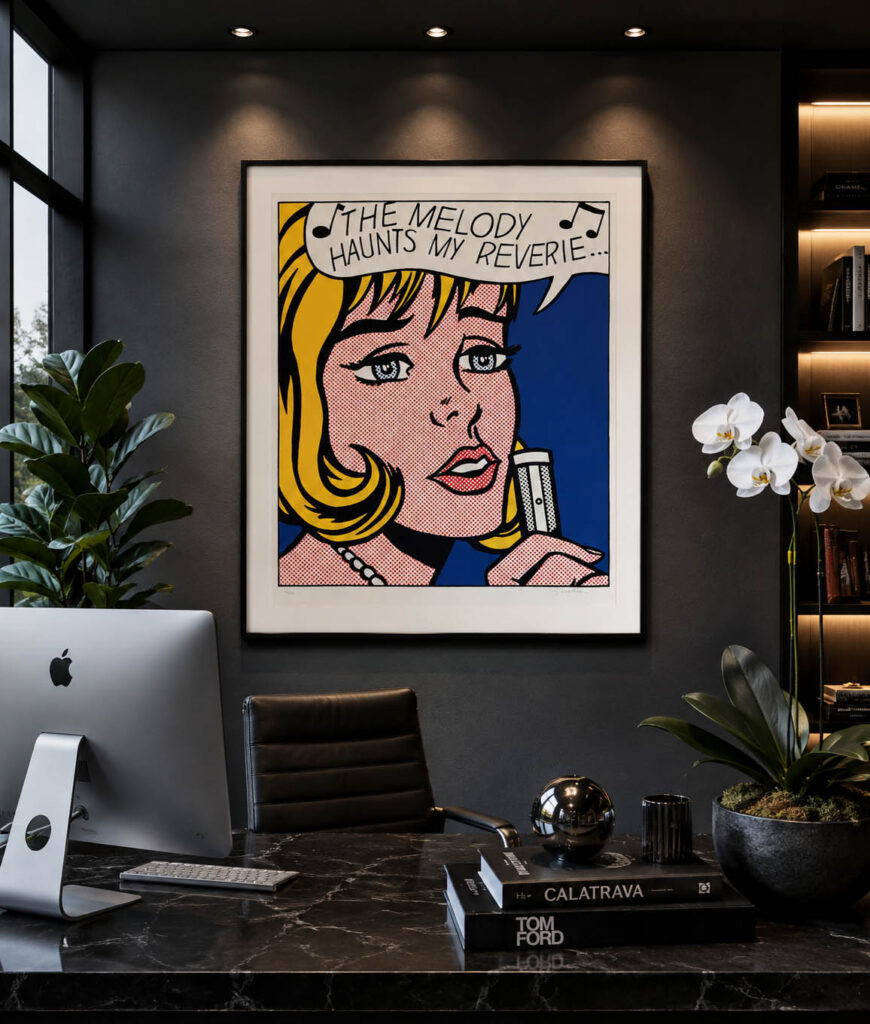
Its generous scale—approximately 30 × 24 inches—allows the image to retain much of the graphic impact associated with Lichtenstein’s paintings while remaining particularly versatile for a residential collection.
More than sixty years after its creation, Reverie remains remarkably contemporary. It is immediately recognizable from across a room, yet rewards closer viewing through the extraordinary tension between its mechanically rendered surface and deeply human subject.