One of the most reproduced artists in the world actually made remarkably few prints during his lifetime. And that makes the ones he did create all the more fascinating.
When you think of Jean-Michel Basquiat (1960–1988), you probably picture his explosive paintings filled with crowns, skulls, mysterious symbols, and frantic handwritten observations. What you probably don’t think about is printmaking.
And there’s a good reason for that.
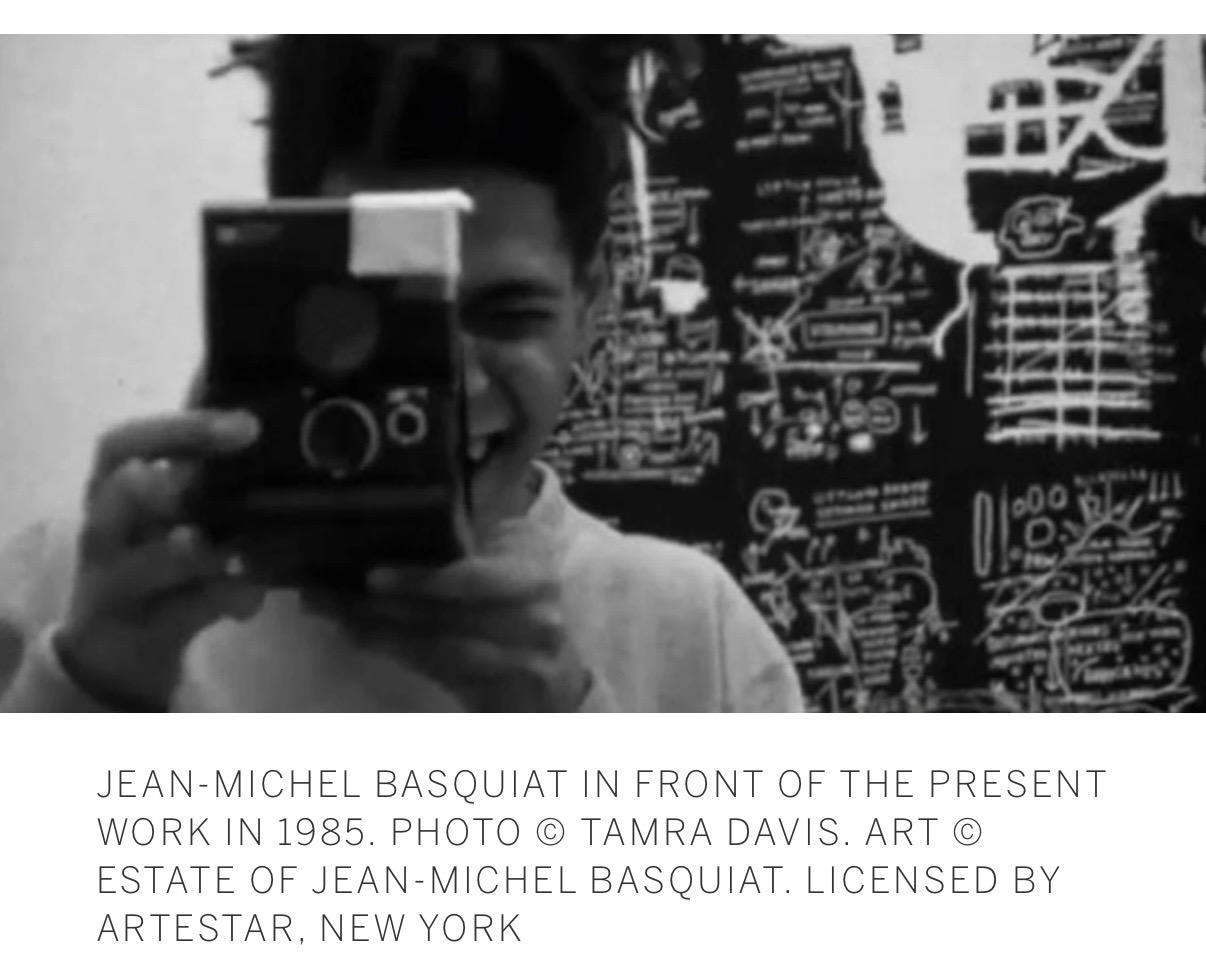
Unlike his friend Andy Warhol, who turned screenprinting into an art form of its own, Basquiat produced only a small number of print projects during his brief career. He preferred the spontaneity of painting and drawing, where every mark, mistake, and unexpected discovery became part of the finished work.
But when Basquiat did make prints, he certainly didn’t think small.
Big Art. Tiny Editions.
In 1983, Basquiat collaborated with Fred Hoffman and New City Editions in Venice, California, creating extraordinary large-scale silkscreens on canvas.
Among them were Tuxedo and Untitled, monumental compositions that captured the energy and complexity of his paintings.
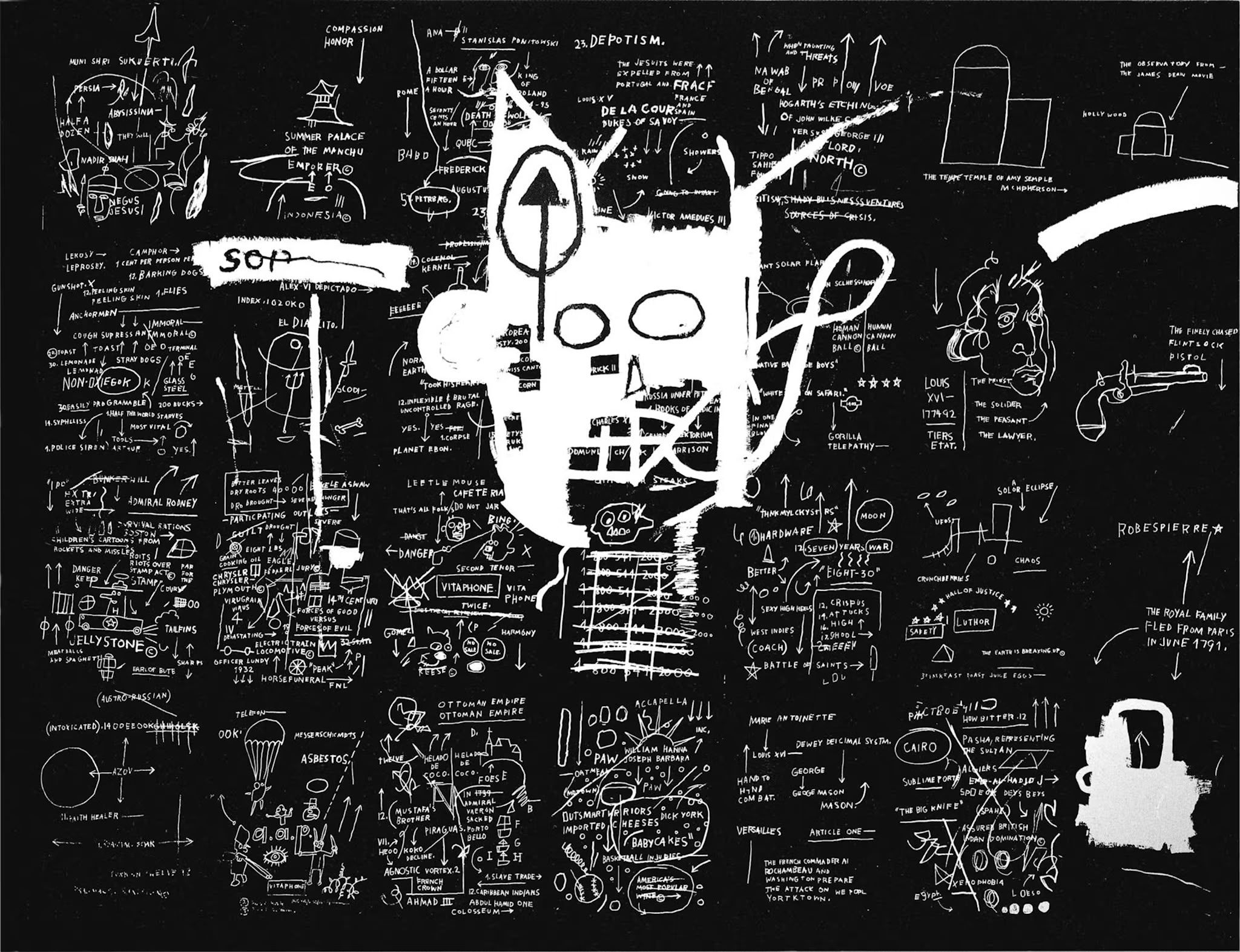
One particularly striking Untitled features a large white skull-like figure surrounded by an explosion of handwritten notes, arrows, anatomical references, and historical observations. Measuring more than six feet wide, it was produced in an edition of just 10, plus two artist’s proofs.
Not exactly your typical print!
These works were created during Basquiat’s lifetime, with his participation, and have since earned places in important collections, including New York’s Museum of Modern Art.
Lifetime vs. Posthumous: An Important Distinction
Today, collectors encounter numerous Basquiat prints featuring his iconic imagery. However, many were produced after his death in 1988, with authorization from his estate.
While these posthumous editions have their own appeal, they are fundamentally different from prints Basquiat actually helped create.
His lifetime editions offer a rare connection to the artist’s working process during the remarkable years when he was redefining contemporary art.
The Ultimate Irony
Basquiat’s crowns, skulls, and scribbled observations have become some of the most recognizable images in modern culture. They appear on everything from museum walls to fashion collaborations.
Yet the artist himself produced remarkably few original print editions.
For an artist whose images are seemingly everywhere, his lifetime prints are surprisingly hard to find.
And perhaps that’s the most Basquiat thing of all: even when working in multiples, he managed to make something extraordinary.
Robin Rile Fine Art | Perspectives on Modern & Contemporary Art