

Roy Lichtenstein (American, 1923–1997)
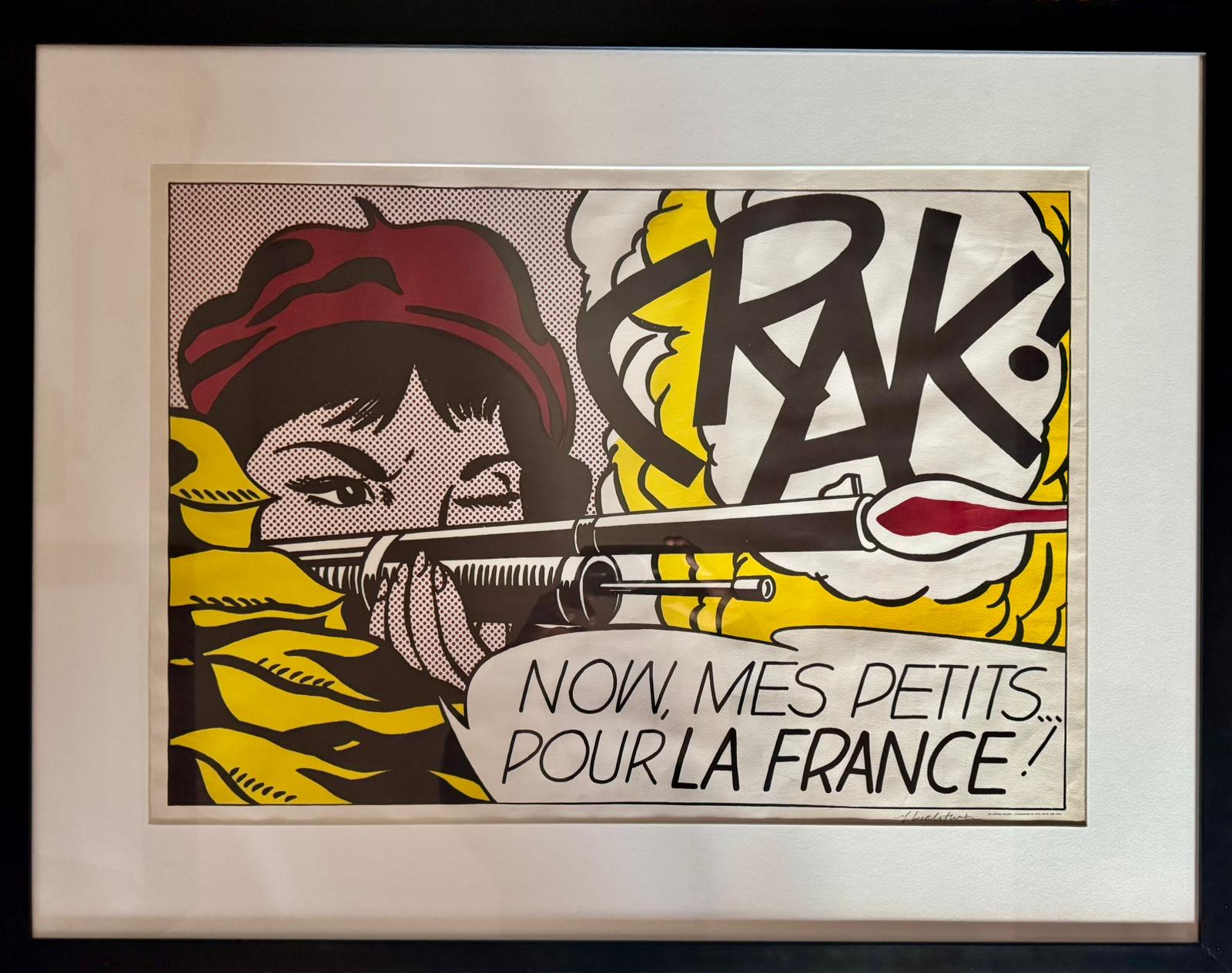
CRAK!, 1963/1964
Offset lithograph in colors on lightweight wove paper
Image: 18 5/8 × 27 1/16 in. (47.3 × 68.7 cm)
Sheet: 19 1/4 × 27 5/8 in. (48.9 × 70.2 cm)
Framed: approximately 24 7/8 × 33 3/8 in. (63.2 × 84.8 cm)
Signed and dated 1964 in pencil
From the edition of 300
Printed by Colorcraft, New York
Published by Leo Castelli Gallery, New York
Catalogue Raisonné: Corlett II.2; RLCR 812
Condition: Very good
Professionally framed
Price: on request
About the Work
Few early prints capture the explosive energy of Roy Lichtenstein’s breakthrough Pop period quite as effectively as CRAK!
Created in 1963/1964, the image belongs to the remarkable moment when Lichtenstein transformed the seemingly disposable visual language of comic books into one of the defining vocabularies of postwar American art.
A glamorous female figure peers down the barrel of a rifle while an enormous “CRAK!” erupts behind her. Lichtenstein compresses the entire narrative into a single frozen instant: heroine, weapon, explosion and text collide within a tightly constructed composition of brilliant yellow, red and black.
The accompanying speech balloon—
“NOW, MES PETITS… POUR LA FRANCE!”
—adds an almost cinematic quality to the scene. We have entered the action midway through the story, without knowing precisely what preceded it or what will happen next.
That ambiguity was fundamental to Lichtenstein’s early comic-derived imagery. By removing an individual panel from its original narrative and radically enlarging and simplifying it, he transformed commercial illustration into something simultaneously familiar, monumental and strangely mysterious.
An Icon of Lichtenstein’s Early Pop Period
CRAK! has particular historical importance within Lichtenstein’s graphic oeuvre.
The image was created in connection with the artist’s second solo exhibition at the legendary Leo Castelli Gallery in New York, held from September 28 through October 24, 1963. Lichtenstein’s equally celebrated Crying Girl was produced in connection with the same exhibition.
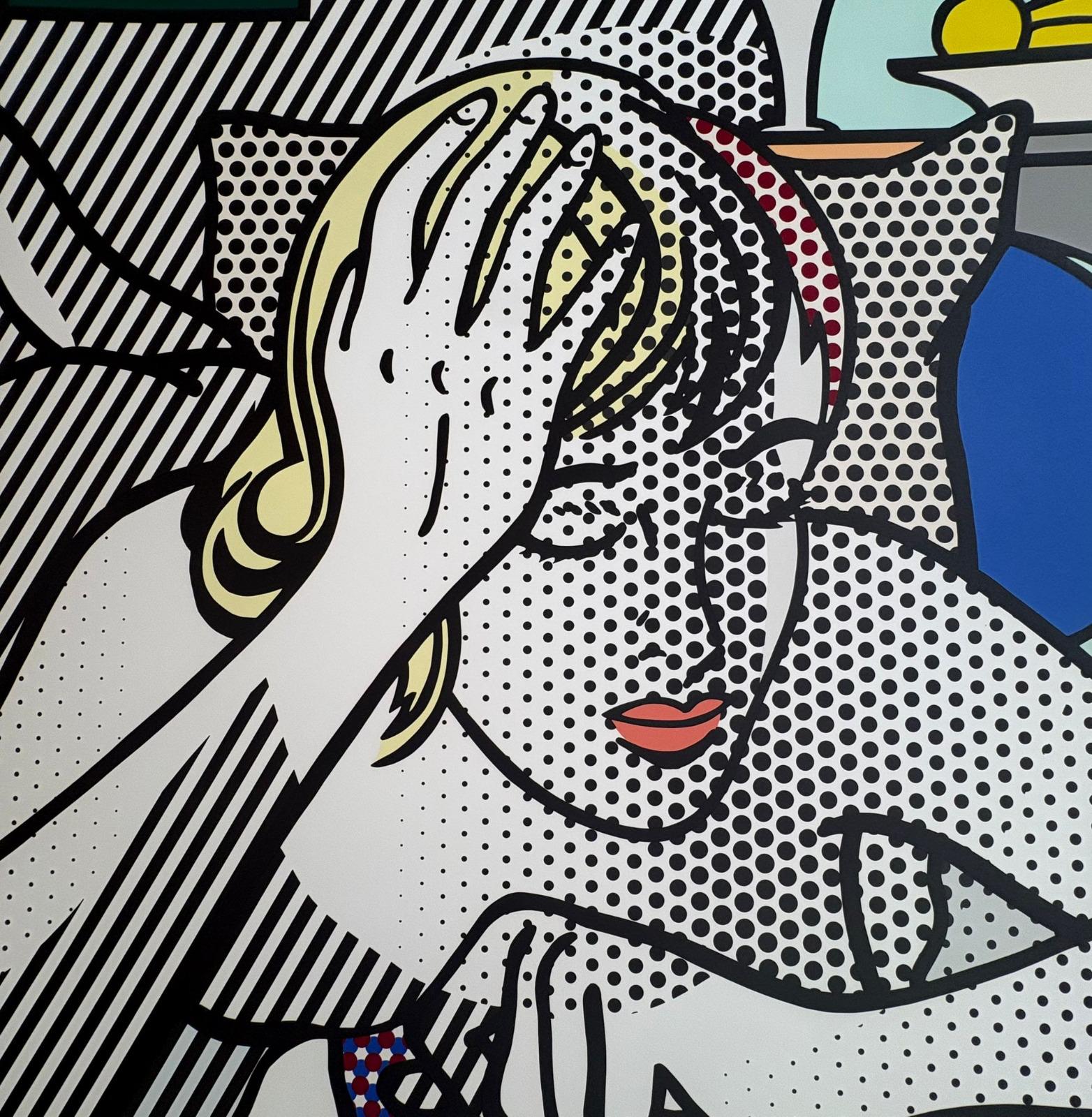
This was an extraordinary period in the artist’s career. Only a few years earlier, Lichtenstein had begun appropriating imagery from romance, war and adventure comics. By 1963, his distinctive vocabulary—Ben-Day dots, primary colors, heavy black outlines, speech balloons and dramatically isolated comic-book imagery—had become unmistakably his own.
Rather than concealing the mechanics of commercial reproduction, Lichtenstein made them the subject. The regimented red dots across the woman’s face, flat areas of brilliant yellow and thick black contours mimic inexpensive mass printing while simultaneously transforming it into fine art.
CRAK! therefore comes not from a later revisiting of Lichtenstein’s famous comic-book vocabulary, but from the period in which he was actively inventing it.
The Leo Castelli Edition
The present work belongs to the signed and numbered edition of 300, published by Leo Castelli Gallery, New York, and printed by Colorcraft, New York.
Importantly, this edition should be distinguished from the various poster editions of the same image that were also produced in connection with the Castelli exhibition. The signed and numbered edition of 300 is separately documented in the definitive Roy Lichtenstein Catalogue Raisonné as RLCR 812 / Corlett II.2.
The work is hand signed and dated 1964 by Roy Lichtenstein in pencil.
More than sixty years after its creation, CRAK! retains everything collectors seek in an early Lichtenstein: the beautiful comic-book heroine, Ben-Day dots, primary colors, bold typography, action imagery and the unmistakable visual wit of American Pop Art.
It is an immediately recognizable image from one of the most consequential periods of Lichtenstein’s career—and an exceptionally engaging way to acquire an original signed work from the artist’s classic early Pop period.