

Andy Warhol (American, 1928–1987)
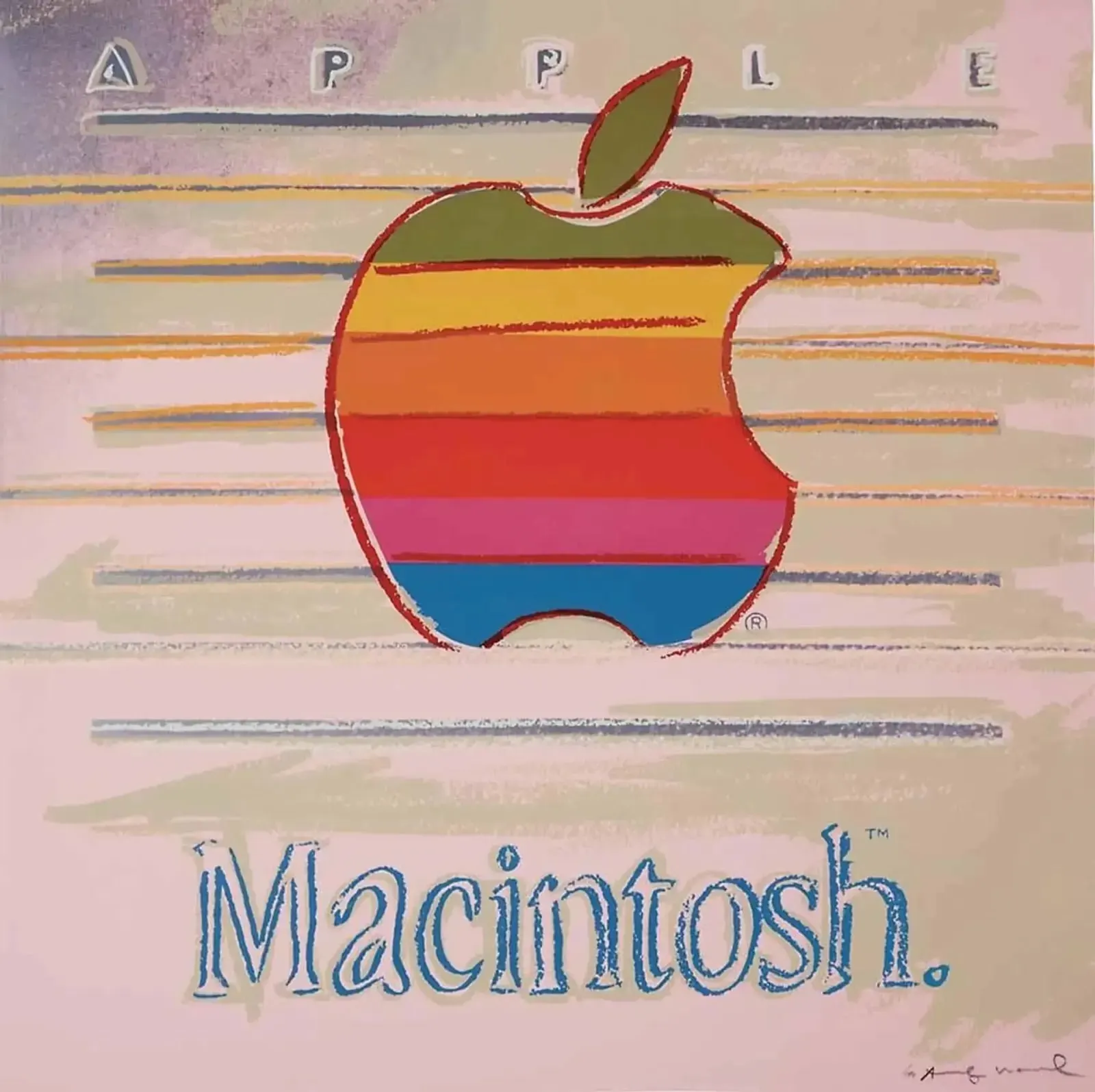
Apple, from Ads, 1985
Screenprint in colors on Lenox Museum Board
38 × 38 in. (96.5 × 96.5 cm)
Signed and numbered in pencil
Edition of 190, plus 30 artist’s proofs
Printed by Rupert Jasen Smith, New York
Published by Ronald Feldman Fine Arts, Inc., New York
Feldman & Schellmann II.359
PRICE: on request
Description
Created in 1985, Andy Warhol’s Apple is one of the most recognizable images from his celebrated Ads portfolio, in which the artist transformed icons of advertising and consumer culture into works of fine art.
Warhol depicts Apple Computer’s now legendary rainbow-striped logo above the word “Macintosh,” capturing the company at an extraordinary moment in its history. Apple had introduced the original Macintosh only the previous year, in 1984, making Warhol’s choice of subject remarkably prescient. What was then the identity of a young technology company would ultimately become one of the most recognizable corporate symbols in the world.
The subject was also personally relevant to Warhol. In 1985, Steve Jobs demonstrated a Macintosh computer to Warhol at Sean Lennon’s birthday party, an encounter Warhol later recorded in his diaries. Warhol—who had spent his career exploring the intersection of art, celebrity, commerce and mass communication—was fascinated by the possibilities of the new technology.
Apple belongs to Warhol’s 1985 Ads portfolio, a suite of ten screenprints appropriating imagery from some of the most recognizable brands and advertisements of the twentieth century. Subjects included Chanel, Volkswagen, Paramount, Mobil and Rebel Without a Cause. In Apple, Warhol transformed a commercial logo into something monumental, painterly and unmistakably his own.
Nearly four decades later, the image has acquired an additional historical resonance. Warhol captured Apple and the Macintosh at the very beginning of the personal-computing revolution, creating a work that now stands at the intersection of Pop Art, technology, design and contemporary culture.