

Artist: Andy Warhol (American, 1928–1987)
Title: Electric Chair
Year: 1971
Medium: Screenprint in colors on paper
Dimensions: 90.2 × 121.9 cm (35½ × 48 in.)
Edition: 250, plus 50 artist’s proofs
Signature: Signed and dated on the verso (subject to confirmation for this impression)
Catalogue Raisonné: Feldman & Schellmann II.81
Publisher: Bruno Bischofberger, Zurich
Printer: Silkprint Kettner, Zurich
Price: on request
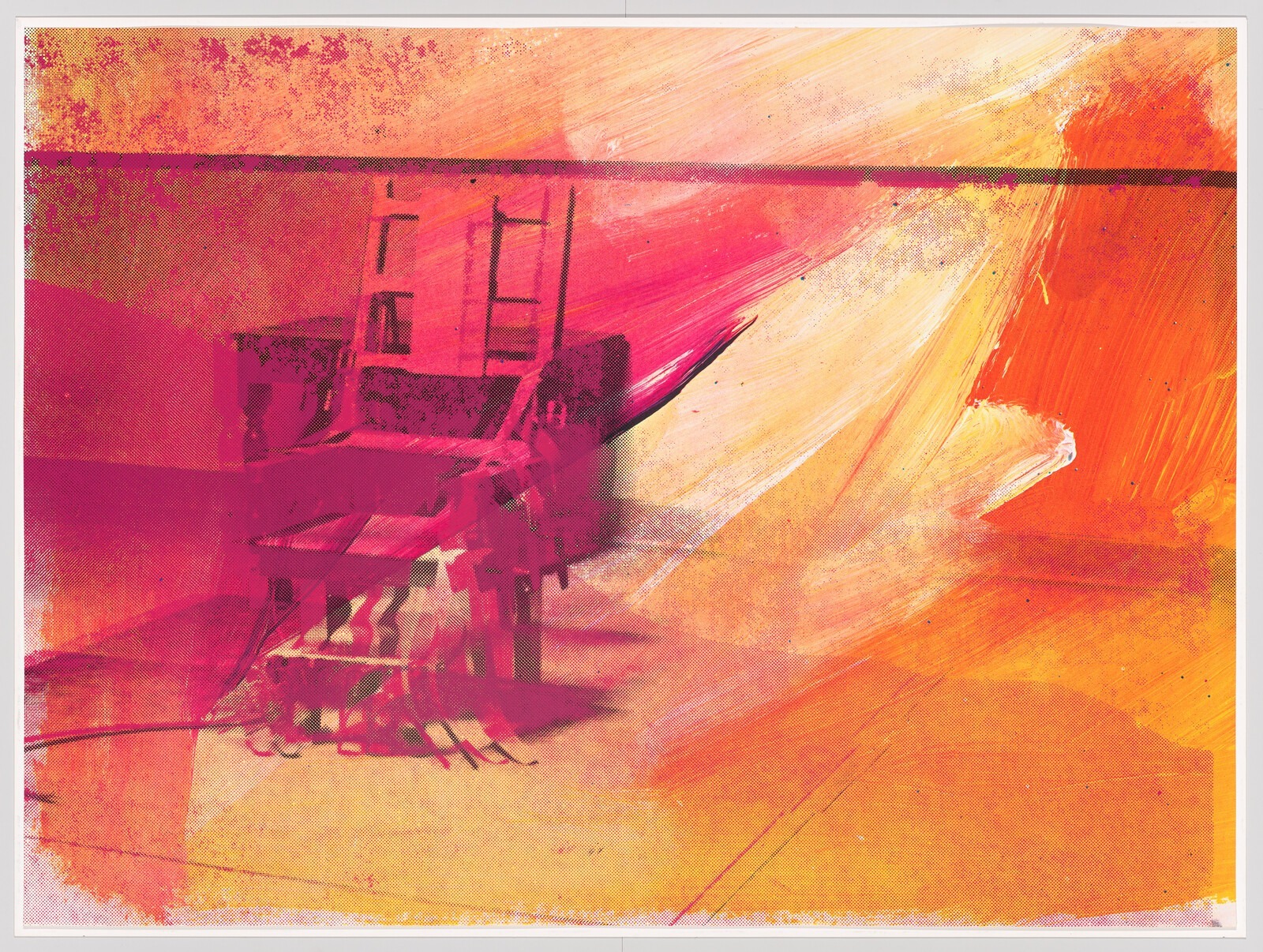
Andy Warhol’s Electric Chair (1971) is among the most compelling images from his celebrated Death and Disaster series, a body of work that transformed the unsettling imagery of American mass media into some of the most consequential art of the twentieth century.
The image originated from a press photograph of the execution chamber at Sing Sing Correctional Facility in New York. Warhol first explored the subject in 1963, returning to it repeatedly through variations in color, scale, and composition. By isolating the empty electric chair and reproducing it through silkscreen, Warhol created an image that is simultaneously haunting, seductive, and strangely impersonal.
In this 1971 interpretation, brilliant passages of orange, yellow, crimson, and magenta envelop the otherwise somber subject. The vivid palette creates a powerful tension between the violence implied by the image and the visual allure of Warhol’s Pop Art aesthetic. The vacant chair becomes a symbol of mortality, institutional authority, and the uneasy relationship between spectacle and tragedy in American culture.
Unlike Warhol’s glamorous portraits of Marilyn Monroe, Elizabeth Taylor, and other celebrities, Electric Chair confronts the darker side of fame and mass-media consumption. Yet both subjects reflect the artist’s enduring fascination with how repetition and reproduction shape our collective understanding of life and death.
Today, Warhol’s Death and Disaster works are recognized as foundational achievements of postwar American art, with related examples represented in major museum collections worldwide.