



Andy Warhol (American, 1928–1987)
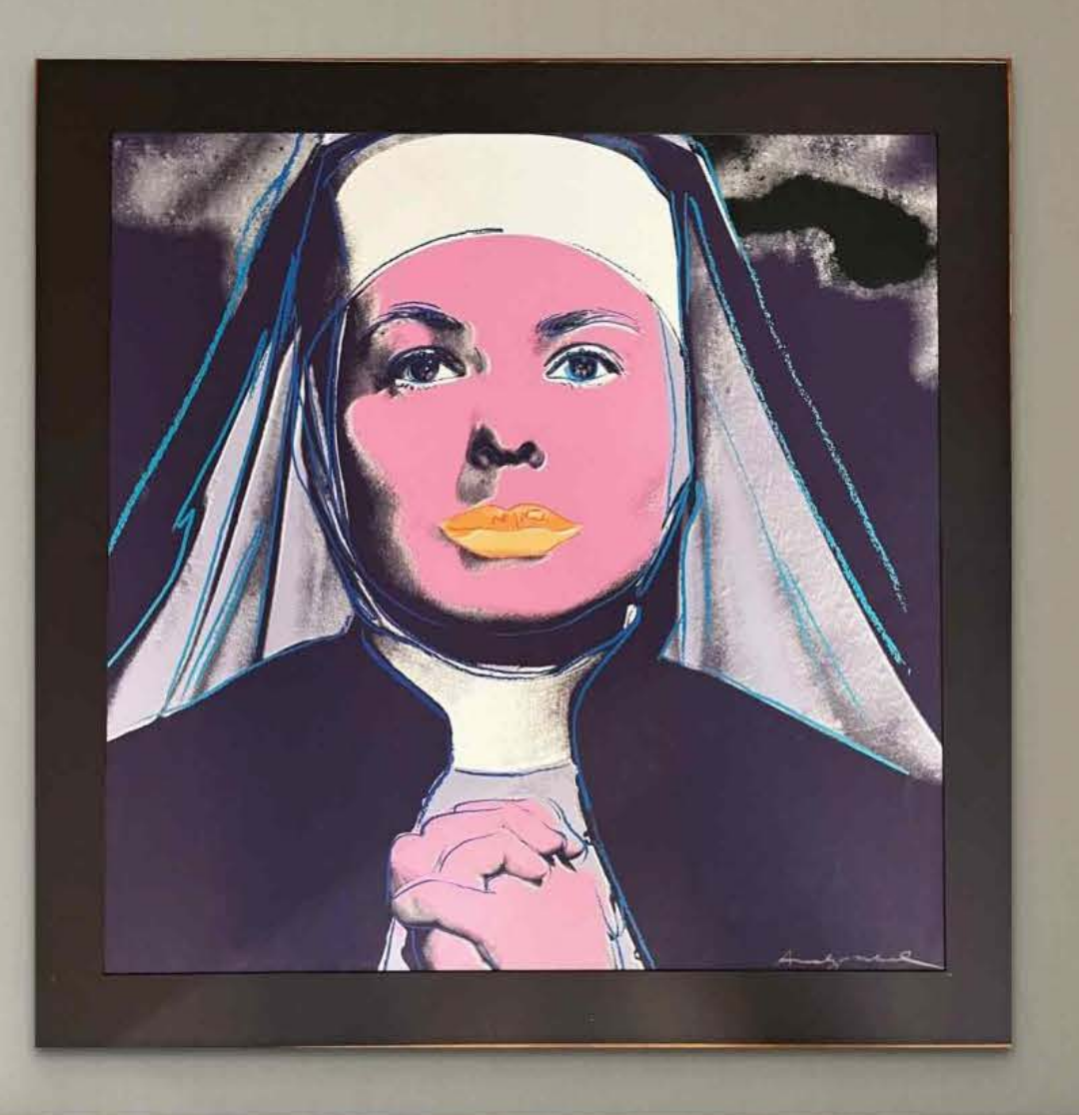
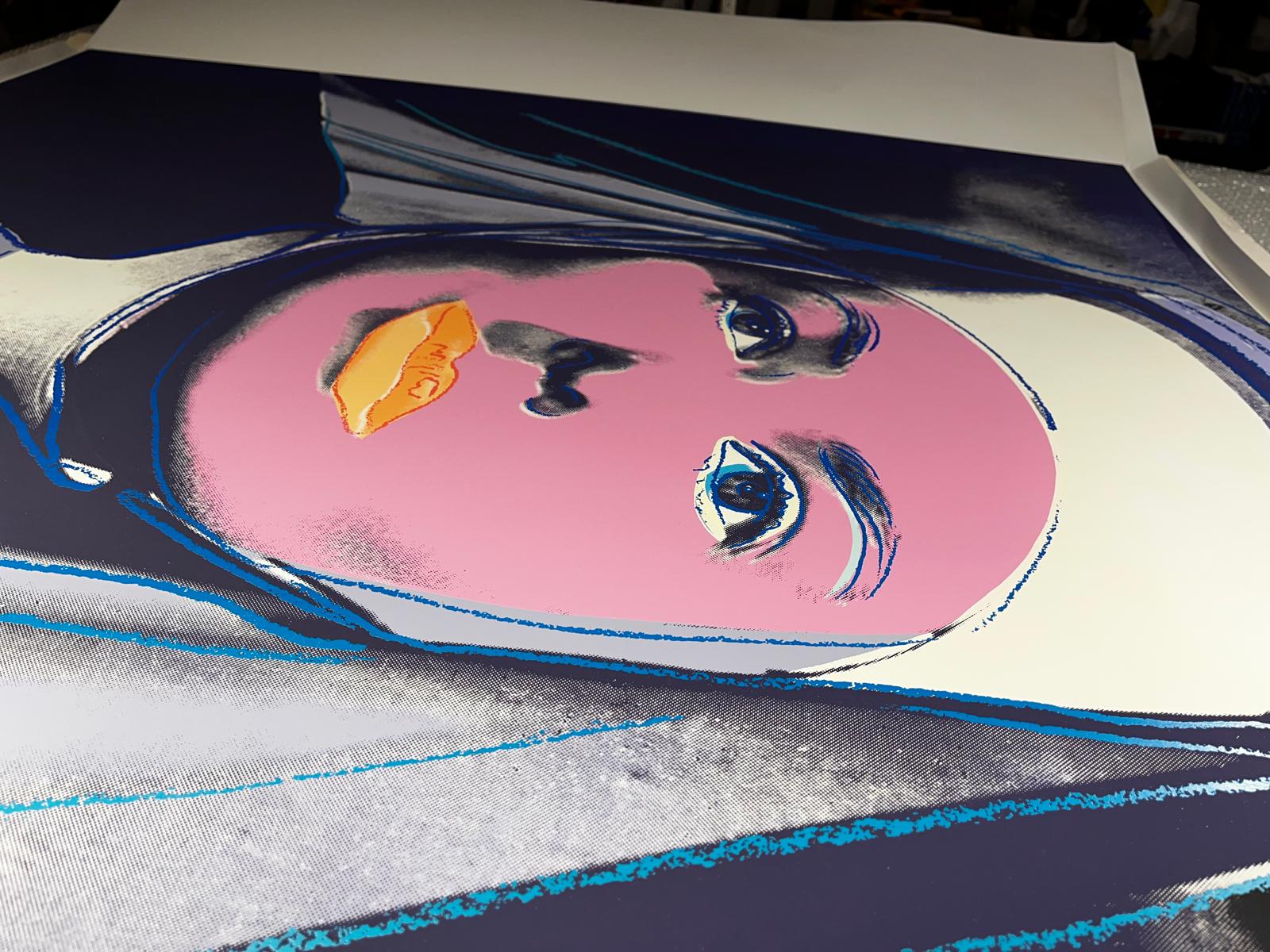
Ingrid Bergman as The Nun (The Bells of St. Mary’s), 1983
Screenprint in colors on Lenox Museum Board
38 × 38 in. (96.5 × 96.5 cm)
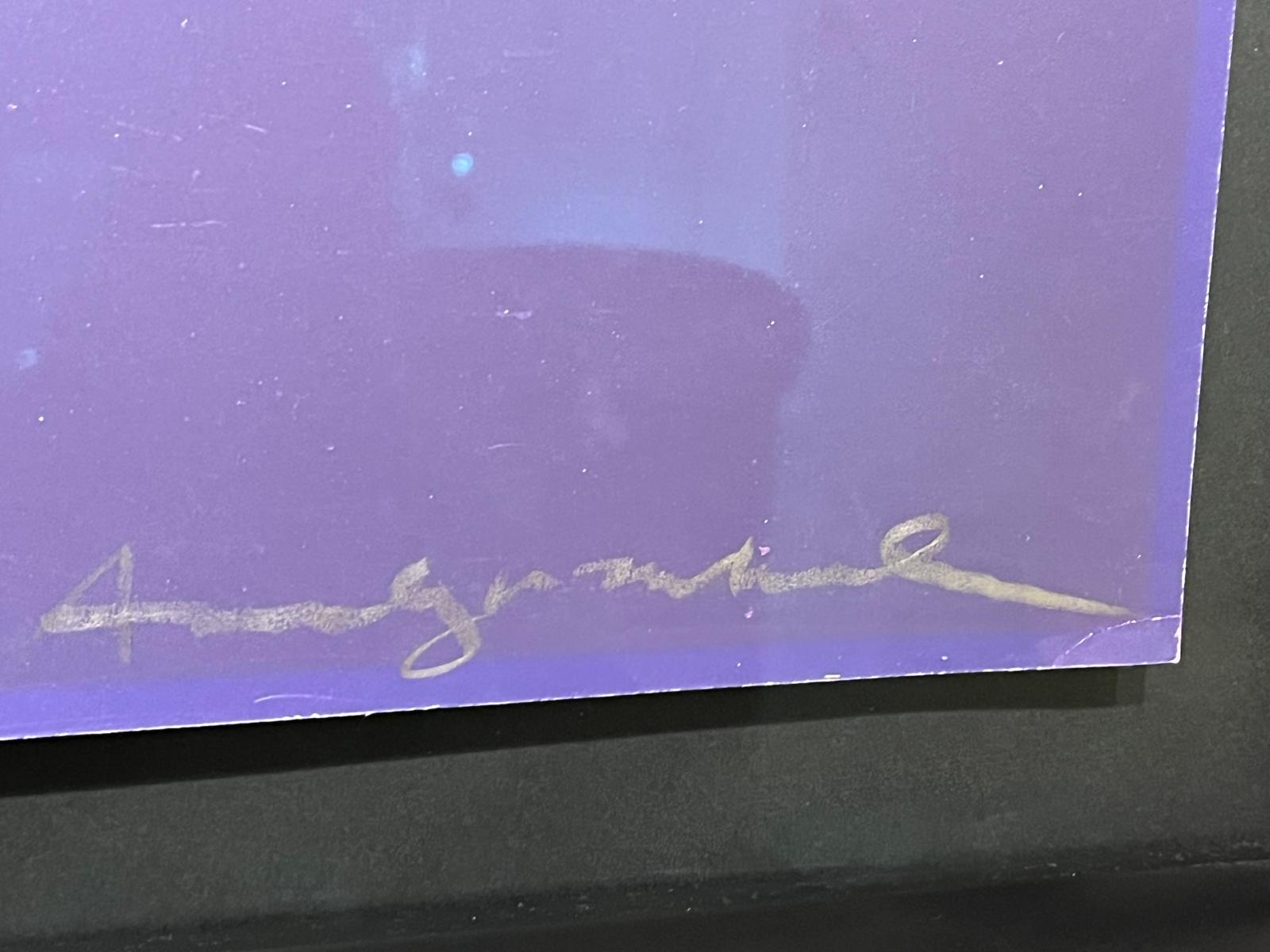
Signed by Andy Warhol in pencil lower right
Unique, unnumbered color proof outside the standard numbered edition
From the Ingrid Bergman portfolio
Printed by Rupert Jasen Smith, New York
Published by Galerie Börjeson, Malmö, Sweden
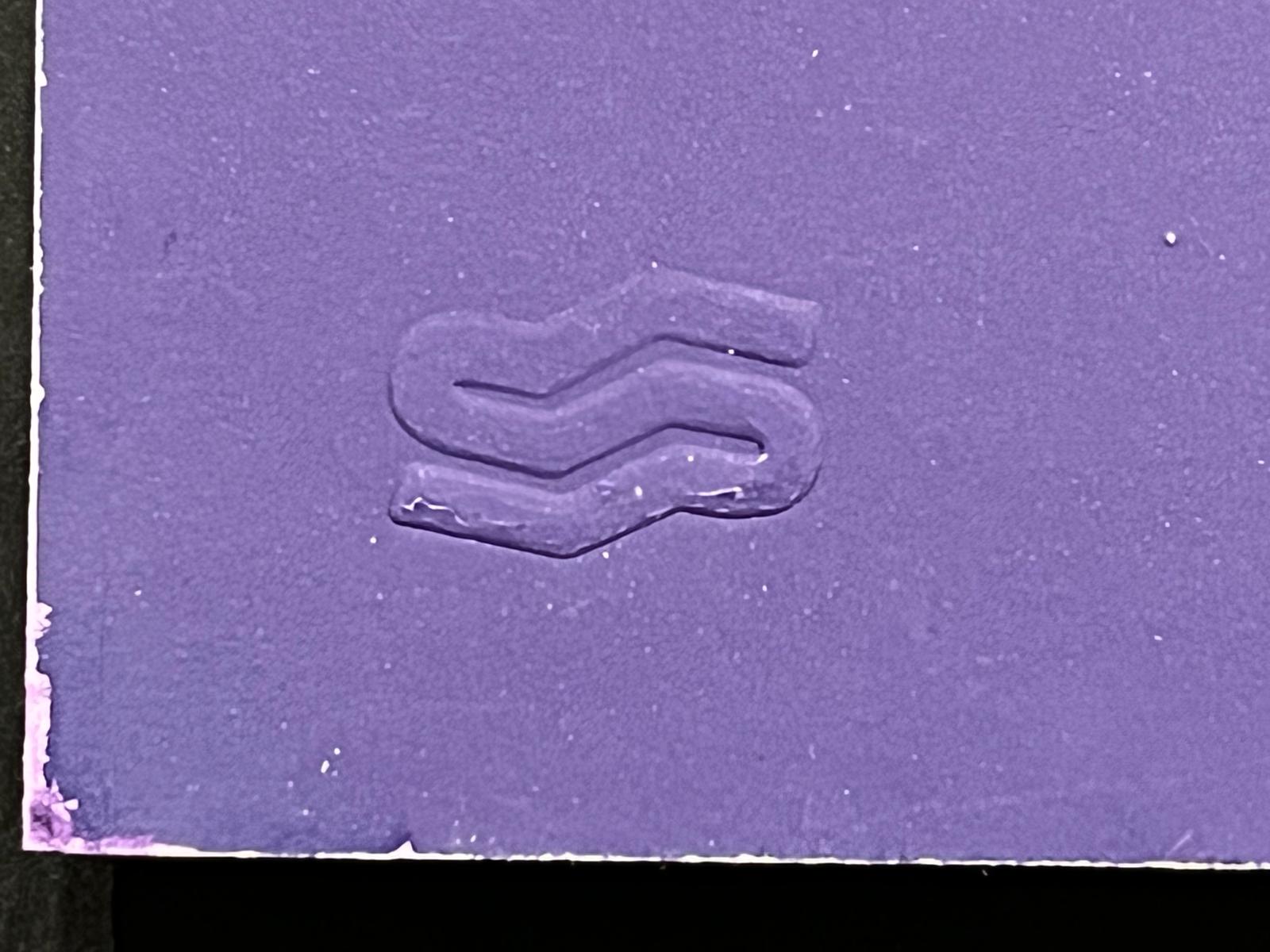
Catalogue Raisonné: Feldman & Schellmann II.314; related to the unique-color trial proofs catalogued under IIB.314
Provenance:
Michael Enns, New York/Miami, reportedly acquired directly during his tenure working in Andy Warhol’s studio; Acquired directly from the above by the present owner approximately 2001
Private Collection, Europe
Price: on request
About the Work
There are Warhol prints one encounters regularly—and then there are the anomalies that remind us how experimental his printmaking process actually was.
This extraordinary impression of Ingrid Bergman as The Nun belongs firmly to the latter category.
Warhol created his celebrated Ingrid Bergman portfolio in 1983, transforming three of the actress’s most recognizable screen personas into brilliantly colored Pop icons. For The Nun, Warhol selected Bergman as Sister Mary Benedict in Leo McCarey’s 1945 film The Bells of St. Mary’s.
The standard edition is among the most recognizable portraits from Warhol’s graphic work of the 1980s. The present impression, however, is dramatically different.
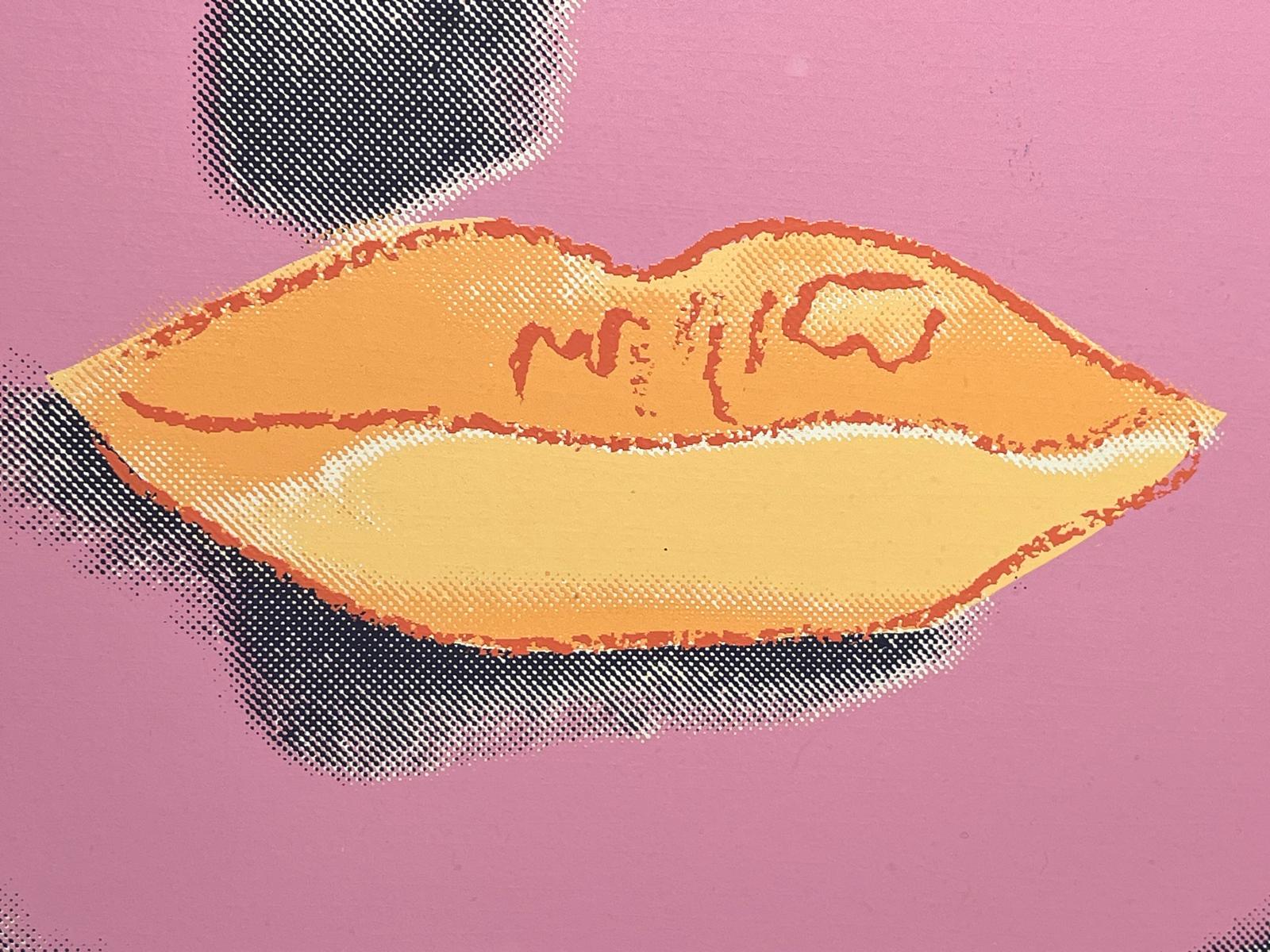
Rather than the coloration of the regular edition, Bergman’s face is rendered in an extraordinary saturated pink, punctuated by orange and yellow lips and surrounded by deep violet, black, silver-gray and electric blue. The effect is considerably more radical—and arguably more quintessentially Warholian—than the familiar published version.
It is a portrait simultaneously devotional and glamorous, transforming the visual austerity of a nun’s habit into an explosion of unmistakable Warhol color.
A Unique Color Proof
This impression is signed by Andy Warhol in pencil but is not numbered.
Unlike the documented group of numbered Trial Proofs, however, the present impression bears no visible TP number or designation. We therefore conservatively describe it as a unique, unnumbered color proof related to the Trial Proof group, rather than assigning it a numbered Trial Proof status that the sheet itself does not document.
Its highly unusual coloration appears to be unique.
Direct Connection to Warhol’s Factory
Adding considerably to the fascination of this particular impression is its reported early provenance.
The work was acquired approximately 25 years ago directly from Michael Enns, who worked in Andy Warhol’s studio during the late 1970s and 1980s. Enns was directly involved in Warhol’s screenprinting operation and has spoken publicly about his work at the Factory and his interaction with master printer Rupert Jasen Smith, who printed the Ingrid Bergman portfolio.
According to the provenance related by the owner, Enns received this impression in connection with his work in Warhol’s studio. It was subsequently acquired directly from Enns and has remained in the same European private collection for approximately a quarter century.
This history offers an intriguing context for the work’s unusual character: an unnumbered, alternatively colored impression originating with an individual who worked within Warhol’s printmaking circle during precisely the period in which the image was created.
Ingrid Bergman Through Warhol’s Eyes
The Ingrid Bergman portfolio was commissioned by Swedish gallery owner Alexander Iolas? [VERIFY/REMOVE] and published by Galerie Börjeson in Malmö in 1983 as a tribute to one of Sweden’s greatest international stars.
Warhol selected three dramatically different images of Bergman: a glamorous studio portrait, her celebrated role as Ilsa Lund in Casablanca, and the present image of Bergman as the habit-clad Sister Mary Benedict in The Bells of St. Mary’s.
The Nun provided Warhol with an especially compelling visual contradiction.
The severe geometry and monochromatic tradition of the religious habit becomes a framework for the artificial colors of celebrity culture. Bergman’s face emerges from the dark veil almost like a secular icon—a movie star presented with the frontal solemnity of a religious image.
In the present unique-color impression, this tension becomes particularly pronounced. The intense pink of Bergman’s face and golden-orange lips deliberately disrupt any expectation of naturalism. Warhol turns the beloved Hollywood actress, already disguised as a nun, into something else entirely: an unmistakable Pop icon.
Condition
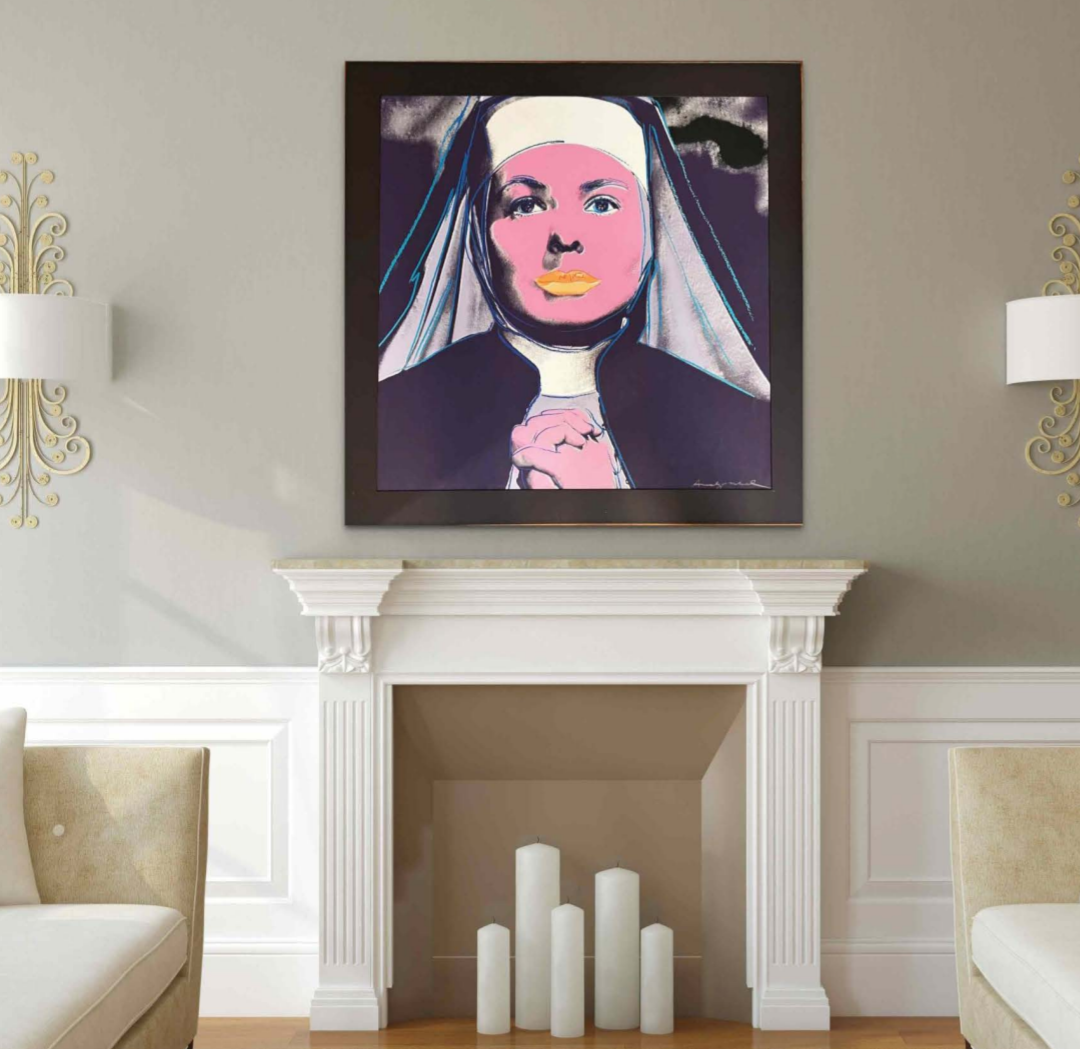
The work presents impressively when framed and installed, as illustrated in the accompanying photographs.
The sheet nevertheless exhibits visible age- and handling-related condition issues, including surface abrasions, scuffing, edge wear and small areas of loss, particularly noticeable upon close inspection. These characteristics have been taken into consideration in the work’s pricing.
Additional high-resolution photographs and detailed condition information are available upon request.
For the collector drawn to the unusual rather than the ubiquitous, this is a fascinating Warhol: a signed, apparently unique color variant of one of his most recognizable 1980s portraits, with a direct reported connection to the artist’s Factory.