Some artists change the way we paint. Others change the way we see.
Victor Vasarely did both.
Widely regarded as the father of Op Art, Vasarely believed that art could be built from mathematics, geometry, and color to create the illusion of movement. Long before the digital age, his work explored ideas that now feel remarkably familiar—pixels, algorithms, and images that transform as we interact with them.
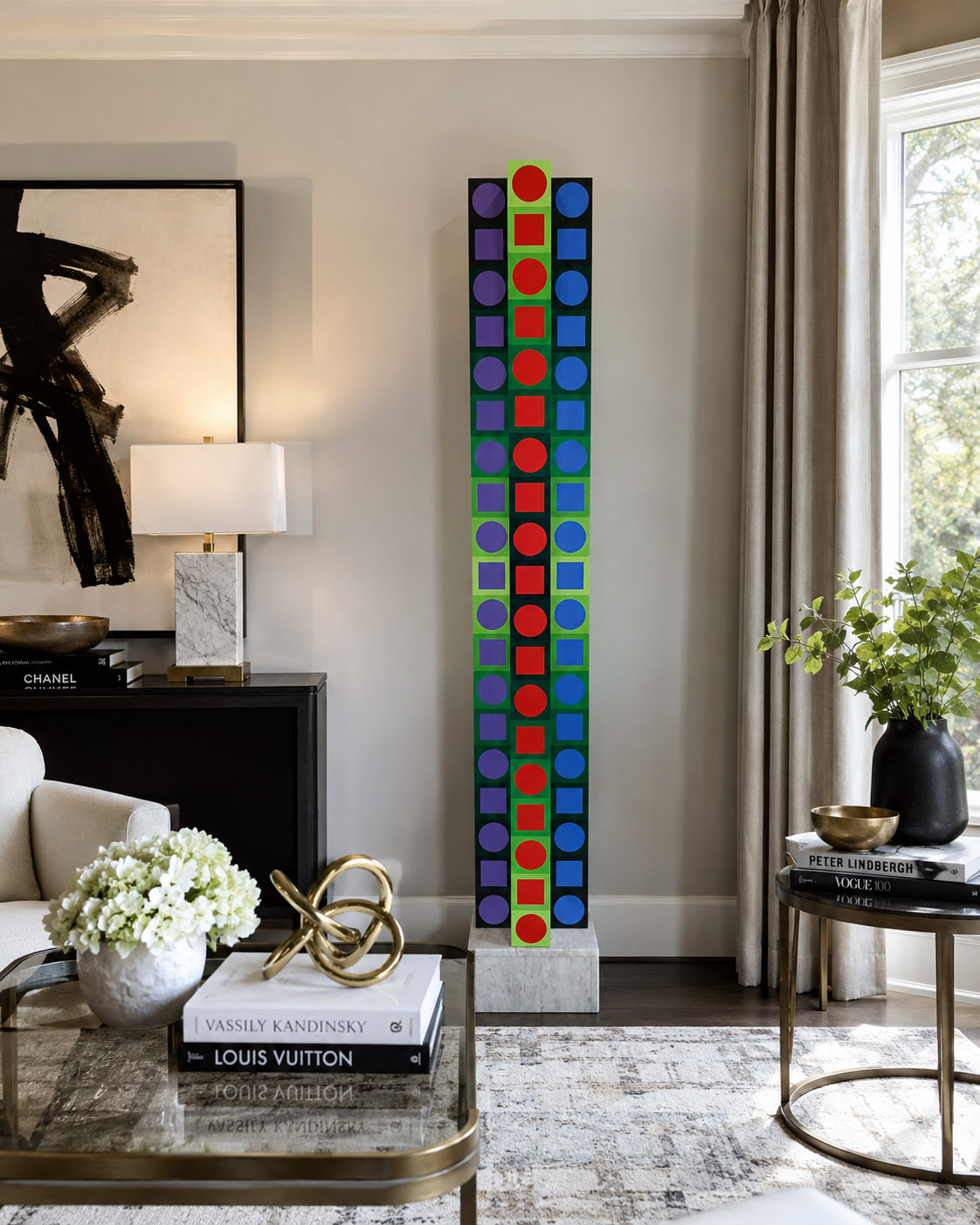
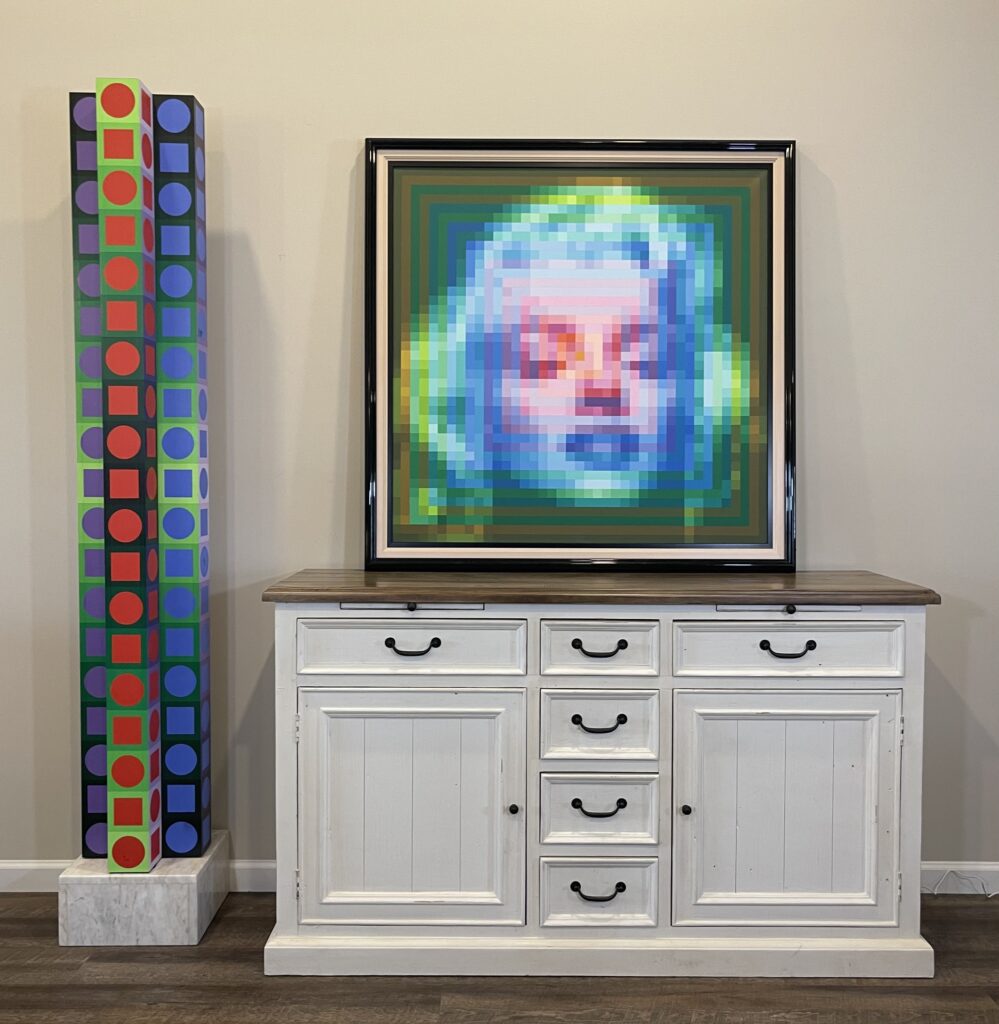
His monumental sculpture, Colonne, embodies that vision. Standing over six feet tall, it appears to shift and change as you walk around it, proving that movement can exist entirely within the viewer’s perception.
Those ideas didn’t end with Vasarely. They evolved through the work of his son, Jean-Pierre Yvaral, who carried Op Art into the computer age. In Marilyn Numérisée, one of his most celebrated compositions, the world’s most recognizable face dissolves into a matrix of color and geometry, only to reappear as the viewer steps back. Decades before digital imagery became part of everyday life, Yvaral was exploring how countless individual elements could come together to create a single image.
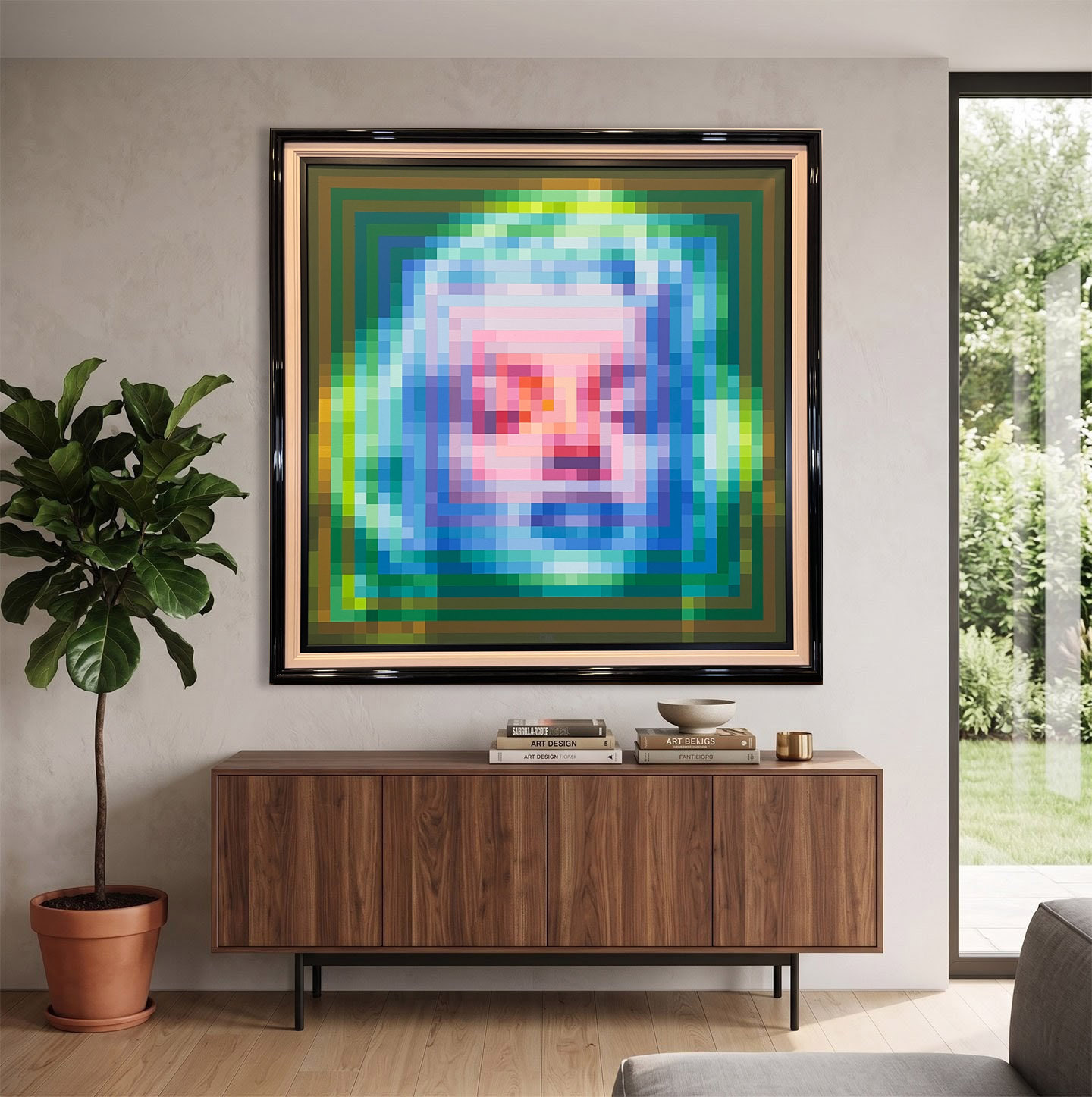
Today, these works feel more relevant than ever. They bridge the worlds of Modernism, Pop Art, digital culture, and contemporary design while remaining rooted in one of the twentieth century’s most influential artistic movements.
For collectors, they offer more than striking visual impact. They represent two generations of innovation, each pushing the boundaries of perception in their own way. Both works come from the same private collection, acquired through Circle Gallery in the early 1990s and accompanied by their original documentation—a provenance that only enhances their appeal.
The best works of art continue to reveal themselves over time. Vasarely and Yvaral remind us that sometimes the artwork never changes at all.
Only the way we see it.