Few contemporary artists are as instantly recognizable as Romero Britto.
His bold black outlines, brilliant colors, and joyful imagery have become part of the visual landscape around the world. Yet behind that global success is a much smaller and increasingly sought-after body of work: the original paintings that established his reputation in the early 1990s.
Long before Britto became an international brand, he was a young artist in Miami, developing a visual language that blended the fractured planes of Cubism with the vibrant palette of Pop Art. His paintings celebrated happiness, optimism, and the belief that art should be accessible without sacrificing sophistication.
Among his most enduring subjects is the horse.
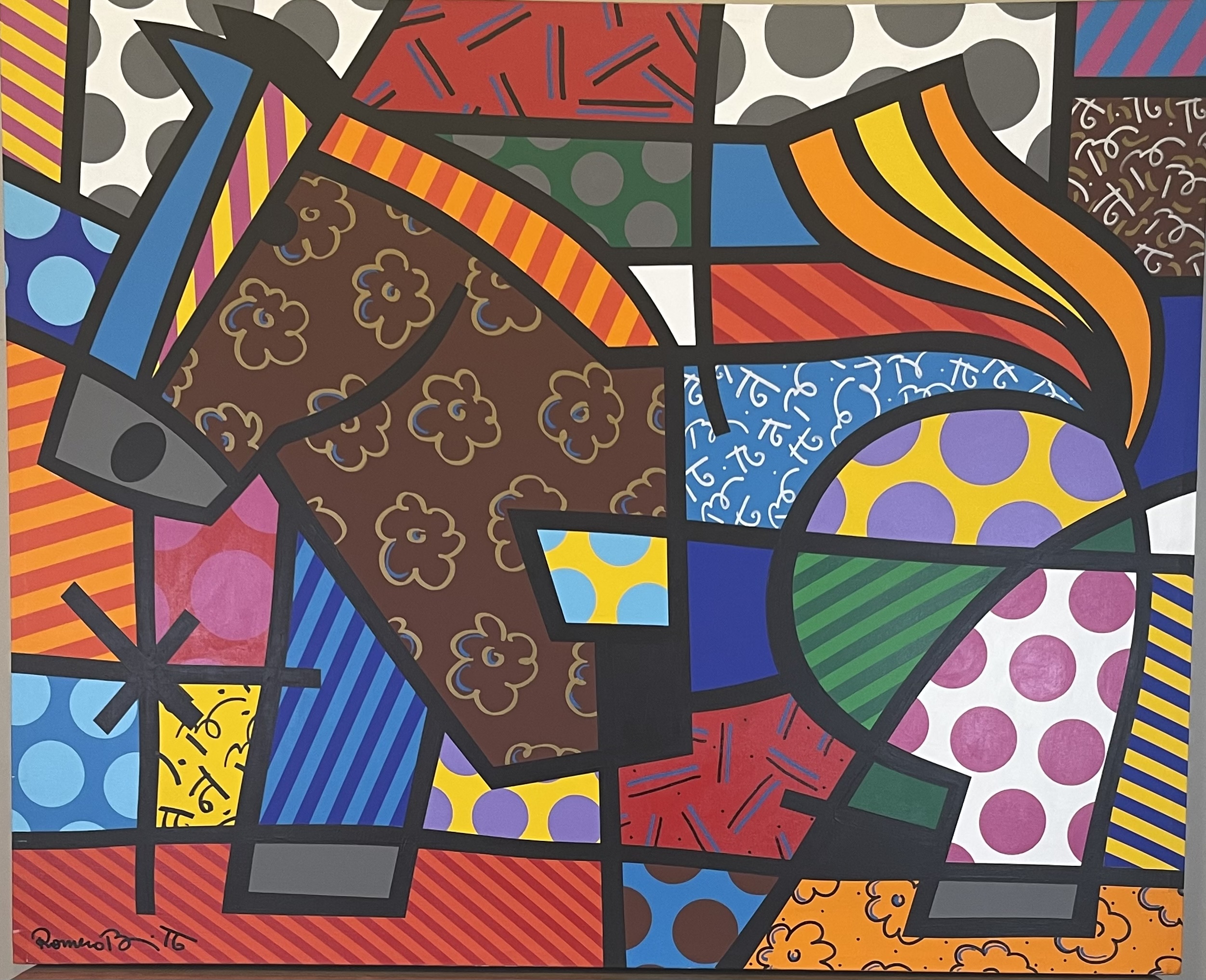
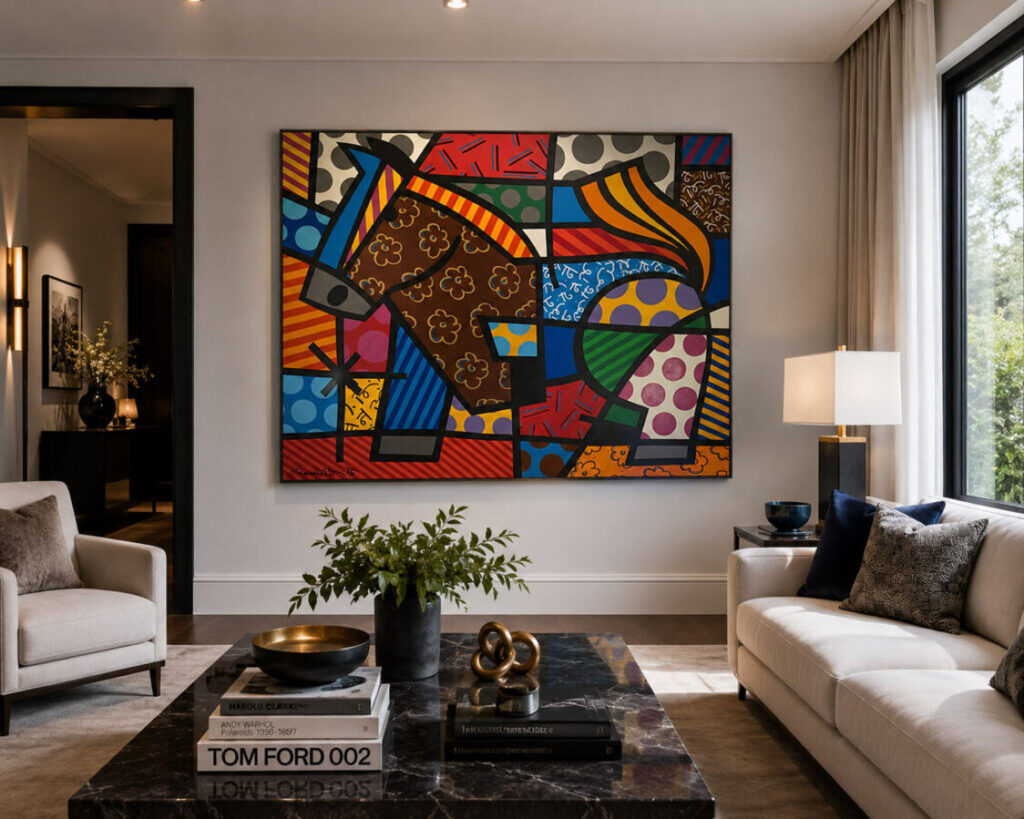
Across cultures, the horse has long symbolized freedom, strength, grace, and forward momentum. Britto transforms that familiar symbol into a celebration of color and life, dividing the composition into rhythmic patterns of stripes, polka dots, florals, and geometric forms. The result is unmistakably his own—playful at first glance, yet remarkably disciplined in its construction.
Our recently available The Horse (1994) comes from this formative period in the artist’s career. Measuring an impressive 50 × 62 inches, it was executed using Britto’s early tape-edge painting technique, producing the crisp lines and vibrant fields of color that distinguish many of his finest original works.
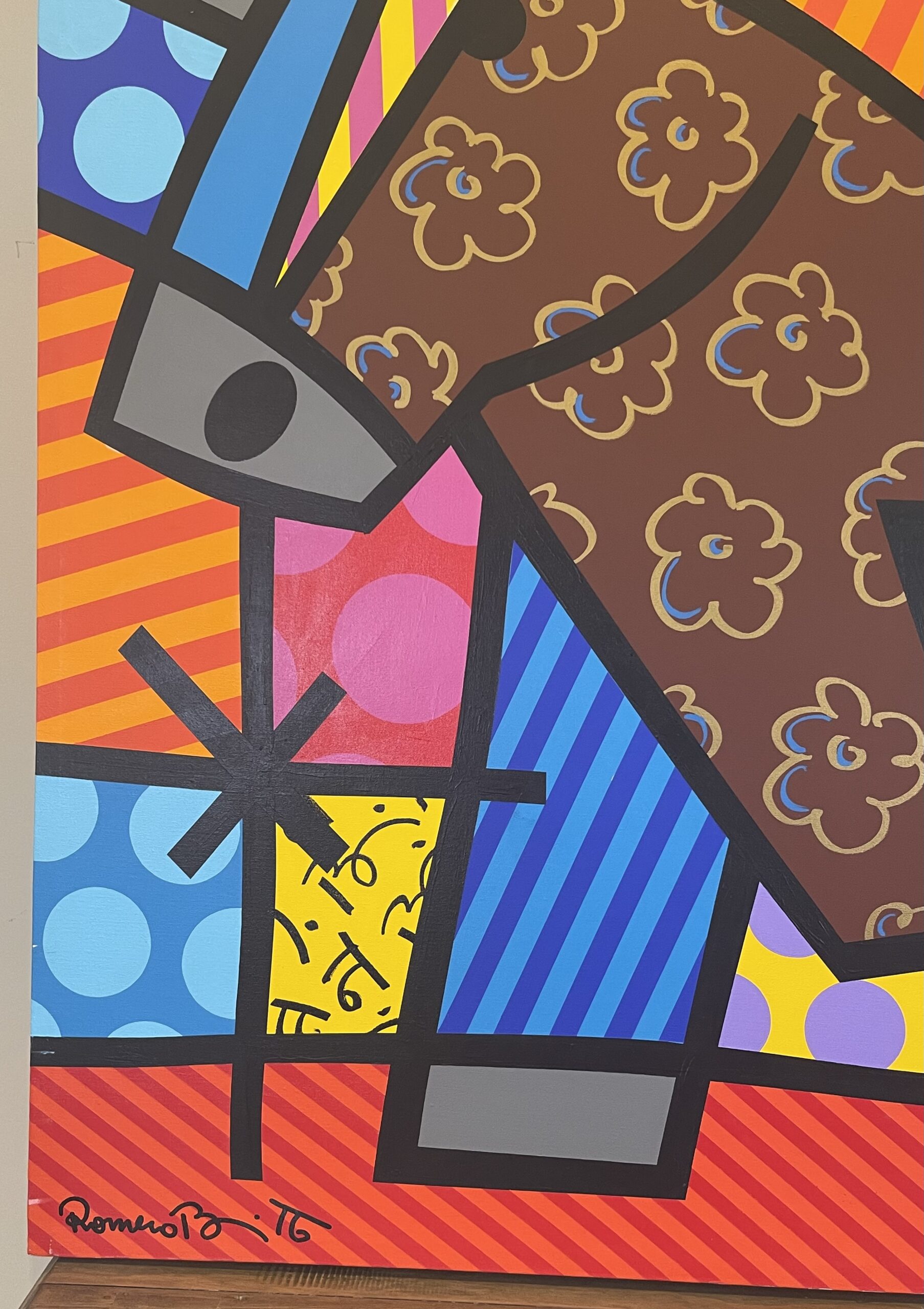
Perhaps just as important is its provenance. Acquired directly through Nan Miller Gallery in 1994 after being viewed at Britto Central in Miami, the painting has remained in the same private collection for more than thirty years. It is accompanied by its original purchase documentation, gallery correspondence, and packing records—a level of provenance that collectors increasingly value.
As Britto’s international reputation has grown, collectors have begun looking beyond later commercial editions to the unique paintings that launched his career. These early originals are finite in number and represent the artist at a pivotal moment, before worldwide recognition transformed both his market and his production.
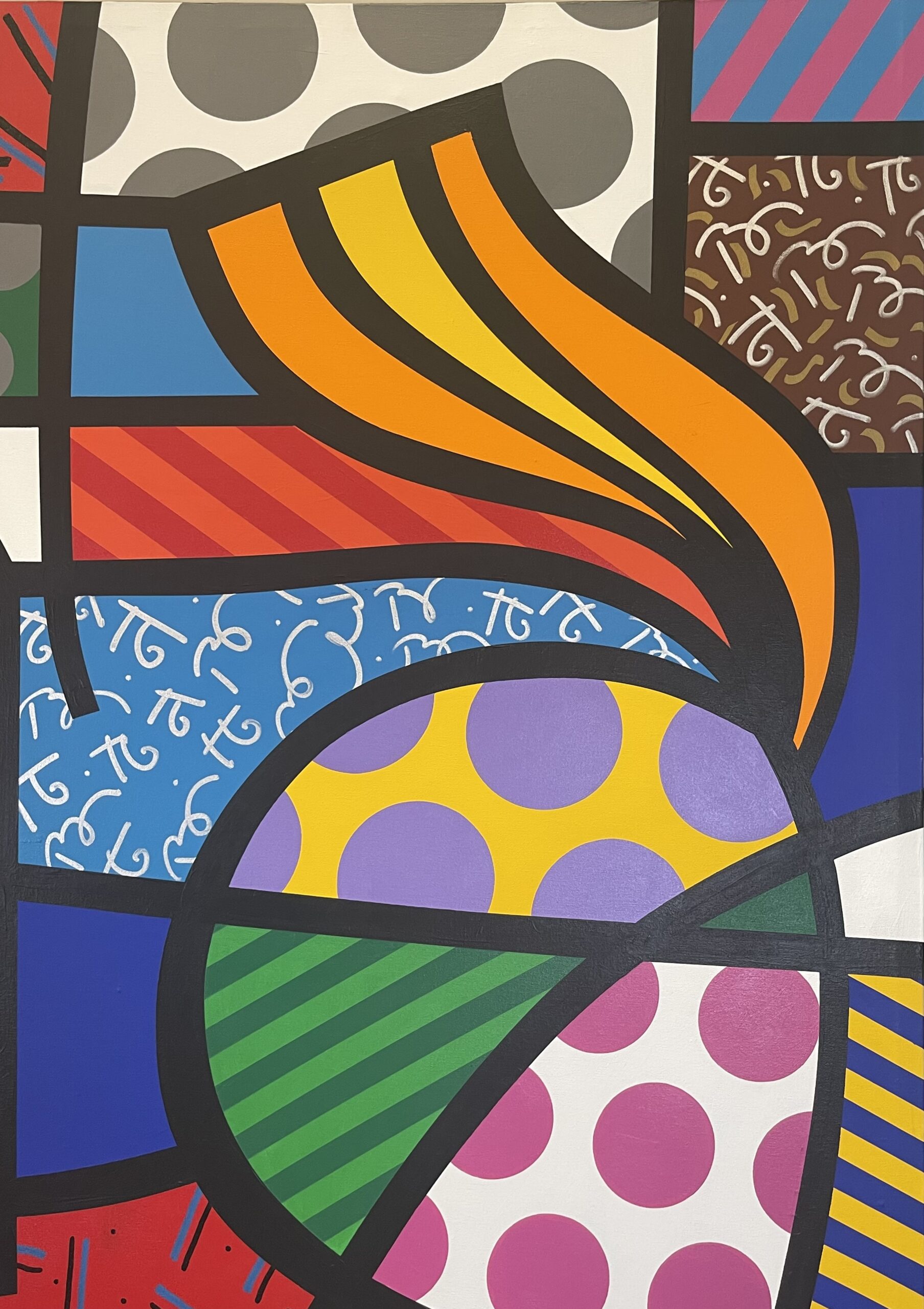
The best collections tell stories about artists at defining moments in their careers. The Horse captures one of those moments—a confident young painter refining the visual language that would eventually make him one of the most recognizable contemporary artists in the world.
Sometimes the most important works are not those created after fame.
They are the ones that made fame possible.